Witnesses Tell House Panel Sudan Near Collapse as Famine, Displacement Worsen
May 25, 2025 | Foreign Affairs: House Committee, Standing Committees - House & Senate, Congressional Hearings Compilation
This article was created by AI summarizing key points discussed. AI makes mistakes, so for full details and context, please refer to the video of the full meeting. Please report any errors so we can fix them. Report an error »
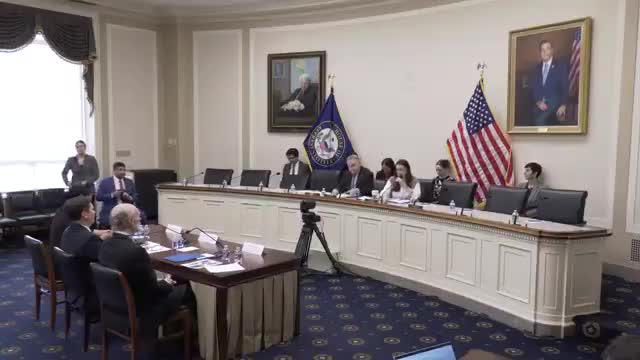
Ken Isaacs, vice president of programs and government relations at Samaritan's Purse, told the House Foreign Affairs Subcommittee on Africa that “Sudan is in a crisis. Right now, it is near collapse on all levels, political, security, economic, social, humanitarian, health, food security, and infrastructure.”
Isaacs and other witnesses said the war that began in 2023 between the Sudan Armed Forces and the Rapid Support Forces has produced a humanitarian catastrophe. Witnesses gave updated figures during the hearing: about 24,600,000 people are highly food insecure; more than 13,000,000 have been displaced internally and roughly 4,000,000 have fled across borders as refugees; and portions of the country meet IPC (Integrated Food Security Phase Classification) phase 5 criteria for famine. Cameron Hudson, senior fellow for the Africa program at the Center for Strategic and International Studies, described shifting battle lines and expanded use of drones and advanced weapons that are degrading civilian infrastructure and access.
Witnesses emphasized that these are largely man-made conditions. Isaacs said the famine is “totally a man made failure,” citing interrupted harvests, looting, and restrictions on humanitarian movement. Testimony and questioning cited humanitarian access problems including delays in permits, checkpoints, and deference by some international bodies to de facto authorities, which witnesses argued has restricted assistance to those in need.
Members pressed witnesses on the immediate consequences of reduced U.S. and international funding. Ranking Member Jacobs said cuts to U.S. foreign assistance forced “more than 80% of the roughly 1,500 community kitchens across Sudan” to close; witnesses confirmed recent U.S. cancellations totaling roughly $87,000,000 in humanitarian programs, including about $30,000,000 for emergency nutrition, water and food aid in Darfur. Witnesses warned that many of the volunteer-run “emergency response rooms” and local mutual-aid kitchens that provide life-saving food and services operate on “little and often” funding and are at risk if predictable financing is not restored.
Several witnesses described on-the-ground medical responses delivered by nongovernmental groups. Isaacs described a Samaritan’s Purse field hospital in Port Sudan that served roughly 9,149 patients and delivered 562 babies during an 87-day mission. Witnesses said private and NGO-run operations have filled gaps where state services have collapsed but stressed that humanitarian assistance alone cannot end the crisis: “The war must stop,” Isaacs said.
Committee members and witnesses recommended sustained, predictable humanitarian funding and diplomatic steps to secure and protect aid corridors. They also flagged the growing complexity of the response as drones and long-range strikes expand the geographic reach of conflict, making previously safe areas vulnerable. Members signaled intent to pursue legislative and diplomatic measures to increase U.S. engagement and funding.
Less immediate details noted during the hearing included calls for support to youth programming and nonpartisan media in Sudan, and proposals to explore mechanisms to capture conflict-era revenues (for example, from gold) into future reconstruction funds. No formal committee action or vote was taken during the hearing.
Isaacs and other witnesses said the war that began in 2023 between the Sudan Armed Forces and the Rapid Support Forces has produced a humanitarian catastrophe. Witnesses gave updated figures during the hearing: about 24,600,000 people are highly food insecure; more than 13,000,000 have been displaced internally and roughly 4,000,000 have fled across borders as refugees; and portions of the country meet IPC (Integrated Food Security Phase Classification) phase 5 criteria for famine. Cameron Hudson, senior fellow for the Africa program at the Center for Strategic and International Studies, described shifting battle lines and expanded use of drones and advanced weapons that are degrading civilian infrastructure and access.
Witnesses emphasized that these are largely man-made conditions. Isaacs said the famine is “totally a man made failure,” citing interrupted harvests, looting, and restrictions on humanitarian movement. Testimony and questioning cited humanitarian access problems including delays in permits, checkpoints, and deference by some international bodies to de facto authorities, which witnesses argued has restricted assistance to those in need.
Members pressed witnesses on the immediate consequences of reduced U.S. and international funding. Ranking Member Jacobs said cuts to U.S. foreign assistance forced “more than 80% of the roughly 1,500 community kitchens across Sudan” to close; witnesses confirmed recent U.S. cancellations totaling roughly $87,000,000 in humanitarian programs, including about $30,000,000 for emergency nutrition, water and food aid in Darfur. Witnesses warned that many of the volunteer-run “emergency response rooms” and local mutual-aid kitchens that provide life-saving food and services operate on “little and often” funding and are at risk if predictable financing is not restored.
Several witnesses described on-the-ground medical responses delivered by nongovernmental groups. Isaacs described a Samaritan’s Purse field hospital in Port Sudan that served roughly 9,149 patients and delivered 562 babies during an 87-day mission. Witnesses said private and NGO-run operations have filled gaps where state services have collapsed but stressed that humanitarian assistance alone cannot end the crisis: “The war must stop,” Isaacs said.
Committee members and witnesses recommended sustained, predictable humanitarian funding and diplomatic steps to secure and protect aid corridors. They also flagged the growing complexity of the response as drones and long-range strikes expand the geographic reach of conflict, making previously safe areas vulnerable. Members signaled intent to pursue legislative and diplomatic measures to increase U.S. engagement and funding.
Less immediate details noted during the hearing included calls for support to youth programming and nonpartisan media in Sudan, and proposals to explore mechanisms to capture conflict-era revenues (for example, from gold) into future reconstruction funds. No formal committee action or vote was taken during the hearing.
View the Full Meeting & All Its Details
This article offers just a summary. Unlock complete video, transcripts, and insights as a Founder Member.
✓
Watch full, unedited meeting videos
✓
Search every word spoken in unlimited transcripts
✓
AI summaries & real-time alerts (all government levels)
✓
Permanent access to expanding government content
30-day money-back guarantee
