
St. Cloud schools report 1,073 students identified as homeless; liaison describes services under McKinney‑Vento
Get AI-powered insights, summaries, and transcripts
Subscribe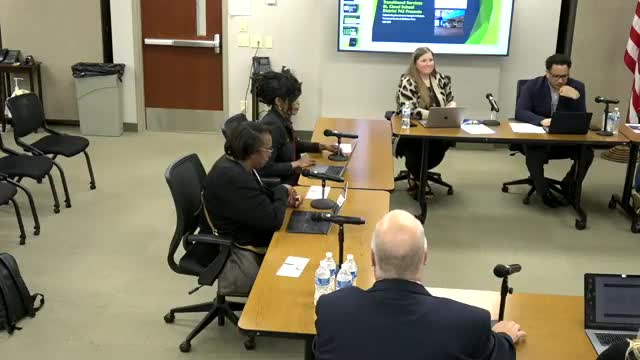
Summary
District transitional services staff told the school board the district has identified 1,073 students experiencing homelessness and described transportation, food and placement supports under the McKinney‑Vento framework.
St. Cloud Public School District staff told the School Board on May 21 that 1,073 students were identified as experiencing homelessness and described the district’s intake, transportation and wraparound supports under the McKinney‑Vento framework.
Kim Braxton, family advocate and intake coordinator for transitional services, said the liaison role connects students and families with school and community partners to secure “essential educational resources and support services.” She told the board the intake process covers “school placement, transportation arrangement, food, physical needs, academic needs and MARS,” and that the district uses those data to coordinate services.
The nut graf: the district presented operational details the board said matter because housing instability disrupts students’ access to education. Board members framed the report as central to the district’s stated mission to provide a “safe and caring climate” and to the board’s recent discussions about basic needs and equity.
Braxton said the district’s count — 1,073 students in a district of about 9,500 — reflects students who have been identified as homeless “so far this year.” She added that the McKinney‑Vento Homeless Assistance Act places no statutory time limit on how long a student may be categorized as homeless: “Under McKinney Vento, there’s no limit as far as like statute of, length of homelessness.”
Board members pressed for practical details. At the board’s request, Braxton described how the district handles transportation and school placement. She said the district attempts to preserve school stability when possible and partners with families to choose the “school of origin.” When distance or safety concerns make a school of origin impractical, the district coordinates with neighboring districts and third‑party providers so students retain uninterrupted instruction. Braxton cited recent out‑of‑district transports as examples: “Last year, we had a student that wanted to graduate from Tech, and he picked up every day in Glenwood. This year, it was Minneapolis for a while.”
Board members asked about food and other basic‑needs supports. Braxton described partnerships with community agencies and charities, and direct district efforts: the district has used donated funds to purchase grocery certificates, delivered food to students and used a district van to transport students and families to appointments when needed. She said Stearns County Bank donated $16,000 for grocery support and that the district partnered with Ruby’s Pantry for food distribution. Staff monitor need lists to invite families in cycles so multiple families can be served.
Braxton said the district works with coordinated entry and housing partners to place families on housing lists and that district staff continue to support students year‑round: “Now that we have a 12‑month employee… I will continue to serve. It’s not as vast through the school year, but there are some that still need services.”
Board members and Superintendent Lori Putnam framed the update as tied to larger concerns about poverty and students’ readiness to learn. Board Member Al Dahlgren noted the scale of the need and repeated the board’s view that schools cannot solve housing shortages alone. Superintendent Putnam thanked transitional staff and highlighted community partnerships in the district’s wraparound approach.
Discussion vs. decision: the presentation was informational; no board action was taken. The presentation included requests for clarifying information and described existing district policies and partnerships. The board did not adopt new policy or allocate new funding during the meeting.
Background: the district identified its homeless liaison functions and described compliance with federal McKinney‑Vento requirements, including transportation, school‑of‑origin protections and community coordination. Board members repeatedly tied the issue to broader community needs and to the district’s mission to reduce barriers to learning.
Looking ahead: board members thanked the transitional team and noted the district will continue year‑round supports, partner with county and community agencies for housing referrals, and keep the board apprised of needs that may affect future budgets or programming.