
Brazosport ISD CFO outlines narrower 2025–26 deficit after updated revenue and ADA figures
Get AI-powered insights, summaries, and transcripts
Subscribe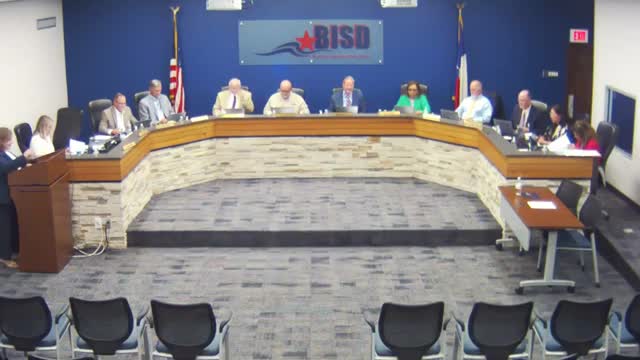
Summary
Chief financial officer presented updated 2025–26 budget scenarios showing a reduced projected deficit of about $100,000 before reductions, driven by better-than-expected state payments and revised property values; pending legislative changes (House Bill 2) could further change the district’s outlook.
Brazosport ISD’s chief financial officer reported revised 2025–26 budget figures to the Board of Trustees, saying updated state payments and property-value estimates have reduced the district’s projected shortfall.
The presentation outlined that the district’s original budget projected an $11.7 million deficit but, after updated state Chapter 313 payments and other adjustments, the projected deficit stands at roughly $100,000 before applying identified reductions. The CFO said the district now expects to end the year with an estimated fund balance of about $38 million.
Why it matters: the budget outlook determines whether the district must cut programs or raise revenues and affects decisions on staff compensation, campus services and capital planning. Trustees pressed staff on enrollment and state reporting details that materially affect funding.
In the presentation, Mr. Martinez, the district’s chief financial officer, said the budget was adopted assuming average daily attendance of 10,086; current ADA is about 9,985, roughly 101 students below the projection. He reported Chapter 313 receipts are now expected to total about $12.5 million, above the $6.0 million originally projected.
The CFO emphasized several state reporting and program-count changes that influenced revenue: a shift in special education counts tied to the Texas Education Agency’s new reporting system and an apparent undercount in state compensatory education (state comp) students. "We are currently working with TEA to correct our state comp student count and potentially secure additional funding," the CFO said.
Staff walked trustees through preliminary property value estimates from the Brazoria County Appraisal District. For maintenance and operations (M&O) the preliminary taxable value was presented as about $11.5 billion after adjustments, a roughly 1.42% increase from last year. Despite that increase, the projected M&O rate was expected to compress, producing lower M&O tax collections (the staff projected about $72.6 million) compared with the current year.
The CFO presented several budget scenarios. Before reductions, available revenues were shown near $117.9 million with expenditures of $127.6 million, yielding the roughly $9.8 million gap that staff narrowed to the near-balance figure by identifying about $9.7 million in potential expenditure reductions. The presentation excluded recent federal entitlement cuts in the figures and noted those cuts (Title I and IDEA-B) will affect the general fund when fully quantified.
Trustees and staff discussed pending state legislation. The CFO said the Senate substitute to House Bill 2 would raise per-student allotments modestly and create a new teacher retention allotment, but would not fully fund employer payroll taxes tied to pay increases. Under the presented legislative scenario, revenues would increase in the model and could produce a surplus of about $2.9 million in the staff’s illustrative column, but that depends on final legislative language and federal funding actions.
The board asked several technical questions about the TEA reporting change that affected special education counts. A trustee noted the district had submitted a ticket to TEA and was expecting an additional count gain (the CFO estimated about 600 students in one component if corrected), which would increase state revenue.
The board did not take action at the meeting; the update was presented for information and will be used to refine the 2025–26 budget in coming weeks.