Get Full Government Meeting Transcripts, Videos, & Alerts Forever!
Get email alerts on the Public Safety topic
No spam. Unsubscribe anytime.
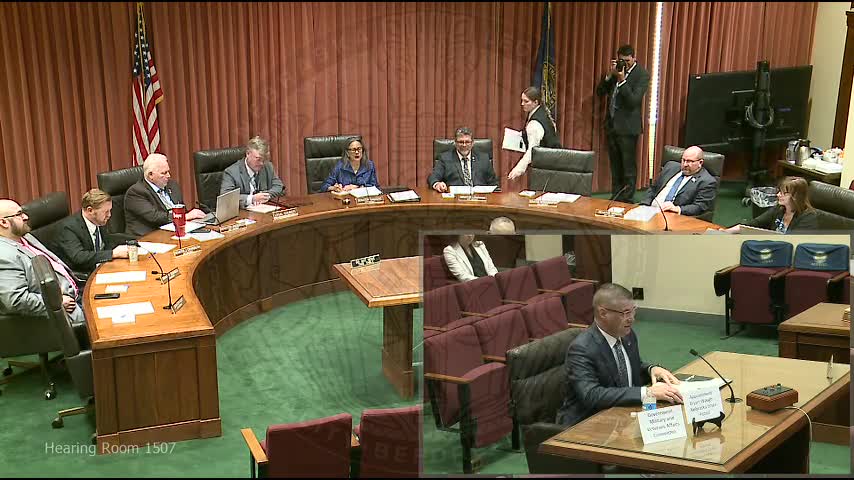
Committee hears Brian Waugh on nomination to lead Nebraska State Patrol
Summary
Brian Waugh, chief of the Kearney Police Department, told the Legislature’s Government, Military and Veterans Affairs Committee he would prioritize recruiting, training and clear guidance on medical cannabis enforcement as he seeks the committee’s recommendation for appointment as superintendent of the Nebraska State Patrol.
Brian Waugh, chief of the Kearney Police Department, testified before the Nebraska Legislature’s Government, Military and Veterans Affairs Committee seeking the committee’s recommendation for appointment as superintendent of the Nebraska State Patrol and outlined priorities including recruitment, training and guidance on medical cannabis enforcement.
Waugh said he brings nearly 32 years of law enforcement experience and described a leadership approach focused on building trust within the agency and addressing staffing shortfalls. “My goal every day when I walk through that door, is to do what I can to make their jobs, their lives at the Nebraska State Patrol better,” he told the committee.
The nomination matters to statewide law enforcement because the Nebraska State Patrol is responsible for traffic safety and statewide coordination with county sheriffs and municipal police, and because law enforcement is facing staffing challenges, Waugh and committee members said. Waugh told senators the patrol has an authorized strength of 482 troopers and was short about 69 troopers at the time of his testimony.
Waugh described immediate priorities if confirmed: communicating with command staff and troopers to build trust, pursuing “low-hanging fruit” improvements that are widely accepted within the agency, and working with partners to recruit and retain personnel. He said he intends to use training and clear written guidance to address legal ambiguities in recent changes to state law on medical cannabis.
On medical cannabis, committee members pressed Waugh about how troopers should handle stops in which a person claims a medical recommendation or card. Waugh said the patrol and local agencies will rely on training, coordination with county attorneys and the attorney general’s office, and “special bulletin[s]” or clear directives for roadside scenarios. “We will ensure that that officer knows to contact their immediate supervisor, obtain guidance on the roadside, and make sure that the proper decision is made,” Waugh said.
Waugh told the committee he will communicate “early and often” with partner agencies, the legislature and legal counsel about implementation questions and that he is committed to getting policy decisions right from day one. He said he would welcome the committee’s recommendation to the full Legislature for appointment and stated his anticipated first day in the role as Monday, June 2.
Kearney community leader Stan Klaus appeared as a proponent and praised Waugh’s work in Kearney, citing relationship-building with local law enforcement and technology modernization. The hearing record included a period for additional proponents, opponents and neutral testimony; no committee vote or formal recommendation was recorded in the transcript excerpt.
The committee proceeding included introductory instructions on public testimony, and multiple senators asked questions about Waugh’s priorities and specifics of enforcing the state’s medical cannabis law. No formal action on the nomination was taken in the portion of the hearing captured in the transcript.