Get Full Government Meeting Transcripts, Videos, & Alerts Forever!
Get email alerts on the Legislative Oversight Reform topic
No spam. Unsubscribe anytime.
Nebraska senators debate LB 298 to create Division of Legislative Oversight; opponents object to criminal penalties and confidentiality rules
Summary
Lincoln, Neb. — Nebraska senators spent more than two hours Tuesday debating LB 298, Speaker Arch—s proposal to create a Division of Legislative Oversight that would move the legislative performance audit office and the state—s two inspectors general under a single director and a new oversight committee while clarifying access to agency information and subpoena authority.
Lincoln, Neb. — Nebraska senators spent more than two hours Tuesday debating LB 298, Speaker Arch—s proposal to create a Division of Legislative Oversight that would move the legislative performance audit office and the state—s two inspectors general under a single director and a new oversight committee while clarifying access to agency information and subpoena authority.
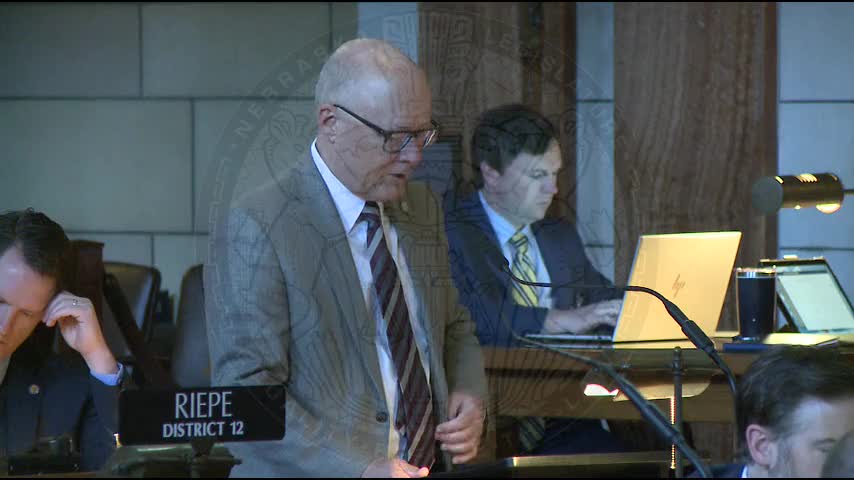
The bill, carried as AM 15-04, aims to address questions raised by an August 2023 Attorney General opinion that curtailed information flows to legislative oversight offices and prompted a temporary memorandum of understanding (MOU) between the legislature and the executive branch. "LB 2 98 will be transformational for the legislature as an institution," Speaker Arch said on the floor, arguing the bill "gets us to where we should be" by reuniting fragmented oversight functions and restoring access to information.
Supporters said the reorganization would coordinate oversight work and restore steady access for inspectors general and auditors. The proposal would create a director of legislative oversight, to be appointed by a two-thirds legislative vote to a six-year term; place the Legislative Audit Office and the Offices of Inspector General for Child Welfare and for the Correctional System under that division; and create a special Legislative Oversight Committee that can approve annual work plans, key performance indicators, and receive quarterly briefings from the division director.
But a major point of contention during floor debate was new language that mirrors a provision in the current performance audit statutes imposing criminal penalties for unlawful disclosure of confidential records. Several senators warned the language could "chill" staff and agency employees from sharing information with oversight offices. "If we're creating a more expansive amount of criminal exposure for employees and individuals that are involved in the OIG, in the ombudsman's office, I think that is an issue," Senator McKinney said, adding that employees might become "more hesitant ... to tell us what's going on." Senator Mikaela Kavanaugh also raised concerns about how the change would affect members' ability to request records and said the legislature—s own statutory authority to request records from agencies has been interpreted, by some agencies, to apply only to the executive board rather than individual senators.
Speaker Arch defended the confidentiality provisions as already existing in the performance audit statutes and said the bill mirrors those protections for the inspectors general. "We're not talking about employees out there someplace. It is members of the office. ... This isn't something that you go home and you put on Facebook," Arch said, adding the criminal standard in the bill targets knowing, bad-faith disclosures rather than inadvertent errors.
Other contested points included the bill's handling of subpoenas and computer-system access. Under the proposal, the oversight committee could request subpoenas but issuance would involve the Executive Board: the committee would seek approval and the Executive Board would approve issuance, a process supporters likened to current committee practice. On electronic access, Arch said the bill envisions tailored information-sharing agreements rather than a one-size-fits-all computer access mandate because different agencies use different systems.
Several senators urged stronger protections or clearer exceptions for employees who bring forward whistleblower information. Senator Dungan and others suggested either additional statutory protections for staff or a public-briefing mechanism to ensure serious problems are not shelved if the oversight committee does not act.
Procedural notes from Tuesday—s session: the Executive Board advanced LB 298 with AM 15-04 on a 7-1 vote in committee; Representative debate on the floor included a failed effort to call debate (cease-debate motion passed by the body), and a floor amendment to strike the criminal-penalty language (FA 2-57) was withdrawn by Senator Mikaela Kavanaugh after she said she would work on revisions between general and select file. No final vote on LB 298 was recorded in the transcript during this session.
Why it matters: LB 298 addresses a sustained breakdown in information sharing after an Attorney General opinion (No. 23-008) and the executive branch—s subsequent restrictions on access; supporters say it restores the legislature—s ability to examine systemic problems in corrections, child welfare and other areas, while critics say some provisions could deter the very staff and whistleblowers whose information triggers investigations.
What comes next: lawmakers said they expect further amendments between general and select file, including possible changes to the confidentiality and penalty provisions and additional language on how the oversight committee will handle work plans and reports. The temporary MOU that has preserved some information-sharing is scheduled to terminate at the end of the session, and backers argued statutory fixes are needed to prevent future disruptions.
Top quotes from the debate, as recorded on the floor: "LB 2 98 will be transformational for the legislature as an institution," Speaker Arch said. "This bill gets us to where we should be."
"If we're creating a more expansive amount of criminal exposure for employees ... I think that is an issue," Senator McKinney said.
"We're not talking about employees out there someplace. It is members of the office," Speaker Arch said in response to concerns about criminal penalties. "This isn't something that you go home and you put on Facebook."
Ending: Lawmakers will reconvene LB 298 on later calendars; floor debate and committee staff work between general and select file will determine whether the bill retains the criminal-disclosure penalties, modifies the oversight committee—s subpoena procedures, or adopts additional safeguards for whistleblowers and staff.