
DEQ outlines regional‑haze, ozone and audit‑program work as air rules shift at federal level
Get AI-powered insights, summaries, and transcripts
Subscribe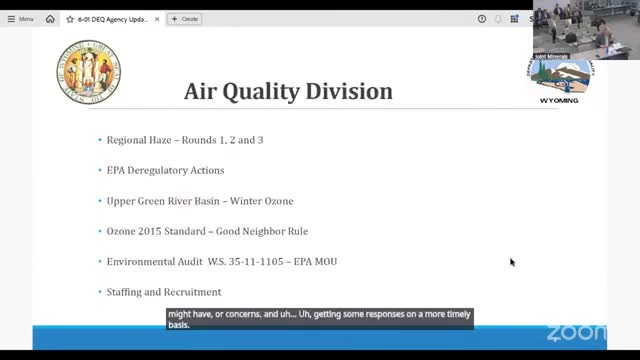
Summary
DEQ described long‑running regional haze and ozone work, a high‑use environmental audit program under state statute, and staffing gains in air quality, while noting potential changes from federal rulemaking.
Todd Parfitt told the Minerals interim committee the air quality division has been the most active DEQ component in recent years because of substantial federal rulemaking that states must implement.
Parfitt described the regional haze program as a visibility—not health—program that applies to national parks and wilderness areas; it requires periodic SIP (state implementation plan) updates and has involved disputes with EPA about controls at specific coal‑fired electric units. He identified five facilities that drew EPA objections during the first regional haze round and said most disputes have been resolved except for ongoing discussions about one facility the transcript references as “WIO DAC” (Wyodak). Parfitt said Wyoming prevailed in litigation on one judicial remand and is continuing to work with EPA to resolve remaining issues.
On ozone, Parfitt summarized the Upper Green River Basin winter‑ozone effort. The basin had been designated nonattainment under the 2008 ozone standard; DEQ later demonstrated attainment and is pursuing redesignation while also complying with the stricter 2015 ozone standard. He said the attainment work involved collaborative efforts among industry, citizens and federal partners.
Parfitt also discussed the “good neighbor” rule (cross‑state transport): EPA initially determined Wyoming contributed above a de minimis threshold to downwind nonattainment in Denver; DEQ and other states challenged modeling inputs and, after EPA reran the analysis, Wyoming fell below the threshold and DEQ prevailed on that point, Parfitt said.
Parfitt highlighted the state environmental audit program, citing statutory authority at Wyo. Stat. 35‑11‑1105. He described a 2018 memorandum of understanding between DEQ and EPA that limited EPA “over‑filing” where facilities follow the state audit process; since then, Parfitt said, thousands of facilities have used the audit option and DEQ reports frequent use in air quality permitting.
Staffing and recruitment: Parfitt said DEQ reduced an air‑division vacancy rate that reached about 26% (around 2023) by establishing a step‑pay system tied to experience, implementing internships with the University of Wyoming (cutting overhead costs for internships to about 5%) and other retention measures. He reported the air division now has roughly 80 staff and the vacancy rate has fallen into the single digits.
Why it matters: Several recent or proposed federal deregulatory actions cited by Parfitt — including reconsideration of the Clean Power Plan successor, methane rules for oil and gas, exceptional‑events treatment and mercury air toxics — could change compliance burdens for Wyoming fossil‑fuel facilities. Parfitt said DEQ is monitoring proposed federal actions and coordinating with regional EPA officials.
Ending: Parfitt asked lawmakers to note that implementing and defending state plans against federal reviews requires technical staff and funding.