Get Full Government Meeting Transcripts, Videos, & Alerts Forever!
Get email alerts on the Parks Recreation Master Plan topic
No spam. Unsubscribe anytime.
Carrollton unveils 10-year Recreation and Open Space Master Plan after yearlong outreach
Summary
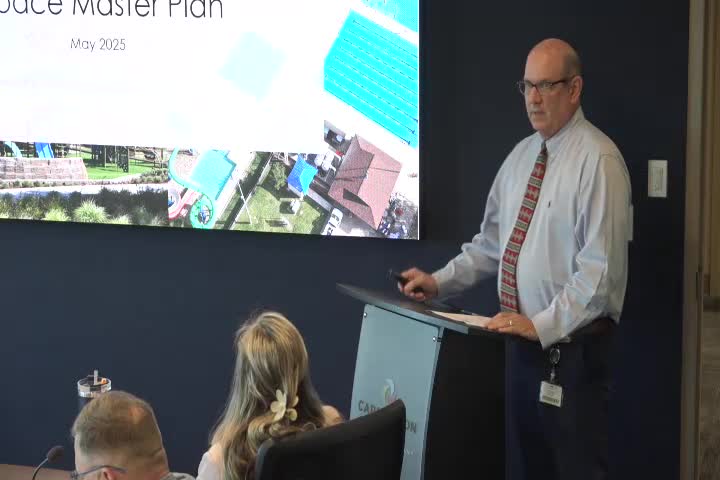
Carrollton city staff and consultants presented a final Recreation and Open Space Master Plan to the City Council on May 20, 2025, laying out a 10‑year roadmap for parks, programming and capital projects.
Carrollton city staff and consultants presented a final Recreation and Open Space Master Plan to the City Council on May 20, 2025, laying out a 10‑year roadmap for parks, programming and capital projects.
Scott Whitaker, Carrollton’s parks and recreation director, said the plan grew from an inventory and public‑input process beginning in April 2024. "We had 1,145 responses," Whitaker said, and "we touched approximately 1,500 residents to get their feedback." The inventory reported roughly 1,800 acres and 53 developed parks in the city.
The plan, prepared by Dunaway & Associates with local consultants, uses benchmarks and National Recreation and Park Association guidance to evaluate facility standards, service areas and amenity mix. Philip, a Dunaway consultant, told council the firm and its subconsultants reviewed every park and compared Carrollton’s developed and natural acreage to peer communities.
The document groups needs into capital, program and operational priorities. City staff highlighted three recurring program priorities from the public input: more events, expanded senior programming and increased pick leball opportunities. Staff also recommended operational investments in maintenance data systems, lifecycle replacement programs for recreation‑center equipment and clarified cost‑recovery targets so program managers can track expenses and revenues.
Council members pressed staff on sample representativeness and access. Councilmember Rubina asked whether the survey demographics matched the city’s population; staff said the demographic charts shown were the profile of survey respondents and that census data were used for comparison. "We published the survey in multiple languages and were at many events," Whitaker said; staff acknowledged the survey underrepresentation of some minority groups and invited targeted outreach suggestions. Councilmember Klein raised the need for restrooms in neighborhood parks; staff confirmed restroom provision ranked high in the facilities priorities and noted maintenance and utility costs affect timing.
Council discussion also covered facility lighting and safety along trails and greenbelts, the relative priority of pickleball programming versus new courts, and the plan’s maps showing high/medium/low priority project areas across the city. Staff emphasized the plan is an internal guiding document for project selection and budgeting rather than a binding contract.
The presentation included program‑level detail: recreation programming benchmarking for sports, esports, cultural arts, seniors and adaptive programs, and a capital priorities map for trails, nature areas and interactive play installations. Staff said some projects will be timed to development opportunities in Trinity Mills and Woodlake.
The council did not take a formal vote on the plan at the May 20 meeting; staff said the master plan will guide future budget requests and capital programming and that additional follow‑up (grading existing parks, cost estimates for high‑priority projects) was planned later in the year.