Get Full Government Meeting Transcripts, Videos, & Alerts Forever!
Get email alerts on the Solid Waste topic
No spam. Unsubscribe anytime.
Carrollton advisory team recommends scaled limits for bulk and brush pickups; council gives consensus to seek new contract
Summary
A council advisory team recommended scaling back Carrollton’s previously unlimited weekly bulk/brush pickup to defined cubic-yard limits, adding craft bags for yard waste and increasing self‑delivery limits; the finance committee endorsed the majority recommendation and council provided consensus to proceed to an RFP with those terms.
A city advisory team recommended on Jan. 7 that Carrollton revise its solid-waste service limits and update Chapter 50 ordinances before issuing a new multi‑year collection contract.
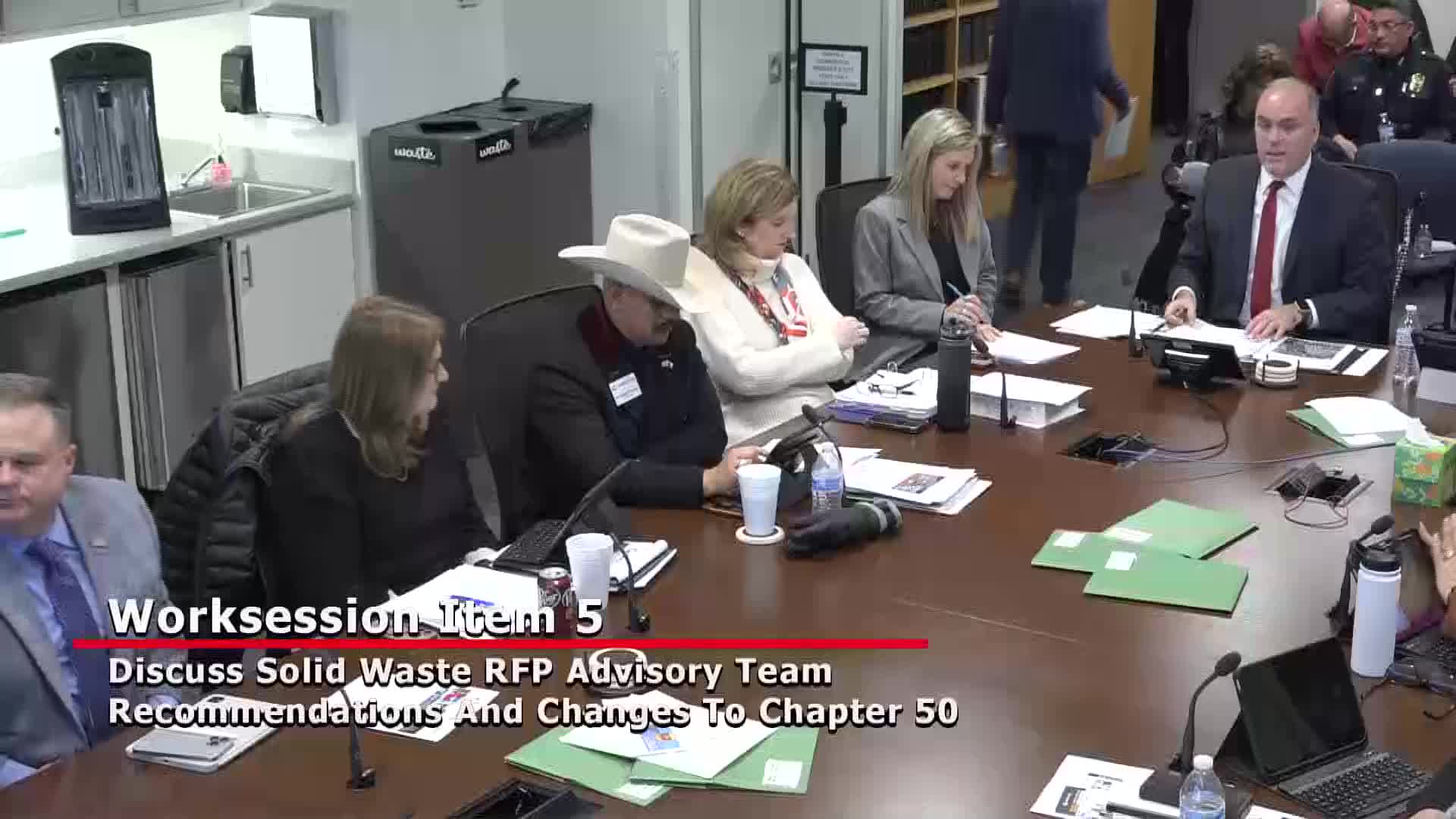
Diane Vaughn, the city chief financial officer, and Daniel Bryan, solid waste contract administrator, told council the current contract (procured in 2015 and renewed in 2020) expires in September. An advisory committee with council members and board chairs reviewed market responses to an RFI, benchmarking from peer cities, and resident expectations before presenting two recommendations to the finance committee.
The majority recommendation, backed by the finance committee and later by council consensus, would keep weekly trash and recycling service intact while setting limits for bulk and brush: up to 3 cubic yards of brush and 3 cubic yards of bulk per week, continued option for special paid pickups, and an increase in the city self‑delivery allowance from 3 to 6 cubic yards. The minority recommendation had proposed a biweekly bulk pick-up at 6 cubic yards to give code enforcement more time to act; the advisory team chose the majority approach to avoid confusing residents who are accustomed to weekly service.
Advisory members described three categories: bulk (large inorganic items such as couches), brush (large vegetative items), and yard waste (leaves, grass clippings). Bryan showed examples in staff photos of compliant and noncompliant setouts and noted a problem with contractors hauling debris into Carrollton neighborhoods and placing it for pickup. He said Garland is an outlier that can offer unlimited service because it operates its own landfill.
To reduce contamination and improve collection efficiency, staff recommended adding biodegradable craft bags for yard waste so haulers can route vegetative material separately from landfill-bound trash. The ordinance cleanup proposed clearer definitions, reordered collection priorities, and a requirement that outdoor material remain on the curb (not in the street). Staff also recommended an app or notification system to improve resident communication.
Council members and advisory-team participants praised the inclusive process; members of the advisory team and finance committee said the majority recommendation balanced resident service expectations and market realities. Council gave staff consensus direction to proceed with a procurement and ordinance changes to implement the majority recommendation, and staff said they plan to release an RFP, score proposals, and transition to a new contract with lead time for resident education ahead of an October start date.