
City attorney says state law limits licensing for farm‑produce sellers; right‑of‑way permission remains a municipal lever
Get AI-powered insights, summaries, and transcripts
Subscribe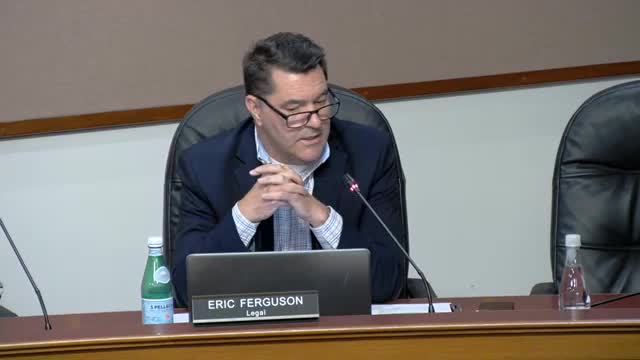
Summary
City attorney briefed council on a long‑standing state statute that protects sale of farm produce and similar items from local licensing requirements; he said the city can regulate use of public right‑of‑way but a regulatory permit tied specifically to produce sales faces legal risk.
City attorney Eric Ferguson told the Pasco City Council on May 19 that a historic state statute — originally enacted in the 19th century and still in force — makes it unlawful for municipalities to require a license from producers who are selling fruits, vegetables and other farm produce. Ferguson quoted the statute during the meeting: “It shall be lawful for any farmer, gardener, or other person without license to sell, deliver, or any fruits, vegetables, berries, eggs, or any farm produce or edibles raised, gathered, produced, or manufactured by such person.”
Ferguson said that language operates as a narrow preemption: municipalities cannot require a license for people who sell their own farm produce. That statutory exception complicates efforts to create a city business‑style licensing regime specifically aimed at vendors selling produce along public rights‑of‑way. He and staff examined other jurisdictions and said comparable statutes or ordinances did not provide an obvious, ready‑made model Pasco could adopt.
However, Ferguson said the city retains authority over management of public rights‑of‑way. He explained that the city can adopt general permitting or use‑of‑right‑of‑way rules that are not framed as a license to sell produce but instead regulate use of the public way (e.g., safety, obstruction, electrical bonding, placement). He warned that any permit framed as a license specifically targeting the protected produce sales could be legally vulnerable because courts and counsel often treat “permit” and “license” interchangeably.
Ferguson summarized the options: the city can enforce existing trespass or obstruction rules on private property, continue code enforcement, use right‑of‑way permitting that focuses on safety and obstruction standards (not on the commodity sold), or pursue legislative change at the state level if city leaders want broader local control. He also said the city should consider potential liability risks when the public right‑of‑way is used for commercial activity and recommended staff further analyze risk and enforcement approaches.
No ordinance vote occurred; Ferguson framed options and asked for direction to continue legal work.