
Charleston County Council authorizes negotiations for transportation sales tax education contract after heated debate
Get AI-powered insights, summaries, and transcripts
Subscribe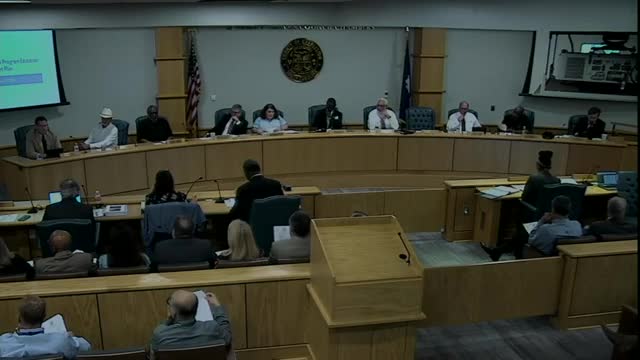
Summary
The Charleston County Council voted to authorize staff to enter contract negotiations for a Transportation Sales Tax education and engagement program, with an amendment requiring the final price to return to council before execution.
The Charleston County Council voted to authorize staff to enter contract negotiations for a Transportation Sales Tax (TST) education and engagement program, with the requirement that the final contract price be returned to council for approval before execution.
Public works staffer Adams told the council the scope includes reviewing the 2024 referendum and public perception of the TST program, educating the public on program accomplishments and status, and facilitating public engagement on a potential 2026 TST referendum. Adams said the selected firm has experience working with counties and regional agencies and that staff worked with procurement to solicit proposals.
Council Vice Chair Kabrovsky voiced strong opposition to hiring outside consultants to "massage the message," saying voters already rejected the previous referendum: "quote Bob Dylan, you don't need a weatherman to know which way the wind is blowing." He questioned whether spending public money on what he characterized as political messaging would be legal and said he wanted direct dialogue with the groups that led the opposition.
Councilman Boykin and other supporters said the intent is not to "steer" a vote but to provide transparent education and a public-facing platform so residents can see project progress and how funds were spent. Boykin said staff are primarily engineers and that consultants could help translate technical work for the public: "These folks are coming in to assist our staff who are mainly engineers...to educate them on the accomplishments that have been done with the previous referendums." Adams said the 2024 effort placed a heavy burden on staff and noted other counties that have used similar engagement models successfully.
County attorney (name not stated) told the council the request had been reviewed and found to present no current legal or ethical concerns. Councilmember Honeycutt said the purpose is transparency and that the firm could be scoped not to include studying why voters might vote one way or another if the council so directed.
Council members debated whether using consultants would look like an attempt to influence a referendum. Several members urged transparency, recommended meeting with groups that opposed the 2024 referendum, and stressed that any consultant would not produce the final project list: that work, they said, will be carried out by staff working with the Berkeley-Charleston-Dorchester Council of Governments (BCD COG) and municipalities.
A motion to authorize staff to enter contract negotiations with the selected firm, amended to require staff to bring the final price back to council before executing any contract, passed by roll call vote with six ayes and three nays. The council directed that, if negotiations are successful, staff may return with a contract that will only be executed after council review of the final price and confirmation that funds are available in the fiscal year 2026 public works general fund.
Why it matters: The TST funds a large portion of county transportation, greenbelt and transit projects; council members said educating the public about project accomplishments and future needs is essential if a future referendum is to be considered. Critics said hiring outside consultants risks appearing to use public money to influence voters; supporters said consultants would improve transparency and public access to project status.
Next steps: Staff will proceed with contract negotiations under the amended direction and return to council with the final negotiated price and the proposed contract for council approval before execution.