
Rio Grande International Study Center invites public to June 7 workshop after yearlong Laredo air‑monitoring project
Get AI-powered insights, summaries, and transcripts
Subscribe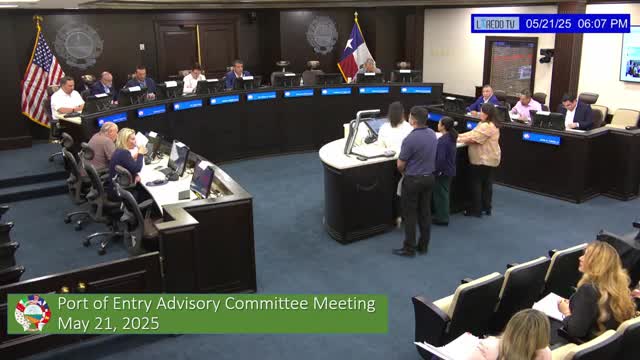
Summary
The Rio Grande International Study Center invited residents and officials to a free, in‑person workshop on June 7 at the UT Health Science Center to review results from a 12‑month air‑monitoring project that installed 19 low‑cost sensors across Laredo and neighboring Mexican neighborhoods.
The Rio Grande International Study Center invited residents and officials to a free, in‑person workshop on June 7 at the UT Health Science Center to review results from a 12‑month air‑monitoring project that installed 19 low‑cost sensors across Laredo and neighboring Mexican neighborhoods.
The project team said the workshop, organized through the Binational Air Council and funded by NAB Bank, the U.S. Environmental Protection Agency and Mexico’s Secretaría de Medio Ambiente y Recursos Naturales (Semarnat), will present a public data dashboard and seek community feedback on local air quality and possible next steps. "We're basically here ... to invite you and the members of the committee to our first in‑person workshop for the Binational Air Council," presenter Tricia Cortez said to the advisory committee.
The dashboard and sensors focus on particulate matter (PM2.5). Presenters said the monitoring network is accessible through the Rio Grande International Study Center website and updates twice daily; the raw sensors log data every five minutes and one of each pair of co‑located sensors runs a longer validation cycle twice per day. "Those data are disseminated ... on our website to create a data dashboard, which is access to all community members," Cortez said.
Project staff described two project goals: (1) expand hyperlocal monitoring and make the data public, and (2) build a binational community council to interpret and act on the results. The team said a Binational Air Council executive committee already includes four members from Laredo and four from the Mexican side, and that University of Massachusetts researcher Professor Richard Peltcher will join the June workshop as a technical expert.
Committee members and residents raised technical and interpretation questions during the presentation. Participants asked whether the dashboard separates sensors on the U.S. side from those in Mexico; presenters said the cloud database stores each sensor's readings and the team can produce segregated reports on request, but the public dashboard currently presents combined views by default. The team said they can extract U.S.‑only or Mexico‑only sensor data for council or staff reports.
Attendees also questioned the limits of low‑cost sensors for source attribution. The project team cautioned that low‑cost PM2.5 sensors measure particulate mass but do not reliably speciate sources (for example, distinguishing diesel exhaust from wood smoke). A committee member asked how cross‑border regulatory differences (for example, vehicle emissions standards) affect interpretation when data from both sides are combined; presenters said those jurisdictional differences should be stated clearly when results are discussed and that wind patterns and other context will be covered at the workshop.
Operational details presented to the committee included: 19 sensor locations installed in January; twice‑daily summary updates on the public dashboard; two sensors per location with staggered reporting and periodic validation; and that raw data are stored in a cloud service hosted by the University of Massachusetts. The team said the data can be downloaded for research or reporting, though the high frequency (five‑minute readings) makes the dataset large.
The presenters emphasized community engagement. Christy Van Heel Bryan, who helped place monitors in specific neighborhoods, noted sensors are currently sited in neighborhoods including the Mines Road area, World Trade Bridge approaches, San Francisco Javier (near the railroad bridge downtown), Azteca, Guadalupe near Bridge 2, Delmar and northwest neighborhoods. Bryan said the project will provide bilingual materials and translators at the workshop.
Committee members asked whether local emissions from household activities, wildfires or cooking could influence readings at a nearby sensor; the presenters confirmed such localized sources can raise PM2.5 values and said those events (for example, a nearby fire) showed up clearly in the network data. The team repeated that the intent of the workshop is to explain what the sensors measure, what they do not, and to gather community interpretation and priorities.
Direction from the committee was limited to attendance and follow‑up: committee members said they would consider attending the workshop and asked staff to coordinate which advisory members will participate. No formal votes or policy decisions were taken.
The presenters asked for industry participation on the Binational Air Council executive committee and invited CBP, county and city staff, and industry representatives to the workshop. The project team said the event is free, bilingual (English/Spanish) and will run 9 a.m.–noon at the UT Health Science Center second‑floor auditorium on Bustamante Street.
The committee discussion closed with the committee agreeing to review the dashboard and to determine which members will attend the June 7 workshop; staff said they would follow up with the presenters to arrange data access and additional technical briefings for members who request them.
For community members: the project team said the dashboard and sensor locations are posted on the Rio Grande International Study Center website under the air quality section and that the project will continue to make data and interpretation resources available online.