Get Full Government Meeting Transcripts, Videos, & Alerts Forever!
Get email alerts on the Full Service Partnerships topic
No spam. Unsubscribe anytime.
Mental health commission adopts full-service partnership report urging data overhaul, workforce supports
Summary
The Mental Health Services Oversight and Accountability Commission on Wednesday adopted its 2025 full-service partnership report, which recommends overhauling the state’s data collection and reporting systems, expanding workforce supports and peer programs, and launching statewide performance-management supports and technical assistance for providers.
The Mental Health Services Oversight and Accountability Commission on Wednesday adopted its 2025 full-service partnership report, which recommends overhauling the state’s data collection and reporting systems, expanding workforce supports and peer programs, and launching statewide performance-management supports and technical assistance for providers.
The report — presented by Callie Clark, research scientist supervisor at the commission — summarizes what the commission says is the best available data on full-service partnerships (FSPs), outlines persistent data and staffing challenges, and offers recommendations and near-term actions including pilots and a request for proposals tied to set-aside funds.
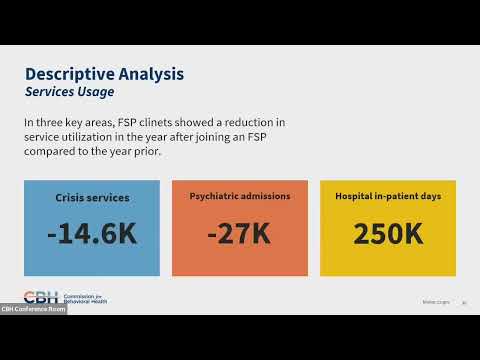
Full-service partnerships are targeted behavioral-health programs intended to divert people with serious mental illness from homelessness, incarceration and hospitalization. Clark told commissioners the programs currently serve about 45,000 people a year and have served roughly a quarter-million Californians since their expansion. The report found that, comparing the year before and the year after joining FSPs, crisis-service usage fell by almost 16,000 events, psychiatric admissions fell by more than 27,000 and the programs accounted for an estimated 250,000 fewer inpatient hospital days over their existence.
Clark said the commission’s ability to tell a fuller story depended on combining provider, county and multiple state datasets inside the commission’s data warehouse, and that those linkages made it possible to report on hospitalizations and service usage even where counties’ reporting systems are incomplete. “We have so much data in the data warehouse,” Clark said, noting the commission used HCAI and other agency data and expects Department of Justice data in a future report. She urged replacing the current DCR reporting system with a more efficient tool and said the Department of Health Care Services is planning an overhaul of the DCR.
The report lists a set of recommendations clustered around data collection and reporting; staffing and workforce development; performance management; technical assistance; and expanded use of peers. On workforce, the report recommends pipeline-building with local universities, increased financial incentives for counties to supplement wages in understaffed regions, subsidized housing or loan repayment for workers, and expanded peer certification, licensing and post-placement supports. On performance management, the report recommends incorporating client-centered performance metrics into contracts, launching a statewide learning community, and evaluating the resources needed to scale performance management statewide.
Clark said the commission is already running performance-management pilot programs in Sacramento and Nevada counties and expects to report results this summer. She also said the commission has $20 million in MHSA funds set aside to improve outcomes and service delivery, and that $10 million of that was earmarked by the commission specifically for technical assistance, capacity-building and outcome-based contracting; a related request for applications is expected in May.
Commissioners pressed on data gaps, housing and provider capacity. Commissioner Larson praised the report’s detail but said she was frustrated that incarceration data remain incomplete, calling that gap “hurtful” because reducing incarceration was a founding goal of FSPs. Commissioner Tsai cautioned that some service metrics — for example, readmissions or service contacts — can be ambiguous: higher counts may sometimes reflect needed access rather than failure. Several commissioners pressed the commission to translate its findings into concrete supports for counties and providers and to consider more disruptive solutions for state data collection.
Public commenters echoed the report’s calls for better data and stronger provider supports. Steve McNally of Orange County commended the report and recommended more use of the state’s open data portal; a commenter identified as Jay, speaking for the California Behavioral Health Association, urged the commission and the Legislature to expand access to FSPs and to ensure providers receive resources and clear operational guidance for implementation.
After discussion, the commission voted to adopt the report. The motion to adopt the 2025 full-service partnership report passed with recorded ayes from multiple commissioners and one recorded abstention; the commission did not adopt additional policy actions at the meeting beyond the report’s adoption.
The report and the presentation also stress that data quality improvements are a prerequisite for many recommendations: Clark said better intake and reporting tools, more realistic documentation workflows for clinicians, and increased training and technical assistance will be needed so providers can produce accurate, usable data. The commission signaled it intends to continue coordinating with DHCS, HCAI and others as the DCR overhaul and CalAIM-related changes proceed, and to follow up on pilot outcomes, the May RFA and the next biennial report, which Clark said the commission hopes will be substantially richer once additional agency data agreements are in place.