Get Full Government Meeting Transcripts, Videos, & Alerts Forever!
Get email alerts on the State Veterans Home Siting topic
No spam. Unsubscribe anytime.
Mohave County leaders and veterans groups press state on siting of promised veterans home; county offers land leads and raises staffing concerns
Summary
County supervisors, veterans groups and state officials at a May 22 meeting in Kingman discussed where to locate a promised Arizona State Veterans Home in Mohave County and described land donation, funding approvals and staffing as the main hurdles.
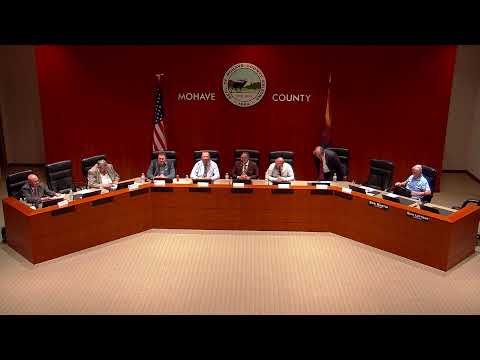
Commissioners, county supervisors and veterans service organizations discussed the long-standing proposal to locate an Arizona State Veterans Home in Mohave County during the May 22 commission meeting in Kingman and identified several practical barriers and next steps.
Supervisors and local advocates emphasized Mohave County’s high veteran population and offered potential land leads. Supervisor Don Martin (Mohave County District 4) said Kingman would be a “centralized” and population-appropriate location if the commission and state decide to site a facility there. Connie Hargreaves, outgoing state legislative chair for the VFW Auxiliary, said local landowners and developers have parcels available and that community leaders and chambers would support the effort.
Process and requirements described by staff: a commission member and staff described the state process as requiring donated land (meeting participants repeatedly cited an 11-acre donation threshold) and a state appropriation and federal VA concurrence; one speaker estimated an initial construction cost in the low tens of millions, though the commission said figures should be verified. Staff cautioned that the State Veterans Home program and the VA have limited construction funding each federal fiscal year and that projects require multi-year planning and close project management.
Operational concerns raised: several speakers said staffing nursing positions is a major challenge in rural Arizona. Gary Ochoa, Deputy Director of the Arizona Department of Veterans Services, told the commission that recruitment and retention are difficult and that lessons learned opening Flagstaff and Yuma should be applied to a Mohave project; he said Flagstaff took about four years from donated land to admitting residents and that operating costs and local demographics affect occupancy and staffing.
Medical suitability: Judge Kalui and others noted that high-elevation facilities like Flagstaff pose medical challenges for some veterans (e.g., respiratory conditions) and that Mohave County’s varied elevations may influence siting decisions for a skilled nursing facility.
Discussion vs. decision: attendees exchanged offers of land leads, volunteered local support and urged timely action; no formal site selection or funding commitment was made at the meeting. Several attendees urged the department and commission to accelerate outreach to landowners and local governments to avoid state funds being reallocated if unspent.
Ending: Commissioners asked stakeholders to identify specific donated parcels and said staff would follow up on land offers and project feasibility; the commission reiterated that site selection and construction is a multi-step process that will require both community donations and state/federal approvals.