Get Full Government Meeting Transcripts, Videos, & Alerts Forever!
Get email alerts on the Purple Star Schools topic
No spam. Unsubscribe anytime.
Arizona’s Purple Star Schools program expands; state liaison urges schools to adopt peer supports and staff training
Summary
The Arizona Department of Education’s military-community liaison described the new Purple Star Schools designation, its requirements (including 70% staff training and a peer-to-peer program), and plans to grow from about 53 schools to broader statewide adoption.
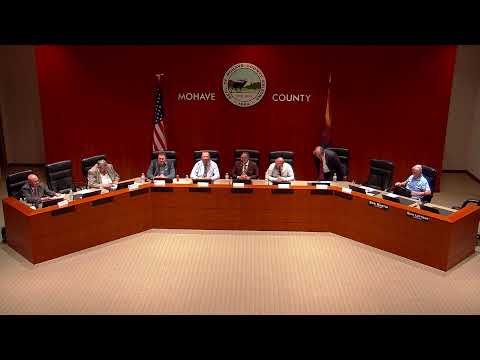
Lee Fernwalz, military community liaison with the Arizona Department of Education, briefed the advisory commission May 22 on Arizona’s newly enacted Purple Star Schools program and how schools can win the designation to better support military-connected students.
Fernwalz described the law, signed by the governor in April and effective in July, as part of a broader national Purple Star movement; he said Arizona joins about 40 other states. “Every state must enact legislation in order to have such a designation,” he said. He reported roughly 53 Arizona schools have begun the process and said initial requirements are intentionally light so schools can begin the work and finish the remaining steps within about 90–120 days.
Why it matters: Fernwalz said military-connected students are highly mobile — often changing schools two to three times every three years — and that trained school staff and an organized peer-support program improve student outcomes. He cited national research summarized by Columbia Law’s leadership survey showing a positive to very positive impact in 77 percent of schools that implement Purple Star programming and a teacher-reported 53 percent improvement in academic outcomes among participating students.
Program details Fernwalz listed: a school must publish Purple Star information on its website, train 70 percent of staff in military culture and transition issues, and designate a peer-to-peer program to welcome and support incoming military-connected children. The program is school-based rather than district-based; Fernwalz said the law assumes families interact first with schools, not district offices.
Fernwalz also explained related state programs he oversees: SkillBridge internships (DoD internships for active-duty members), Troops to Educators (now Troops to Educators/Teachers), and efforts to ensure reservists and National Guard families are included in outreach. He said the designation carries minimal cost to schools (a banner or signage is an optional small expense) and that the Education Department’s website provides training modules and a parent resources section.
Discussion vs. decision: The presentation was informational. Commissioners asked about scaling and whether charter, private and parochial schools can participate; Fernwalz confirmed they can and said several charter and parochial schools are already participating. No formal action or state funding commitment was made at the meeting.
Ending: Fernwalz said he hopes to expand the program and later consider a “Purple Star College” initiative to ease the high-school-to-college transition for military-connected juniors and seniors.