Get Full Government Meeting Transcripts, Videos, & Alerts Forever!
Get email alerts on the Veterans Treatment Courts topic
No spam. Unsubscribe anytime.
Lake Havasu judge tells Arizona commission veterans courts cut recidivism, urges better data and outreach
Summary
Judge Mitchell Kalui told the Arizona Veterans Services Advisory Commission that Lake Havasu’s veterans treatment court has reduced repeat offending, saved community resources and depends on a local Veterans Resource Team; he urged better veteran identification in courts and statewide data collection to secure funding.
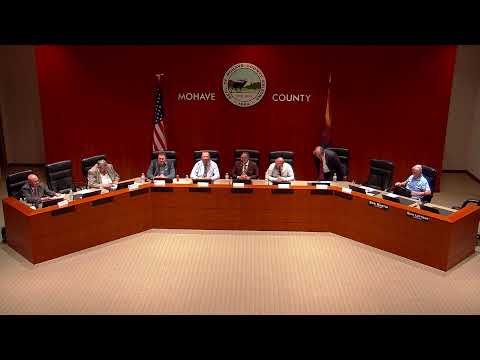
Judge Mitchell Kalui of the Lake Havasu City Municipal Court told the Arizona Veterans Services Advisory Commission on May 22 that Lake Havasu’s veterans treatment court has sharply reduced repeat criminal behavior among participating veterans and stressed the need to identify veterans early and collect outcome data for state funding.
Kalui, who helped start Lake Havasu’s court more than a decade ago, said the town’s Veterans Resource Team coordinates services such as emergency rent, utility assistance and transportation and that the team filled service gaps during the court’s early years. “The court system is the ambulance at the bottom of the cliff,” Kalui said. “What we really need is to push all of those services up onto the top of the cliff and back from the cliff so that they never fall over.”
Why it matters: Kalui argued that evidence of effectiveness — not appeals alone — will sustain and grow state support for veterans courts. He gave concrete figures from Lake Havasu’s program: about 300 graduates over roughly 12 years and a recidivism rate “less than 8 percent.” He also said the community-run Veterans Resource Team provided roughly $80,000 in services and covered $30,000–$40,000 a year for drug testing in the program’s early years.
Kalui described how the court recruits community partners and expands services over time: mentoring programs were added after launch, transportation was provided via donated vans and volunteer drivers, and a coordinated intake process reduced duplication of emergency aid. “If somebody comes to the Veterans Resource Team, typically there’s rarely a time when it takes more than 24 hours to fill that need,” he said.
Kalui urged the commission and other officials to require or fund routine identification of veterans in the justice system. “It doesn’t cost any money to ask somebody, have you ever served in the military?” he said, and recommended asking the broader question, “Have you ever served in the military?” rather than narrower phrasing that can miss National Guard or noncombat service.
On performance measurement, Kalui told commissioners that while he has many anecdotal success stories, sustainable state funding requires comparable metrics and broader study. He said a rumored bill under consideration would both require courts to flag veterans and create funding channels; he encouraged using data to show “this works” when asking the legislature for support.
Discussion vs. decision: Kalui’s presentation was informational and advisory; commissioners and staff discussed next steps such as hosting more training and a likely expanded veterans-court conference. No formal commission vote or directive on funding or statewide mandates occurred at the May 22 meeting.
Ending: Kalui closed with a personal example of a veteran whose medical needs were clarified through the court’s assessment and whose life stabilized after treatment and mentoring — an example he said demonstrates why veterans courts are “worth it.”