Get Full Government Meeting Transcripts, Videos, & Alerts Forever!
Get email alerts on the Wildfire Preparedness topic
No spam. Unsubscribe anytime.
Orinda officials outline evacuation plans, home-hardening programs and insurance advocacy at community wildfire meeting
Summary
City and Moraga-Orinda Fire District officials described fuel breaks, inspection deadlines and evacuation planning, while State Sen. Tim Grayson said he is pursuing legislation to make Cal Fire staffing year-round and aides emphasized local incentive programs and chipping services.
Orinda city leaders and public-safety officials told hundreds of residents at a community meeting that the city is intensifying inspections, fuel-reduction work and evacuation planning while pushing state-level fixes on insurance and Cal Fire staffing.
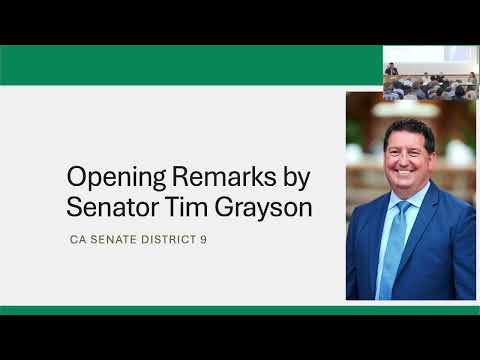
The meeting on wildfire preparedness combined presentations from the Moraga-Orinda Fire District (MOFD), the Orinda Police Department, the city manager and State Sen. Tim Grayson, who told the audience he is “working on the state level to support efforts that help curb catastrophic events such as fires” and described legislation to move Cal Fire firefighters from a seasonal to a year‑round workforce.
Why this matters: Officials said the combination of home hardening, defensible space and firefighter actions determines whether houses survive extreme fire. Local programs — including a city incentive that can reimburse up to $1,000 for fuel removal and an MOFD home‑hardening program offering vent mesh and gutter guards — are intended to reduce ignition risk ahead of fires. Officials also outlined operational steps for large evacuations and urged residents to sign up for emergency alerts.
MOFD fire chief Chief Isaacs described the district’s strategy as “a combination of three things,” listing “home hardening,” “fuel mitigation” and “firefighter actions.” He and Deputy Chief Lucas Lambert described recent regional work on fuel breaks — including a North Orinda shaded fuel break completed in 2019 and a Tunnel East Bay Hills fuel break completed in March — and said the fuel lines are designed to slow fire pathways to give firefighters time to act. “A fuel break is where we plan to slow a fire down,” Chief Isaacs said.
Lambert, who deployed to Southern California in January with a California incident management team, described the Palisades conflagration as driven by extreme winds and ember cast and urged residents to “heed the warning” on red-flag days and to evacuate early. He used a specific example of a structure saved with pool water and a contractor pump to show how rapid local action and available resources can allow firefighters to make a stand on a home.
City manager Linda Smith said the city is updating its emergency operations plan and will operate an emergency operations center during a significant incident to coordinate shelters, logistics and regional resources. Smith and Chief Isaacs said MOFD would begin targeted defensible-space inspections June 1 under MOFD Ordinances 2303 and 2308; the pink areas on the district map shown at the meeting were described as the highest-priority inspection zones this year, including areas around Lafayette Reservoir and El Toyonal.
Evacuation planning and communication: Orinda Police Chief Anthony Rossi described how the police and fire chiefs form a unified command in major incidents and said evacuation orders and public notifications are the police department’s responsibility. Rossi urged residents to sign up for the Community Warning System (CWS) and Nixle and to keep cell phones registered individually so multiple household numbers receive forced notifications. He explained contraflow operations on Minor Road (turning lanes into outbound-only traffic) and said the city hopes to expand contraflow capability to Moraga Way with additional funding and roadwork.
Schools and buses: Rossi said the city and police are working with school administrators and bus companies so buses will remain in town on red‑flag days and be radio‑ready to evacuate students promptly if needed. He said schools and staff would be a first priority for resources during an incident.
Local programs and funding: Smith described city programs intended to help homeowners reduce fuels: a chipper service (the city and MOFD both operate chipping schedules), an incentive program that matches up to 50% of a resident’s cost (up to $1,000), and an online resource planned as OrindaReady.com to consolidate preparedness information. Smith said $400,000 has been budgeted for the incentive program and that roughly one quarter of that budget has been distributed to date. She also said the city has removed about 10,000 cubic yards of material from resident properties through the chipper program.
Regulatory timeline and differences: Officials discussed California Board of Forestry proposals for a 5‑foot noncombustible “Zone 0” measured from exterior walls (the board is drafting regulations that will be filed with the Office of Administrative Law); MOFD currently enforces a 2‑foot noncombustible zone under its ordinances. Chief Isaacs explained that the board is expected to require noncombustible groundcover in Zone 0 for new construction as of Jan. 1, 2026, and that the state law gives existing construction a three‑year compliance window — but the district plans a phased approach and will recommend a structured year‑by‑year compliance schedule to its board.
Insurance and state action: State Sen. Tim Grayson said he authored legislation to transition Cal Fire firefighters to year‑round positions and to establish a California Firefighter Prevention and Research Program; he also said he is advocating for insurance reforms that would recognize local mitigation work so policies return to high‑risk communities. “Prior planning prevents poor performance,” Grayson said.
Operational constraints and community requests: Officials acknowledged gaps and limits. Chief Isaacs said MOFD does not own bulldozers but can request them from CAL FIRE, ConFire or other mutual‑aid partners during major incidents. Smith and Mayor Lehi Kamalakani urged broader resident participation in Firewise communities, neighborhood ambassador programs and alert systems. Residents raised concerns about vegetation along PG&E lines, leftover debris from utility tree trimming, and access on Wildcat Canyon Road; staff said they will raise those issues with regional partners and monitor progress. County documents for Wildcat Canyon repair bid solicitation were reported as issued the week before the meeting; staff said construction activity could appear in July if bids proceed on schedule.
Supply and demand: Officials warned that certain home‑hardening supplies (vent mesh, gutter guards) and contractor availability have been strained by recent regional demand; MOFD said it will restock as vendors can supply materials.
What’s next: MOFD and the city highlighted two public events: an MOFD open house at a fire station on May 3 and the Orinda Wildfire Prevention and Safety Fair on May 17. Officials asked residents to sign up immediately for emergency alerts, prepare go bags, maintain defensible space and consider available incentives.