Get Full Government Meeting Transcripts, Videos, & Alerts Forever!
Get email alerts on the Capital Budget topic
No spam. Unsubscribe anytime.
Corte Madera reviews draft FY 2025‑26 capital projects budget and five‑year plan, flags competing priorities
Summary
Council members reviewed a draft $12.8 million FY 2025‑26 capital program and a five‑year plan that relies heavily on sales tax override funds; members asked for clearer separation of true capital projects from community programming commitments such as the intergenerational center and wildfire mitigation.
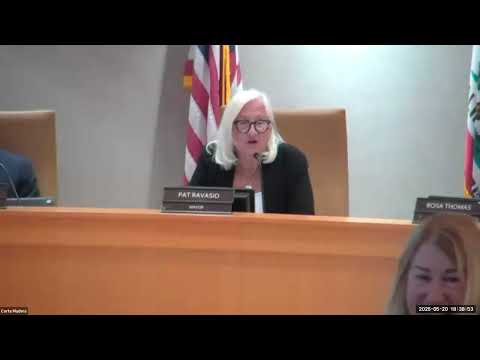
The Corte Madera Town Council held an extended workshop session Tuesday to review a draft fiscal year 2025‑26 capital projects budget and a five‑year capital plan that shows roughly $12.8 million in proposed projects next year and approximately $9 million of that expected to come from the town's sales tax override fund.
Staff presented a consolidated view that combines conventional capital improvement projects with planned expenditures from the sales tax override fund so the council could see both infrastructure spending and programmatic commitments in one place. "One of the things we wanted to do ... was include in the same table all of the expenditures from our sales tax override fund as well," the town manager said, arguing the combined view helps the council evaluate competing priorities.
The draft FY 2025‑26 work program includes resurfacing and complete‑streets work in the Madera Gardens neighborhood, the Shorebird Marsh pump station replacement, Mankey Park accessibility improvements, and preliminary work on the Lower Christmas Tree Hill complete‑streets and climate‑adaptation package. Staff noted the Shorebird Marsh pump station is 38 years old and a high priority for replacement.
Council and staff debated how to present non‑capital community commitments — such as the town's share of wildfire mitigation programs, funding for an intergenerational center, and other community services — alongside conventional CIP line items. Staff proposed a single "recurring capital project needs" line to capture smaller items and contingencies for unforeseen repairs (retaining walls, storm drain repairs, pump repairs) and programs (sidewalks, EV infrastructure).
Several councilmembers asked staff to separate strictly capital work from programmatic and one‑time community spending so the public can easily see how much is dedicated to long‑lived infrastructure versus other uses. Council member Casiza suggested moving community/miscellaneous items below a clear total CIP line so the town can track true capital commitments independently from community programming.
Specific project notes discussed at length included: - Lucky Drive cycle track: staff said the town had just secured a $450,000 TAM grant to build a two‑way protected bike lane from Pfeiffer to Redwood High School, which will likely remove some parking. Council asked staff to confirm timing with nearby projects and private development. - Marina Village berm: staff said the multi‑year, multimillion‑dollar berm project will depend heavily on grant funds (FEMA, Ocean Protection Council) and that smaller, interim mitigation measures will be required if grants are delayed. - Wildfire mitigation: the draft shows $250,000 identified for wildfire programs — about $100,000 to equalize required contributions to the Marin Wildfire Preparedness Authority and $150,000 available to fund local fire authority programs, such as additional chipper days or resident assistance for fuel reduction.
Councilmembers emphasized priorities differed across the body: some said flood control, storm drainage and climate adaptation should be the highest priorities; others pressed for renewed investment in community facilities such as the 1951 community center and Mankey Park. Staff said the draft plan will be revised to show clearer separation of capital versus community commitments and brought back for June budget hearings.