Get Full Government Meeting Transcripts, Videos, & Alerts Forever!
Get email alerts on the Irrigation Water topic
No spam. Unsubscribe anytime.
Tribal leaders and BIA say irrigation infrastructure needs persistent funding; Lander landfill closure noted as logistics factor
Summary
Committee heard that irrigation systems across the Wind River Indian Reservation are dilapidated, that BIA and tribal engineers are pursuing funding and litigation over failed repairs, and that future landfill closures will affect waste transport and costs.
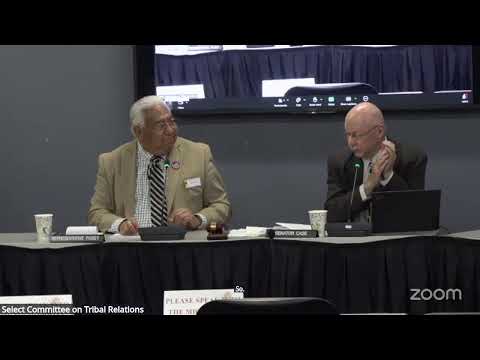
Lehi Shakespeare, Bureau of Indian Affairs regional director for the Rocky Mountain Region, told the Select Committee on Tribal Relations that the BIA has project-based funds for irrigation repairs but that some contractor work has led to new leaks and litigation.
"There is a portion of the funding that gets filtered down through the Bureau of Indian Affairs, and we have do have that money that's project based," Shakespeare said, describing funding that can be put to specific irrigation repairs.
Committee members and presenters described three interlocking issues: decayed irrigation infrastructure on the reservation, limited local capacity to operate or fix systems and competing formulas for funding and operation. Speakers said some infrastructure is more than a century old and that delivery systems are earthen ditches that lose water in transit.
Litigation and funding pathways
Shakespeare and other speakers said some recently completed projects required rework and in at least one instance are now subject to litigation because the repairs were not up to specification and are leaking. They said tribes can rank projects, apply for BIA project funding, and also pursue state water-development money, which includes severance-tax-supported funds in Wyoming.
"When they did the the 638 it, the whole program, that kinda fell by the wayside," one tribal official told the committee, describing earlier shifts in how irrigation work was managed and funded. Speakers said opportunities now exist for tribal entities to access state water-development funds and that the committees should coordinate to match projects with available grants.
Logistics and landfill closures
Speakers also flagged that county waste logistics affect tribal transport costs. A tribal solid-waste manager told the committee the Lander landfill is slated to close in 2029 and that Fremont County materials will move to Sandrock (referred to in testimony as Sandro) landfill sites, increasing haul distances and fuel and equipment needs for transfer-station operators.
Next steps
Committee members discussed holding a future session focused on irrigation and water rights, and presenters recommended inviting the Office of Tribal Water Engineers and state water-development representatives to explore matching funds, storage projects and prioritized repairs. No formal votes or directives were recorded; presenters said they will continue ranking projects and applying for available state and federal funding.