Get Full Government Meeting Transcripts, Videos, & Alerts Forever!
Get email alerts on the K12 Education topic
No spam. Unsubscribe anytime.
District leaders describe rising graduation numbers, persistent proficiency gaps and push for state support and cultural programming
Summary
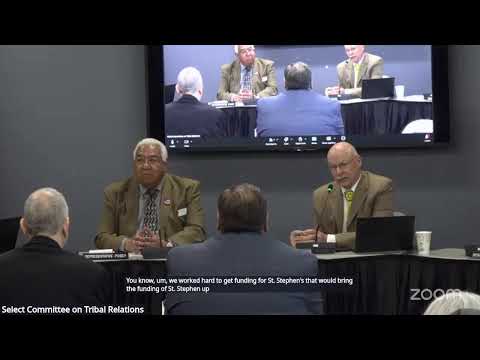
Superintendents serving schools on the Wind River Reservation told the Select Committee on Tribal Relations that while graduation numbers have improved in recent years, standardized test proficiency for Native students remains well below state averages and that sustained funding and targeted staffing are required to keep improving outcomes.
Superintendents serving schools on the Wind River Reservation told the Select Committee on Tribal Relations that while graduation numbers have improved in recent years, standardized test proficiency for Native students remains well below state averages and that sustained funding and targeted staffing are required to keep improving outcomes.
Why it matters: Superintendents said gains in attendance and graduation have come from culturally grounded programming and expanded career‑technical education, but they urged the state to consider funding priorities that recognize the reservation’s limited local tax base and heavier reliance on federal Impact Aid and other programs.
Rob Black, Wyoming Department of Education Native American liaison, gave statewide context: “about 2,700 of those identify as Native Americans, so that’s 3%” of the state student population, he said, and noted that district graduation and proficiency numbers vary widely among reservation districts.
Local superintendents highlighted programs and recent results. Elizabeth Smiley, interim superintendent at Fremont 14 (Wyoming Indian), said her district’s most recent graduating cohort rose from 60% to 76% in one year and that the district uses multi‑tiered supports, professional learning communities and partnerships with outside museums and universities to boost engagement. Deb Smith, superintendent of Fremont 21 (Fort Washakie), told the committee her district reduced the number of students with repeated unexcused absences from 56 to 6 year‑over‑year after stepped‑up outreach and home visits.
Administrators emphasized place‑based teaching and daily language instruction. Fremont 38 (Arapahoe) described a standalone Arapaho‑language program that employs five licensed Arapaho language teachers and a weekly cultural celebration; all three districts reported greenhouses, heritage weeks, drum groups and other cultural activities integrated into regular instruction.
Districts also asked the legislature and state agencies for specific support. Superintendents listed priorities such as: funding for school counselors and wrap‑around social‑emotional supports; tribal court liaison positions to improve attendance; targeted funding for career and technical education and facilities; and consideration of an Office of Indian Education within the Wyoming Department of Education. Those items were presented as requests rather than as formal committee proposals.
Committee members and superintendents also discussed federal uncertainty. District leaders said reliance on federal grants such as Title I, Title II, Title IV and federal Trio/GEAR UP programs and Impact Aid makes districts vulnerable to federal budget changes.
No formal actions were taken by the committee; superintendents invited follow‑up collaboration on targeted supports, accreditation alignment and state funding model changes.