Get Full Government Meeting Transcripts, Videos, & Alerts Forever!
Get email alerts on the Health Fraud Residential Treatment topic
No spam. Unsubscribe anytime.
Blue Cross flags 'body‑brokering' and fraudulent residential treatment schemes that moved Native patients out of state
Summary
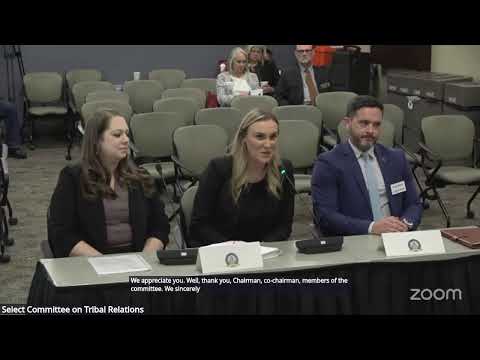
Blue Cross of Wyoming told a legislative panel May 20 that fraudsters have recruited vulnerable people — including reservation residents — onto marketplace health plans and transported them to out‑of‑state residential programs that billed insurers for treatment that in many cases was not provided.
Blue Cross Blue Shield of Wyoming told a legislative committee that a rising fraud pattern — often called “body brokering” — has trafficked vulnerable people, including some Native American reservation residents, to out‑of‑state residential treatment sites that did not deliver promised care while billing insurers for therapy, medication management and other services.
Blue Cross general counsel Raymond Redd and clinical director Amy Skalswak described a scheme the insurer first noticed in late 2024 and into 2025: people (often unsheltered or transient) are recruited or offered transport to purported treatment facilities in other states, and those centers then submitted insurance claims even when services were minimal or unsafe.
Why it mattered to the committee: testimony and documentation suggested hundreds of claims tied to residential programs in multiple states. The insurer said many marketplace enrollments tied to those claims were suspicious or fraudulent, and that the federal marketplace’s special rules for Tribal‑related plans made the fraud easier to execute.
Blue Cross said it had tracked a sharp rise of Native American plan enrollments this year (from an expected few hundred to more than 1,300) and that a large share appears to be linked to out‑of‑state residential treatment claims. Several members of the committee and Blue Cross warned that people leaving shelters or other vulnerable settings are at risk of being moved and left far from home without needed medication or follow‑up care. “He was not receiving any type of clinical counseling. He was not receiving any medical oversight,” Amy Skalswak said of 1 member who reported being held at a facility; the plan secured his return after the facility gave him a plane ticket when staff discovered he had contacted Blue Cross.
Blue Cross and the Wyoming Department of Insurance urged wider public awareness and stronger oversight. Jill Reinking, senior health policy analyst for the Wyoming DOI, said DOI staff had raised the issue with the Centers for Medicare and Medicaid Services, with members of Congress and with the NAIC. DOI issued consumer notices and is coordinating inquiries with federal regulators and the state attorney general’s office.
The insurer asked the committee for several actions: (1) encourage state and federal regulators to tighten enrollment verification on federally administered Tribal‑related marketplace plans; (2) consider legislation similar to other states that allow insurers to pause payments to suspected fraudulent providers while an investigation proceeds; and (3) adopt or revive a statutory fraud‑reporting mechanism so plans can report suspected fraud to state authorities with clear civil‑liability protections.
Committee members said the state could be a conduit for awareness and for connecting DOI, federal agencies and tribal leaders. Several committee members and Blue Cross representatives noted existing criminal prosecutions in other states tied to similar schemes and urged stronger public‑safety and consumer protections.
Ending: DOI, Blue Cross and the committee agreed to coordinate outreach to tribal communities, shelters and local social‑service providers so potential victims can be identified and returned to appropriate care; DOI and Blue Cross will continue to press federal partners (CMS, the federal exchange) for tighter verification and to explore statutory changes to speed investigations and payment holds where fraud is credible.