Get Full Government Meeting Transcripts, Videos, & Alerts Forever!
Get email alerts on the Literature Gender Representation topic
No spam. Unsubscribe anytime.
Readers stage a reflection on how male authors wrote women from Rosalind to Molly Bloom
Summary
A public reading examined recurring literary treatments of female characters — from Shakespeare’s Rosalind to Joyce’s Molly Bloom — arguing both erasure and nuanced portrayals and using excerpts to illustrate how men have shaped female roles on the page.
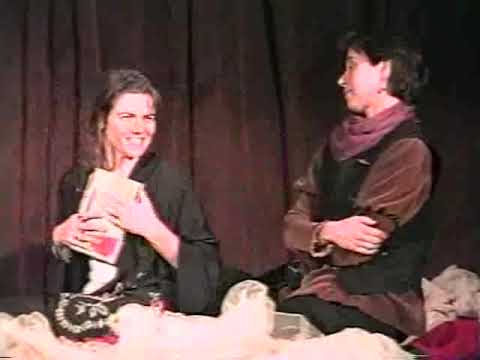
A staged reading on Oct. 11 revisited how male authors have written female characters across Western literature, using passages and commentary to show both stereotyped and complex portrayals.
The reading focused on examples ranging from Shakespeare’s Rosalind and Homer’s Penelope to James Joyce’s Molly Bloom, Tennessee Williams’s Blanche, and Hemingway’s Brett, exploring how male authors have alternately constrained and gifted women with agency on the page. The performers read long excerpts and interleaved short observations about authorship, intent and reception.
The event matters because it highlighted how literary history has been shaped by male perspectives while also pointing to individual characters that authors — even male authors — wrote with depth and emotional agency. For instance, one reader quoted the program’s opening line to frame the evening: “They are completely controlled, contrived, corralled, cajoled and courted by men,” and used Rosalind and Molly Bloom as counterexamples of female characters who speak, choose and command scenes.
Performers alternated between dramatic readings and short interpretive comments. Excerpts presented as evidence included lines from a Molly Bloom–style soliloquy — “Yes. Will I wear the rose in my hair like the Andalusian girls used?” — read to show an unapologetic, sensual female voice. Another performer contrasted that with a description of Penelope’s long wait for Ulysses, noting the passage’s rootedness in the male epic tradition: “Penelope wove and unraveled 20 waiting for Ulysses,” read during the session as an example of the passive, patient wife trope.
Speakers also staged scenes from A Streetcar Named Desire and The Sun Also Rises to compare modern depictions: one performer argued Tennessee Williams’s Blanche and Hemingway’s Brett are three-dimensional but treated differently by their creators. The discussion repeatedly returned to a central claim voiced in the reading: that although many canonical female characters were invented by men, some of those same men produced sharply observed, complex female voices.
There were no formal votes, policy decisions or directions taken — the event was a literary program consisting of readings and commentary. Organizers and performers closed the session with additional staged excerpts and brief, audience-facing remarks about continuing the conversation in future readings.
The reading did not claim institutional conclusions; rather, it presented close readings and theatrical performance as a way to surface how authorship and gender intersect in literature.