Get Full Government Meeting Transcripts, Videos, & Alerts Forever!
Get email alerts on the Land Development Mud topic
No spam. Unsubscribe anytime.
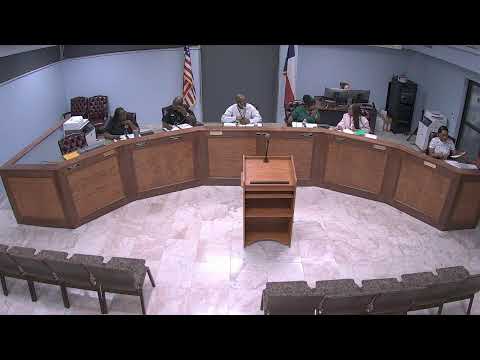
Brookshire council approves ETJ development agreement with IDV, consents to MUD creation
Summary
The City of Brookshire approved an extraterritorial-jurisdiction development agreement with IDV Development Services LLC and consented to the creation of Waller County Municipal Utility District No. 69, allowing the developer to begin the TCEQ MUD-creation process; council instructed staff and counsel to revise certain provisions before closing.
The City of Brookshire on Tuesday voted to enter into an extraterritorial-jurisdiction development agreement with IDV Development Services LLC and approved a resolution consenting to the creation of a municipal utility district that would serve the proposed Brown Tract development at the southwest corner of Interstate 10 and FM 1489.
The agreement authorizes the developer to pursue creation of a municipal utility district (MUD) and to begin the administrative process with the Texas Commission on Environmental Quality, and it establishes terms for sales-tax sharing, infrastructure reimbursement and potential future annexation by the City of Brookshire. Councilmembers voted by voice to approve the development agreement and later adopted Resolution No. 1501 consenting to the MUD; both measures passed on unanimous voice votes.
The Brown Tract proposal, presented to the council by IDV representatives and counsel, calls for a mixed-use development that would be partly inside the city’s extraterritorial jurisdiction (ETJ). The developers said the tract includes a small portion — roughly 37.5 acres — currently outside Brookshire’s ETJ that they expect to acquire and petition to add. The development would be phased, the team said, with an earliest start at the end of the year and a full build-out estimated at seven to 10 years.
Why it matters: the development agreement and the council’s consent to the MUD clear the principal procedural hurdles for the developers to finance infrastructure through a district and to seek the sales-tax sharing that underpins the project’s reimbursement plan. The council’s approvals also set terms for how and when the city might annex the area for full municipal services.
Key provisions and council concerns discussed at the meeting included language governing addition of future-acquired land to the agreement; sales-tax sharing (the draft calls for a 50/50 split of the available 1 percent sales tax over the tract); whether the city or a county would assume road maintenance after warranty; the role of the Berkshire Municipal Water District for part of the area; and the MUD’s financing structure (developers indicated a typical MUD model with tap fees and property taxes used to support bonds rather than an up-front city impact fee). The developers said they expect to finance initial infrastructure through the MUD and to seek full reimbursement under applicable state law and TCEQ rules.
Council members pressed the developers to clarify the following points: whether land acquired after the agreement would be automatically included in the agreement and the ETJ expansion process; what types of public improvements the city might require to be oversized (for which the city could share cost); the identity of proposed engineering consultants (developers said LJA and Jabiri would be engaged); and the timetable for acquisition and start of construction. Developers agreed to revise language so that any addition of land outside the Brown Tract would require city consent or a petition, and the council negotiated shortening the developers’ acquisition deadline from the draft’s one year to nine months.
The council also discussed the MUD and revenue: developers said the tract is subject to a 1 percent ESD sales tax at present and that only 1 percent is currently available for allocation; if the ESD jurisdiction changes in the future, up to 2 percent could be available and the parties agreed to add language to address proportional increases in the event more sales tax becomes available. The developers said the presumptive split would remain 50/50 if additional sales tax were available, but that final language could be added to the agreement.
Formal actions recorded in the meeting included a motion to enter into the ETJ development agreement with IDV with the stated changes and review by the city attorney (motion carried by voice vote), and adoption of Resolution No. 1501 consenting to creation of Waller County Municipal Utility District No. 69 and allowing the developer to file the TCEQ application (resolution adopted by voice vote). The motions were made and seconded on the record and approved; the meeting transcript includes the voice votes but does not record roll-call tallies of individual ayes or nays.
The developers and city staff agreed to produce a revised draft incorporating the council’s requested edits and to return the document for final review; the developers indicated they would turn revisions over to the city within days. The council also heard that executive session produced no action. No firm construction contracts or third-party financing were executed at the meeting.
The council’s approvals allow the developer to move forward with the administrative MUD-creation process at the Texas Commission on Environmental Quality and to continue entitlement and engineering work while the parties finalize contract language and mapping.