Get Full Government Meeting Transcripts, Videos, & Alerts Forever!
Get email alerts on the Emergency Communications topic
No spam. Unsubscribe anytime.
Residents report gaps in evacuation alerts, urge multiple-notification channels
Summary
At a Sierra Madre listening session on the Eaton Fire recovery, residents described late or uneven evacuation notifications and urged the city to use redundant alert methods — text and landline alerts, bullhorns, door-to-door checks and a registry for vulnerable residents.
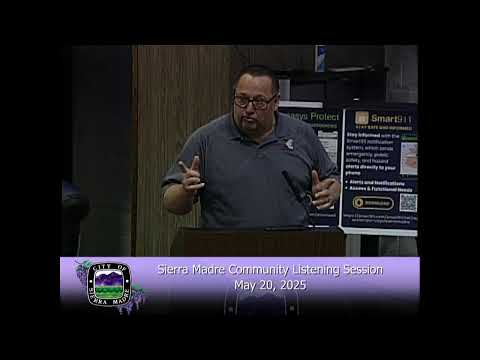
Residents at a Sierra Madre City listening session on the Eaton Fire said notification problems and reliance on cell-phone alerts left some people unaware of the fire until neighbors warned them.
"I saw no fire, heard nobody say anything about a fire," said Kevin Moore, a resident, describing that he only learned about the blaze when neighbors began yelling at about 7:30 p.m. "I didn't own a cell phone at the time."
The concern echoed throughout the meeting: several speakers said they had not received timely official notices, while others praised door-to-door checks and the recreation center evacuation site. Shirley Moore said she received no formal notification until a neighbor knocked on her door around 9:00 p.m., and recommended bullhorns and neighborhood outreach for people who do not use or check mobile alerts.
Why it matters: Early, redundant alerts can reduce the number of people who are surprised or immobilized during fast-moving wildfires and related hazards, particularly older adults and people with disabilities.
Residents suggested concrete changes: a public registry for households with elderly or disabled residents so city staff or first responders can check on them during emergencies; routine door-to-door checks in areas with limited cellular reception; bullhorns or PA-equipped patrols in the canyons; and continued use of the city notification sign-up on the city website.
City staff and consultants responded by describing existing notification channels and the limitations of any single method. Kurt Johnson, a consultant assisting with the after-action report, said the city maintains a website and a public-notification sign-up and encouraged anyone without internet or who prefers not to speak publicly to use the site's anonymous feedback option. Jose Reynoso, the city manager, said the city has one local engine and relies on mutual-aid assignments and the regional incident command center for deployment decisions during a large, multi-jurisdictional event.
Speakers who described missed notices or proposed the registry included Kevin Moore; Shirley Moore; Janine Gillan; and several other residents who urged both improved technology-based alerts and continued in-person checks.
The listening session facilitators said the comments will be logged and evaluated in an after-action report to identify corrective actions. Consultants asked participants to provide additional information on the project website, sierramadrelistens.org, and used the meeting to solicit specifics about where notifications failed and which alternatives residents preferred.
The meeting produced no formal vote or policy change; the consultants said they will make recommendations to the city for consideration in the after-action report and the city's hazard mitigation planning process.