Get Full Government Meeting Transcripts, Videos, & Alerts Forever!
Get email alerts on the Public Safety Policing topic
No spam. Unsubscribe anytime.
Streator residents press officials for answers on rising violence, policing and school safety
Summary
Residents, students and local officials met in Streator City to discuss recent shootings, police staffing, broken cameras and the limits of state law; no formal policy or vote resulted from the meeting.
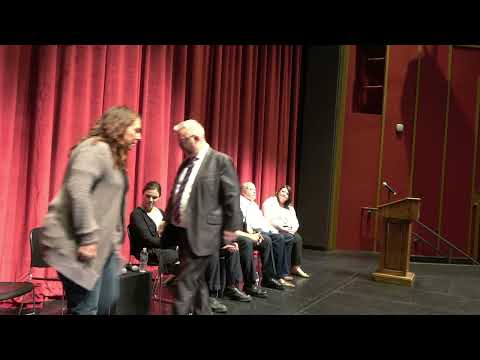
Streator City residents, students and law-enforcement representatives met to air concerns about gun violence, police staffing and school safety, with speakers urging more resources and clearer public communication.
At a community meeting, Matt Tedder, a representative of the State's Attorney's Office, said the office is limited in what it can do by state law and court decisions. "We didn't pass the SAFETY Act. The state of Illinois did. We... don't really agree with a lot of the SAFETY Act," Tedder said, adding that prosecutors and courts make individual custody decisions that can leave local officials frustrated. "We're handcuffed by it," he said.
The matter drew repeated calls for more police presence and working surveillance cameras. Residents said camera systems purchased or installed by outside agencies were not functioning in problem areas; some speakers said the likely solution discussed in the meeting — upgrading cameras — would require additional funding and could mean higher property taxes. A resident said police were visible in one neighborhood for "4 days in a row, night and day," and other speakers described repeated 911 calls to junior-high schools for disturbances, prompting questions about why officers are being asked to respond to school incidents.
Why it matters: Participants said rising violence and frequent calls for police response are affecting whether people — including recent arrivals and students — feel safe living in Streator City. A high-school senior told the meeting, "We shouldn't have to fear in this town because of the police here." That comment captured both concern about public safety and concern about police-community relations expressed by other speakers.
What officials said: Tedder described the prosecutor's role as largely reactive: his office becomes involved after crimes have occurred and must build prosecutable cases. A law enforcement official who answered questions at the meeting said that when someone calls, officers "have to respond. Period," describing school-related calls as ranging from upset parents to administrative incidents the school asks police to handle. The official also said staffing levels constrain the department's ability to pursue every case immediately and that officers are sometimes deployed to provide event security and supervision.
Discussion, not a decision: The meeting produced no motions or formal votes. Speakers discussed possible responses including community-run violence-prevention groups, multiagency family- or victim-support centers cited from other cities, better camera systems, and more community reporting to help police. Multiple residents and officials emphasized the limits of local authority: speakers pointed to state-level law (referred to in the meeting as the "SAFETY Act") and court custody decisions as constraints on local prosecution and detention.
Additional details: A speaker said the prosecutor's office since 2024 had received 1,375 reports submitted by the Ottawa Police Department and 479 reports submitted by Streator (quoted from meeting remarks). One resident referred to a recent homicide on Main Street that is under active investigation and said the office could not release additional details. Several speakers urged public statements from city leaders to reassure new residents and to counter social-media narratives about who is responsible for violence.
Next steps and context: Participants described plans to form local violence-prevention groups that would focus on youth engagement and referral to services; no formal assignment to city staff or timetable was stated. Officials said they would continue investigations and prosecutions as cases develop. The meeting highlighted friction between community expectations, the practical limits of local enforcement resources and the constraints of state law and judicial decisions.
Ending: The meeting closed without formal action; speakers and some attendees said they would continue organizing community-led prevention efforts and request follow-up communications from city leaders and law-enforcement agencies.