Get Full Government Meeting Transcripts, Videos, & Alerts Forever!
Get email alerts on the Right Of Way Parking Permit topic
No spam. Unsubscribe anytime.
Carmel committee weighs expanded right‑of‑way parking ordinance, new fees and updated micro‑mobility definitions
Summary
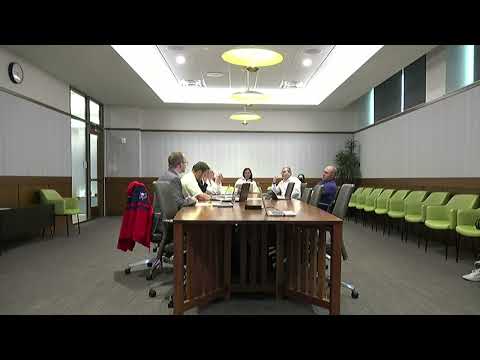
The Land Use and Special Studies Committee met May 21 at the Carmel Library to review a proposed update to the city’s right‑of‑way parking ordinance (draft Section 6.63), which would expand prohibitions to include certain equipment placed on sidewalks, multiuse paths, bicycle lanes and roadways, revise permit responsibility and fee schedules, clarify exceptions and enforcement roles, and modernize micro‑mobility definitions.
The Land Use and Special Studies Committee met May 21 at the Carmel Library to review a proposed update to the city’s right‑of‑way parking ordinance (draft Section 6.63), which would expand prohibitions to include certain equipment placed on sidewalks, multiuse paths, bicycle lanes and roadways, revise permit responsibility and fee schedules, clarify exceptions and enforcement roles, and modernize micro‑mobility definitions. Sergei, city attorney, led the ordinance review; Jeremy Cashman, chief infrastructure officer, and Mike Halvall, director of DOCS, answered operational questions. No formal vote was taken.
Committee members and staff said the draft broadens the ordinance beyond motor vehicles to cover ‘‘equipment’’ — defined in the draft as ‘‘any tool, fixture, piece of construction equipment, or object placed on, blocking or obstructing any portion of city sidewalk, multiuse path, bicycle lane or roadway.’’ Sergei said the change was intended to capture items such as lifts and other non‑motorized construction equipment that can block pedestrian and bike facilities: "Equipment is defined in subsection a in definitions and this is any tool fixture piece of construction equipment, or object placed on blocking or obstructing any portion of city sidewalk multiuse path, bicycle lane or roadway."
The draft includes a list of exceptions discussed at length: city‑owned vehicles performing city business; city‑contracted vehicles displaying a contractor permit; vehicles and placements approved by the Board of Public Works and Safety (BPW) for permitted events; operations under an emergency declaration; and utility vehicles working in recorded utility easements or performing emergency repairs. Sergei said the emergency exception should cite state law and agreed to add a statutory reference: "It actually has to be an emergency declaration pursuant to state law."
Committee members debated who should issue and manage the new permits. Staff told the group that engineering staff and the existing right‑of‑way permitting process should handle these permits rather than splitting responsibility with DOCS. The committee signaled general support for consolidating right‑of‑way and parking permitting under Engineering so that permits and enforcement are co‑located with other infrastructure approvals.
Permits and fees: The draft proposes a staggered permit cost to encourage shorter occupations of city infrastructure: Sergei described an example schedule in the draft — $100 for a one‑day permit, $150 for two days, $200 for three days, with each additional day beyond three increasing by $100 (a seven‑day occupancy would total roughly $600 under that stacking approach). The group discussed enforcement and gaming risks if permit fees are too low. Jeremy Cashman said enforcement capacity is limited: "We're not gonna be able to enforce all of this." Several members urged higher per‑day penalties or a rule that occupations beyond a short threshold must convert to a right‑of‑way permit with bonding and restoration requirements.
Display and enforcement: Staff proposed allowing electronic permits that can be shown on demand; several councilors pressed for a physical display at the site to reduce nuisance calls and speed enforcement. The committee generally favored requiring on‑site proof of permit (printed or shown on demand) so constituents can confirm lawful activity when they call. The draft designates enforcement authority to the Carmel Police Department, city engineering inspectors and code enforcement officers (or their designees).
Penalties and damage: The draft retains an elevated penalty schedule from prior drafts — $200 for a first offense, $250 for a second and $2,500 for subsequent offenses — higher than the prior amount. The ordinance would also require a permit holder to reimburse the city for restoration work if placement or equipment damages sidewalks, paths or roadways; staff said requiring pre‑construction photos for permitted projects would help resolve damage disputes.
Lane closures, events and BPW: Staff and members agreed that full lane closures and significant traffic detours require more extensive review and coordination. The committee asked staff to reconcile the draft’s lane‑closure language with BPW practice. Engineering staff noted that some private development and utility work is already handled through BPW approvals and the right‑of‑way permitting process; several members suggested any closure beyond a short occupancy should be handled as a right‑of‑way permit rather than under this ordinance.
Micro‑mobility and multiuse paths: Councilors and residents pressed staff to modernize vehicle and device definitions. Members noted the draft’s language could accidentally classify class 1 and class 2 e‑bikes (which assist up to 20 mph) as motorized vehicles subject to prohibition. The committee directed staff to update definitions and classifications for Segways, e‑bikes and other micro‑mobility devices so they reflect current industry classes. Staff confirmed that the draft treats multiuse paths — including the Monon — consistently with sidewalks and roadways for the permit and closure rules.
Other discussion and next steps: A councilor raised a constituent request about banning full headphones on the Monon trail; staff and councilors said enforcement would be difficult and did not pursue the idea. Members also asked staff to clarify seasonal or weather‑related flexibility in permit days (for example, winter months or days lost to weather), to consider a short maximum duration for the simpler parking/placement permit (with longer work moving to the bonded right‑of‑way permit), and to bring clarified BPW and lane‑closure language back to the committee. Sergei said he will add the statutory citation for emergency declarations and incorporate the committee’s exceptions and micro‑mobility edits.
The committee did not take a vote. Staff were directed to revise the draft ordinance to: add the state emergency declaration citation, update micro‑mobility definitions (including e‑bike classes), reconcile lane‑closure language with BPW practice, and refine the fee and bond structure for longer occupations. A revised draft will return to the committee for further review.