Get Full Government Meeting Transcripts, Videos, & Alerts Forever!
Get email alerts on the Special Education topic
No spam. Unsubscribe anytime.
Tewksbury officials warn rising special-education costs are straining district budget; ask state for relief
Summary
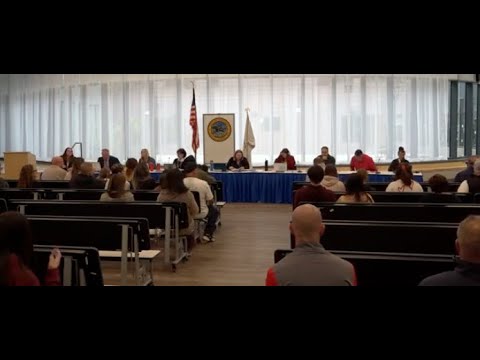
Tewksbury — Superintendent Terry Regan told the School Committee on Tuesday that escalating special-education needs and the costs of servicing them have put the district under “financial pressure to meet all of our students' academic and social emotional needs.”
Tewksbury — Superintendent Terry Regan told the School Committee on Tuesday that escalating special-education needs and the costs of servicing them have put the district under “financial pressure to meet all of our students' academic and social emotional needs.” Without additional relief from the state, she said, “reductions are needed in our other areas of our budget.”
The presentation, led by Regan and Director of Special Education Candice Tharrod with budget examples from district finance staff, said the district faces unpredictable tuition increases for out-of-district placements and sharply higher transportation costs. The presenters told the committee that 33 unexpected new or changed tuitions since budget certification have added about $3.8 million in tuition costs this year alone.
Regan and finance staff said the district has used carryover funds from its circuit-breaker reimbursement account to cover some overages but that the pool has been largely exhausted. Officials described circuit breaker as the state reimbursement program for high-cost special-education expenses and noted the program’s threshold this year was about $52,400 per eligible student (projected at $53,400 for the next fiscal year). Under a fully funded circuit-breaker model, instructional and tuition dollars above that threshold would be reimbursed at 75 percent; this year the state reimbursed transportation at a reduced rate — about 44 percent — because total claims exceeded the state appropriation.
The district gave concrete examples: one student whose tuition the district had budgeted at roughly $132,000 had needs that required a more restrictive placement during the school year, increasing the tuition to about $455,000. Finance staff said three such individual cases in the sample represented roughly $660,000 in unexpected tuition costs. Across the district, they said, 33 unexpected or changed tuitions identified as of late March cost the district about $3.8 million.
Tharrod described district work to address service delivery and compliance. She told the committee the state had earlier placed the district in "needs intervention" on inclusion for 2023–24 but that after district-led root-cause analysis and corrective work Tewksbury moved out of that determination and is “meeting requirements for the 2024–25 school year.” Tharrod said the department is building a clearer continuum of in‑district pathways, stronger tiered supports and better family communication so more students can be served locally when appropriate.
Regan and Tharrod listed two types of steps the district will take locally and at the state level: internally, the district will reorganize and expand in‑district pathways so consistent programs are available across buildings, improve tiered instruction and update family communications; at the state level, the district asked legislators to increase special-education funding, raise the circuit-breaker appropriation and, in general, “make the bucket bigger” and raise reimbursement percentages.
Committee members pressed for detail on scale and impact. Committee member questions summarized in the meeting highlighted that Tewksbury now has more than 90 out‑of‑district students (up from the mid‑60s in prior years) and that special-education spending represents a significant portion of the district’s budget when all funding sources are counted. Town officials and the regional superintendent network were described as already briefed; Regan said the town manager had attended a legislative breakfast where superintendents presented the same information to legislators.
The presentation included regional comparisons (Methuen, Woburn and other districts) showing similar trends: tuition and transportation costs rising faster than state reimbursements. District staff said private special-education programs can request program-reconstruction rate increases and that the Office of Special Education (OSD, as referred to in the presentation) set tuition rates that increased sharply in recent years, citing a roughly 14 percent increase in the 2023–24 school year in OSD‑approved program rates.
Regan urged the committee and community to support legislative fixes while the district simultaneously strengthens in‑district services. “All our students have varying needs,” she said. “Some will need more restrictive services in district and some will need out-of-district services. Under the law, schools are obligated to pay for the services needed for special education students.”
The presentation concluded without a formal vote but with clear direction from the committee: continue work with CPAC (special‑education parent advisory), continue local program development next year, and press state legislators for funding changes that would reduce pressure on the town budget.
What’s next: District staff said they will pursue multi‑year program changes to expand in‑district pathways next year, continue to brief municipal officials and legislators, and report back to the committee with progress on program realignment and the effect of any legislative changes.