Get Full Government Meeting Transcripts, Videos, & Alerts Forever!
Get email alerts on the Employment Religious Exemption topic
No spam. Unsubscribe anytime.
Appeals court hears challenge to UMass Memorial COVID-19 vaccine policy over defendant naming, religious exemption and undue-hardship claims
Summary
The Massachusetts Appeals Court on May 23 heard argument in June v. UMass Memorial Healthcare over whether the correct employer was sued, whether the plaintiff's vaccine refusal was a sincerely held religious belief, and whether the hospital showed undue hardship in denying an exemption.
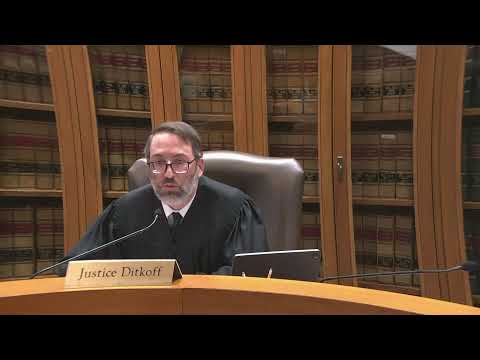
The Massachusetts Appeals Court heard oral argument Friday in an appeal by Rachel Jaeyoon challenging summary judgment for UMass Memorial over her COVID-19 vaccine-related termination. The three-justice panel — Justice Joseph Ditkoff, Justice Sabida Singh and Justice Paul Smith — pressed both sides on (1) whether the correct employer was named, (2) whether Jaeyoon's exemption request was based on a sincerely held religious belief and (3) whether the employer carried its burden to show undue hardship from an accommodation.
The issue matters because it raises both employer-liability questions under state anti-discrimination law and how courts draw the line between medical objections and religious objections in workplace COVID-19 policies. Appellant counsel said the case could show that a parent organization that sets vaccine policies and denies exemptions can be liable even if a subsidiary wrote paychecks; appellee counsel argued the record showed the wrong corporate defendant was named.
Appellant counsel Attorney Scott, representing Rachel Jaeyoon, told the panel the system-level committee implemented the policy, reviewed exemption requests and denied Jaeyoon's request: "It was also that same committee that denied her religious exemption." Scott argued that, under Chapter 151B, "a person is liable under that or entity is liable under that section if they merely aid and abet alleged discrimination," and that the system therefore could be sued even if a subsidiary was the immediate employer.
Bob Kilroy, counsel for UMass Memorial Healthcare Corporation, responded that the summary-judgment record identified different corporate entities and that "there's no such entity as a UMass moral health care system, as Judge Wren found." Kilroy said the record lacked an aiding-and-abetting allegation and discovery on that theory, and that the documentary evidence in the record points to a specific hospital employer and the corporate parent, UMass Memorial Healthcare Corporation.
The panel repeatedly probed the documentary record. Justice Sabida Singh asked why a termination letter on system letterhead would not create a jury question about who employed Jaeyoon; Kilroy acknowledged the letter used a trade name but said the other employment documentation pointed to the hospital entity and the corporation as parent. The panel observed that aspects of joint-employer or parental-liability tests would require more record development if that issue were to create a trial question.
On the religious-exemption question, Kilroy argued Jaeyoon's exemption relied on medical assertions about vaccines (for example, that the vaccines "alter her DNA" or contain "genetic coding proteins") and cited court rulings finding medical or conscience assertions insufficient to create a legally protectable religious accommodation. Kilroy told the court that in the record, when asked whether she claimed any scripture as the reason she refused the vaccine, Jaeyoon answered "no," and counsel cited District Court decisions that courts have treated as showing isolated moral teachings do not automatically create an accommodation right.
Scott disputed that the exemption was purely medical and said Jaeyoon cited God and scripture in her own exemption materials, arguing that at summary judgment those factual disputes about sincerity and religious nature should be for a jury. "There's at least evidence that part of her exemption was based upon religion," Scott said, adding that whether beliefs are sincerely held is a jury issue when the record contains conflicting evidence.
Both sides also debated undue hardship and accommodation alternatives. Kilroy said the hospital considered the duties of a surgical technician working in operating rooms with vulnerable patients and cited decisions holding vaccination may be more effective than masking and testing alone in preventing transmission. He told the court that Jaeyoon could not perform her duties remotely and that the record did not show feasible reassignment to other positions was requested or available.
The panel requested additional authority and briefing. Justice Joseph Ditkoff invited both parties to submit any cases they wanted the court to consider, including unpublished opinions, "by the end of next week," and asked that the parties provide the actual opinion when the decision is unpublished. The court took the arguments under advisement and adjourned until Monday, June 2, at 9:30 a.m.
The arguments on appeal centered on legal thresholds for surviving summary judgment: whether the correct defendant was named and developed sufficient discovery on aiding-and-abetting liability; whether Jaeyoon's exemption materials present a triable issue about a sincerely held religious belief; and whether the employer produced evidence that denial of an exemption was justified by undue hardship. The court did not rule at the hearing; it asked for supplemental filings and set a briefing deadline and a next argument date.