Get Full Government Meeting Transcripts, Videos, & Alerts Forever!
Get email alerts on the Housing Development topic
No spam. Unsubscribe anytime.
Planning commission recommends council amend Marketplace development agreement to encourage return of housing
Summary
The Emeryville Planning Commission on May 22 recommended City Council approve an amendment to the Marketplace development agreement designed to restore the option for residential development and tie a $20 million affordable‑housing contribution to specific development milestones.
The Emeryville Planning Commission on May 22 voted to recommend City Council approve an amendment to the development agreement for the Marketplace redevelopment project that aims to restore the option for residential development on Parcels A and B and to tie the previously negotiated $20 million housing contribution to specific construction and permitting milestones.
What the amendment would change: the proposed amendment extends the development agreement term (which had been set to expire in January 2028) to March 2029 or 12 months after a building‑permit application for an identified residential project on Parcel B. The amendment also attaches milestone deadlines to Parcel A and Parcel B residential submittals: study‑session submittal, application for final development plan, building‑permit application and permit issuance, each within scheduled windows tied to the amendment.
How the $20 million would be handled: the development agreement trade that previously shifted the obligation to build affordable units (and the associated $20 million payment) to another parcel (Parcel F) would be tolled (delayed) and the housing contribution would be tied to the new Parcel A milestones. If the developer meets the milestones and builds residential units, the city would credit fees as appropriate under the city’s impact fee rules. If the developer declines to build residential and proceeds with the non‑residential entitlement already in place, the remaining outstanding housing payment(s) become due earlier (at building permit application) rather than at final certificate of occupancy; missed milestones trigger payment acceleration plus an annual 4% escalation tied to the city’s investment yield.
Background and rationale: the Development Agreement and prior entitlements for the Marketplace site date to a 2008 PUD and subsequent approvals. Parcel A had previously been entitled for residential (a 2008 PUD had contemplated roughly 167 units on Parcel A), but a later amendment shifted housing obligations to other parcels and allowed a large research and development (R&D) project for Parcel B. In the intervening period the market for large R&D and lab space has softened; staff said the DA amendment is designed to create an avenue to return housing to the site if market conditions allow.
Staff analysis and findings: Community Development Director Chad Smalley told commissioners the requested change is consistent with the General Plan designation for the Christie Core (mixed‑use/transit hub) and with policy P2, which supports a mixed‑use neighborhood with housing to bring nighttime vitality. Staff recommended the commission make the two required findings (consistency with the General Plan and that the amendment is in the public interest) and forward a resolution recommending that City Council approve the DA amendment as drafted.
Commissioner discussion: commissioners who spoke voiced support for restoring the opportunity for housing and for the DA’s milestone approach. Commissioners noted the long‑standing need for housing in the city, the high cost and time required to deploy affordable housing funds, and the potential economic benefits of either timely non‑residential investment or accelerated residential construction. Commissioners asked staff for parcel‑specific details; staff said Parcel A’s earlier PUD had allowed about 167 units and the amendment’s timeline and milestones were calibrated to provide reasonable time for study sessions, final development plan submittal and building permit application.
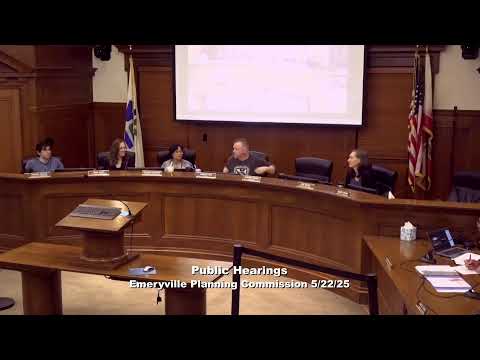
Action: On a motion by Commissioner Gould, seconded by Commissioner Chafe, the commission voted to recommend Council approve the DA amendment; Commissioner Rivera recused himself because he lives within 500 feet of the parcels in question. The motion passed by roll call.
Next steps: the Planning Commission’s recommendation will be transmitted to the City Council for final action; the DA amendment requires council approval by ordinance (first and second reading). If approved by Council, the amendment will allow the developer time to pursue residential studies and entitlements under the milestone schedule, with payments and credits handled per the amendment’s terms.