Get Full Government Meeting Transcripts, Videos, & Alerts Forever!
Get email alerts on the Compensation topic
No spam. Unsubscribe anytime.
Rutherford County committee sends $8.2 million pay-study request to budget committee
Summary
Public Safety Committee voted to forward a compensation plan that would cost about $8.2 million to the county budget office for review, targeting higher pay to improve recruitment and retention for first responders.
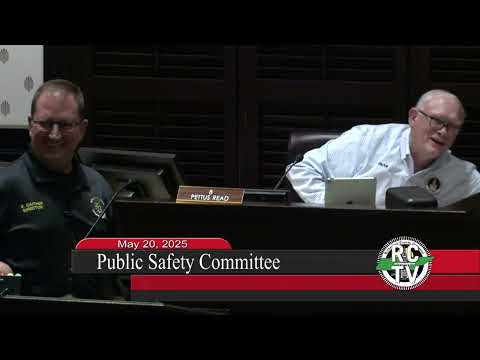
Rutherford County Public Safety Committee members voted May 20 to send a compensation analysis and a proposed $8.2 million target to the county budget office for further study and possible inclusion in the fiscal-year budget.
The request, presented by Mr. Beverly during the committee meeting, lays out options to move county pay toward a 70th-percentile target among peer jurisdictions and to recognize more experience and longevity in pay steps. Beverly told the committee, “So we’re asking for an $8,200,000 increase to the budget.”
The plan breaks costs into several components. Beverly said increasing longevity recognition would cost about $800,000 a year; expanding recognized years of experience to 10 years would cost about $1.5 million a year; and bringing multiple public-safety classifications toward a 70th-percentile pay target would require roughly $5.9 million. The presenter outlined alternatives such as a 3 percent across-the-board lift (roughly $3 million) combined with targeted increases for EMS and fire to reduce the immediate total.
Commissioners framed the request as a recruitment and retention step. One commissioner urged prompt action, saying the county should be “proactive” to avoid turnover and overtime costs. Chairman Reed and other commissioners also said they supported sending the report to budget to give the finance office a concrete figure to analyze.
The committee motion to forward the proposal to the budget office — specifying the $8.2 million figure — passed on a roll call vote.
The committee did not adopt specific implementation language or change tax rates; the item was forwarded to the budget office for analysis of funding sources, tax impact and timeline. Beverly and members noted that the budget committee must decide whether the $8.2 million can be accommodated without raising the tax rate, or whether phased or partial approaches are needed.
What happens next: the budget office will review the $8.2 million request, estimate revenue impacts and propose how, if at all, the increases could be funded. Committee members said they intend to use the budget office report as the basis for future policy decisions rather than adopting a binding compensation change at this meeting.