Get Full Government Meeting Transcripts, Videos, & Alerts Forever!
Get email alerts on the Safe Speeds Bellevue topic
No spam. Unsubscribe anytime.
Bellevue directs staff to pursue lower arterial speeds, launch outreach on 'Safe Speeds Bellevue'
Summary
Council voted May 20 to ask staff to start public outreach and draft an ordinance to lower speed limits on four arterial corridors as part of a 'Safe Speeds Bellevue' program; staff will test target‑speed reductions on selected streets and return with findings and recommendations.
Bellevue City Council on May 20 directed city transportation staff to begin outreach and prepare ordinance language for a Safe Speeds Bellevue program that would lower posted speed limits on a small set of arterial streets and evaluate effects before recommending wider city action.
What council approved
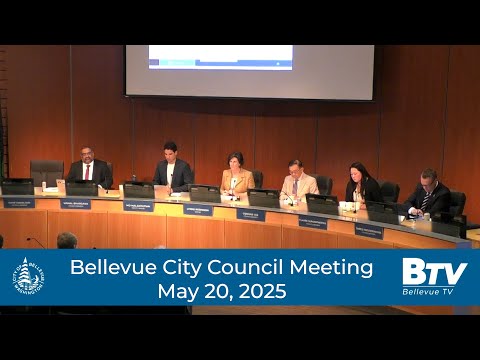
Deputy Mayor Malakoutian moved and the council approved a measure directing staff to initiate outreach on the Safe Speeds Bellevue program and to prepare an ordinance that would lower the speed limit on four arterial corridors identified in staff materials. The council approved the motion by voice vote.
Pilot approach and measurement
Transportation staff described the initiative as a two‑stage approach: (1) a near‑term deployment reducing posted speed limits on four arterial corridors to staff’s target speeds, combined with public outreach, and (2) a later, citywide evaluation and recommended target‑speed policy for all streets at 30 mph and above. Staff said the pilot corridors were chosen based on pedestrian crossing density, mode separation (sidewalks and bike facilities) and adjacent land‑use activity — factors that the department used to derive recommended target speeds for specific corridors.
Data and enforcement questions
Staff said the primary short‑term metric will be measured speed changes on the pilot corridors; staff will return later this year with data and recommendations. Councilmembers pressed staff on enforcement: several members said the program’s effectiveness will hinge on enforcement and on engineering countermeasures to help achieve the posted speeds. One councilmember asked whether targeted high‑speed drivers (street racers) can be addressed through enforcement resources and other measures.
Next steps
Transportation staff will conduct public outreach on the pilot corridors, implement the posted speed changes after outreach, collect speed and safety data, and return to council with findings and a recommended citywide target‑speed approach. The motion passed without objection at the May 20 meeting.