Get Full Government Meeting Transcripts, Videos, & Alerts Forever!
Bellevue council presses staff for trade-offs on Wilburton TOD code after heated public comments
Summary
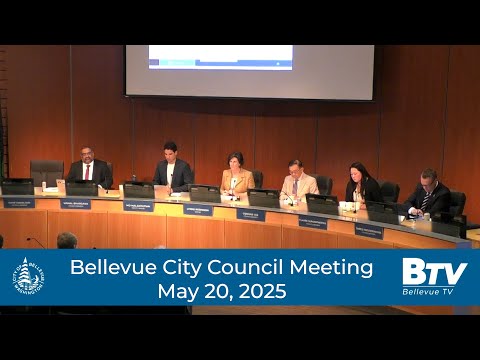
Bellevue City Council members and staff on May 20 debated final design and implementation choices for the Wilburton transit‑oriented development land‑use code amendment (LUCA), after nearly two hours of public comment from property owners, housing advocates and business groups.
Bellevue City Council members and staff on May 20 debated final design and implementation choices for the Wilburton transit‑oriented development land‑use code amendment (LUCA), after nearly two hours of public comment from property owners, housing advocates and business groups.
Why it matters: The council is balancing a push to maximize housing capacity in Wilburton with demands for a walkable, shaded public realm and durable affordable‑housing commitments. Changes to street requirements, sidewalk widths, open‑space minimums and fee rules will affect how many housing units get built, what they cost to build, and who can live there.
Staff and planning commission approach and what council asked for
Development Services staff said the LUCA implements the Wilburton vision adopted in the city’s 2024 comprehensive plan updates (Ordinance 6802 and Ordinance 6811) and that the planning commission’s recommendation leans toward maximizing housing capacity in the TOD core. Staff described a building‑envelope approach that allows larger tower floor plates than downtown — for example, a proposed 16,000 gross‑square‑foot residential floor plate ceiling and a 30,000 gsf nonresidential plate — and removes the downtown‑style upper‑level stepbacks in order to preserve development capacity.
Staff also described the package of transitional incentives and temporary “catalyst” benefits intended to help early projects: a 5% affordable‑housing requirement for the first 500 units (or until 06/01/2026, whichever is later), a 25% fee reduction on the first 500 units (with vesting up to 1,000 units), and CPI‑freeze provisions that delay inflation indexing until additional activity or set dates. Staff said separate commercial catalyst and life‑science fee…
Already have an account? Log in
Subscribe to keep reading
Unlock the rest of this article — and every article on Citizen Portal.
- Unlimited articles
- AI-powered breakdowns of topics, speakers, decisions, and budgets
- Instant alerts when your location has a new meeting
- Follow topics and more locations
- 1,000 AI Insights / month, plus AI Chat