Get Full Government Meeting Transcripts, Videos, & Alerts Forever!
Get email alerts on the Digital Kiosks topic
No spam. Unsubscribe anytime.
Committee backs downtown interactive kiosks, citing wayfinding and business benefits
Summary
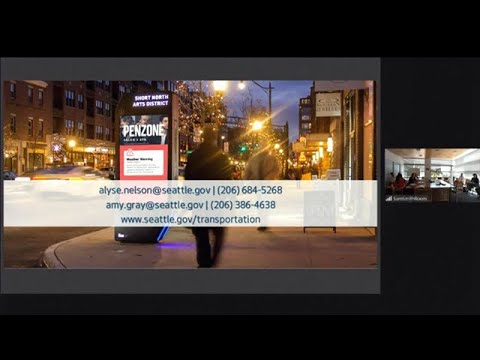
Committee members recommended adoption of Resolution 32170 on May 22, giving conceptual approval for the Downtown Seattle Association (DSA) to install, maintain and operate interactive IKE kiosks in public rights‑of‑way in the Metropolitan Improvement District and participating business improvement areas.
Committee members recommended adoption of Resolution 32170 on May 22, giving conceptual approval for the Downtown Seattle Association (DSA) to install, maintain and operate interactive IKE-branded kiosks in public rights-of-way in the Metropolitan Improvement District and participating business improvement areas.
Supporters told the Governance, Accountability and Economic Development Committee the kiosks would provide multilingual wayfinding, emergency-call access, free Wi‑Fi and a platform to promote local events and small businesses; SDOT staff and central‑staff analysts said the term‑permit ordinance includes maintenance, siting and content limits. Committee chair Sarah Nelson moved the resolution and the committee approved it 5-0.
The kiosks, proposed by the Downtown Seattle Association in partnership with a vendor identified in materials as IKE, are structured as a programmatic term permit rather than individual location permits. Central staff summarized the administration proposal as a two‑step process: (1) a committee-level resolution granting conceptual approval and (2) an ordinance establishing the programmatic permit with detailed conditions and a mayoral memorandum of understanding to address operating terms and revenue sharing. SDOT staff said final installation of any individual kiosk will require separate site‑specific permitting and review.
Supporters emphasized economic benefits. "These kiosks will dramatically improve way finding," said Chris Johnston of the Downtown Seattle Association, adding the devices would connect visitors and residents to local businesses and cultural sites. Michael Woody, chief strategy officer at Business Seattle, said the kiosks are "a dynamic tool to enhance the visitor experience and promote local businesses and support the broader economic recovery." Elden Tam with Friends of Waterfront Park said the kiosks are "self funding, with no city resources to maintain and operate them."
SDOT and central staff described multiple conditions in the proposed ordinance: a 16.5‑year first phase (with a possible later phase requiring city approval), prohibitions on locating kiosks in certain special districts (waterfront, shoreline, historic preservation districts), standards to protect street trees, maintenance and bonding/insurance requirements, reporting obligations, prohibitions on off‑site advertising under existing sign code except as authorized by the permit, controls on brightness and motion (no flashing or strobe effects), and explicit limits on data collection and retention. SDOT said the term permit will require a public‑benefit mitigation plan — for example, streetscape improvements, trash removal and decluttering of block faces where kiosks are installed.
Central staff noted the Seattle Design Commission reviewed the proposal and voted 5‑4 against recommending it while offering design recommendations and public‑benefit conditions. Staff also said the mayor would sign an MOU with DSA that governs the programmatic details, including revenue sharing with BIAs that participate.
During discussion, committee members asked about vandalism, data collection and how neighborhood business districts without established BIAs would receive benefits. SDOT and DSA representatives said the permittee (DSA) and its vendor would be responsible for maintenance and cleanup; SDOT staff said the ordinance explicitly prohibits the kiosks from collecting personally identifiable information except when a user explicitly chooses a selfie or other opt‑in function. Councilmember Sara Nelson and others noted the program is intended to catalyze block‑level improvements (flower baskets, bike racks, bench repairs) at no direct city maintenance cost.
The committee voted to recommend adoption of Resolution 32170; roll call showed Councilmembers Rivera, Solomon, Hollingsworth, Kettle and Chair Nelson voting in favor. The committee sent the recommendation to the June 3 full City Council meeting for final consideration. The draft programmatic term‑permit ordinance will return to committee for further briefing and potential action later this summer.
Supporters said kiosks would help visitors and residents navigate downtown and highlight local businesses; opponents raised concerns during public comment about street clutter, moving images and off‑premises advertising. SDOT and central staff said the ordinance language includes limits intended to address those issues and that further implementation details will be finalized during the installation permitting phase.