Get Full Government Meeting Transcripts, Videos, & Alerts Forever!
Get email alerts on the Cra Budget topic
No spam. Unsubscribe anytime.
Salt Lake City CRA previews $86M FY2025-26 budget, proposes $9M for affordable housing amid expiring project areas
Summary
City staff told the Community Reinvestment Agency Board on May 20 that the mayor's recommended FY2025-26 CRA budget projects about $86 million in revenue and proposes about $9 million for affordable housing while noting multi‑million dollar shortfalls as the Depot and Granary project areas expire.
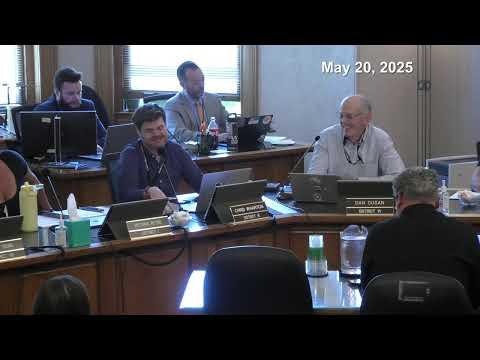
Salt Lake City’s Community Reinvestment Agency Board received an overview on May 20 of the mayor’s recommended fiscal year 2025–26 CRA budget, which staff said projects roughly $86 million in agency revenue and proposes about $9 million for affordable housing programs.
The budget matters because two major project areas are expiring and will reduce annual tax‑increment revenue, staff said, forcing the CRA to rely more on program income, revolving loan repayments and carryover balances while shifting some administrative costs into housing and program funds.
Danny Poue, director (speaking for CRA staff), told the board “our total revenue within the agency budget is just over $86,000,000,” and that more than $50,000,000 of that is already spoken for by obligated expenses such as taxing‑entity payments and debt service. Staff said the Depot District’s expiration removed roughly $6,000,000 in annual increment from the agency’s receipts and noted the Granary District also expires this year.
Staff outlined how the budget breaks down. The recommended package shows about $9,000,000 proposed for affordable housing allocations. Jen Bruno, council staff, summarized staff proposals: roughly $3,500,000 would be set for a competitive Notice of Funding Availability (NOFA) for the housing development loan program; about $2,500,000 would be targeted to a deeply affordable project aligned with mayoral and council priorities; $1,000,000 is proposed for housing property disposition at the DI site in Sugar House to secure deeply affordable units; another $1,000,000 is proposed for wealth‑building housing opportunities; and $232,000 would be the first‑year allocation from housing funds toward administrative expenses.
Staff said other revenue sources and allocations include program income and a commercial revolving loan fund. The presentation lists $3,300,000 of recycled funds proposed to remain in the commercial revolving loan fund for new commercial lending, an $850,000 reserve for Gallivan Center maintenance and repairs, and roughly $7,300,000 carried forward in a transition holding account from FY2025. Staff also identified a $3,000,000 debt‑service payment tied to the North Temple viaduct passed through to the city.
On projects and discretionary spending, staff proposed a $1,000,000 program allocation to begin setting aside funds for the ballpark (program level, not a specific project), $750,000 for ballpark activation and maintenance, $1,000,000 identified for State Street infrastructure needs, $500,000 for renovations at the Whipple property to prepare it for lease, and smaller arts and events allocations across project areas. For Japantown art, staff said there is $336,000 currently reserved and that an additional $37,000 shown in one slide reflects a Block 67 contribution; the transcript indicates a typographical presentation inconsistency that staff acknowledged and said they would reconcile.
Staff discussed the composition of CRA funds and constraints. Jen Bruno explained that primary housing funds are statutorily required transfers from project areas, while secondary housing and the housing development fund are discretionary; she also noted interlocal agreements with the school district and county that prescribe how some housing dollars must be used. Bruno said there is no legal prohibition on the city transferring general‑fund dollars to cover CRA administrative costs, noting several other Utah cities do that, but she did not propose a specific transfer at the meeting.
Board members pressed staff on several points, and staff recorded clarifications and follow‑ups. Key items raised by board members and staff responses include: - Project‑area expirations: Depot District already expired and removed an estimated $6,000,000 in annual increment; Granary District will expire in the current year. Staff said newer project areas and two forthcoming HTRZ project areas (900 South and Rio Grande) are not yet reflected in this budget and would be included later via budget amendment when increment is realized. - West Side Community Initiative boundary: staff repeatedly said WCI funds must be spent “west of I‑15.” A board member disputed the precise boundary (train tracks vs. I‑15); Tracy Tran (staff) confirmed “West Of I‑15” during the meeting, and staff said they would double‑check legal boundaries and follow up. - Arts funding and carryover: board members asked why previous arts allocations (including for Japantown and North Temple) had not been spent; staff said some amounts are carryover funds and that coordination with the Salt Lake Arts Council and project‑specific issues affected timing. Staff offered to report back on execution timelines and to coordinate with the Arts Council on design and delivery. - Flexibility and reporting: staff said some funds labeled as “operations” are expected to be spent in the fiscal year while “capital reserves” carry forward; staff also said ticket revenues from events (noted in a participation agreement with SCG) are being tracked separately and will be included via budget amendment once more months of data are available.
The board did not take a final budget vote at the meeting. Staff announced public hearings on the CRA budget are scheduled for the night of May 20 and again on June 3, with potential adoption on June 10. Staff offered to provide more detailed program descriptions and to schedule follow‑up briefings if board members request additional information before adoption.
Board members and staff also discussed implementation risks and next steps: staff warned that the expiration of certain project areas reduces revenue available for discretionary programs and that some new project areas will impose use restrictions that limit how increment can be spent. Staff said they will return with more precise accounting, answers about WCI boundaries, reconciled arts funding figures and recommended NOFA materials showing which housing funds (including required school‑district and county allocations) would be layered into competitive funding offerings.
For documents and follow up: staff directed board members to the mayor’s recommended budget book (CRA pages cited in the presentation) for line‑by‑line descriptions and said staff would provide slides and program descriptions on request and track action items for later meetings.