Get Full Government Meeting Transcripts, Videos, & Alerts Forever!
Get email alerts on the My Slc Portal topic
No spam. Unsubscribe anytime.
Salt Lake City shows My SLC portal gains and road map for chat, integrations
Summary
City staff reported steady My SLC adoption and integration work that connects resident requests to agency work-order systems, and outlined plans for in-app chat, service-level agreements and cross-jurisdictional login coordination.
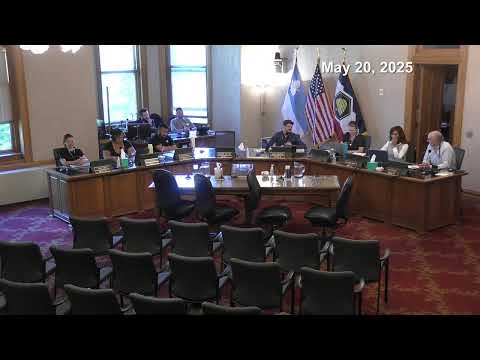
Salt Lake City staff gave the council a status update on My SLC, the city’s resident portal and mobile app, showing steady month-over-month growth and new integrations with department work-order systems.
“My SLC is built on the Salesforce platform, which we use for many applications throughout the city,” Aaron Bentley, Chief Information Officer, said, describing the platform choice that lets web and mobile experiences share a single backend. Bentley said the team has added integrations so that departmental crews that receive work orders in their native systems can update status without entering information in My SLC.
Why it matters: Council members said My SLC makes it easier for residents to report issues even when they don’t know which department handles them, and they pushed for clearer service-level expectations so residents know approximate response times.
What staff described - Integrations: Bentley and the My SLC team described integrations with Accela (used by community and neighborhoods) and Cartograph (used by public services/public lands) so that when a resident files a request, the responsible department’s existing work-order system receives and updates the case and the resident receives feedback. - Growth and dashboards: Staff said My SLC has seen about 5% month-over-month growth and demonstrated a dashboard that can be customized by council district or department. Aaron Bentley said, “If we look back in the history of this type of service ... we had different tools doing different things and we weren’t integrating to the work order systems in many areas. … That will help out a ton because what would happen before, work would get done but the constituent never was told that it was finished.” - Service-level agreements (SLAs): Staff emphasized SLAs are the next step; the portal currently sends an automated receipt but not consistent response-time expectations. “That’s why service level agreements are the next phase of how we can improve our relationship with those that are putting in cases,” the presentation said. - Road map and chatbots: The team outlined a multi-year road map that includes an in-app chat and later chat-bot case deflection to allow users to self-serve routine requests and reduce staff workload. The city also intends to coordinate with state digital identity work in case a shared log-in becomes available. - Equity and reuse: Staff noted the portal can accept anonymous reports but warned anonymous submissions limit resident feedback because the city cannot follow up on the case without contact information.
Council reaction and follow-up Council members praised the app as a customer service improvement and asked for more metrics: repeat-user counts, clearer billboards/links for rate-calculator and guidance, and expanded outreach. Council member Erin M. Young said she had “always gotten a response” after submitting requests through My SLC, and several members urged more cross-department adoption and deduplication of reports.
Ending note Staff said they will continue two-week sprints to add integrations, will refine SLAs with departments, and will publish a rate-calculator and bill-explanation materials on the public utilities and My SLC pages to improve resident understanding.