Get Full Government Meeting Transcripts, Videos, & Alerts Forever!
Get email alerts on the Public Lands Budget topic
No spam. Unsubscribe anytime.
Salt Lake City officials seek $2.7 million for public-lands operations, expand park security and restrooms
Summary
Salt Lake City’s Department of Public Lands asked the City Council to approve roughly $2.7 million in ongoing FY26 budget requests covering inflation, irrigation, seasonal staffing, park security contracts and the transfer of the graffiti team; staff stressed irrigation costs, deferred maintenance and data-driven targeting for security patrols.
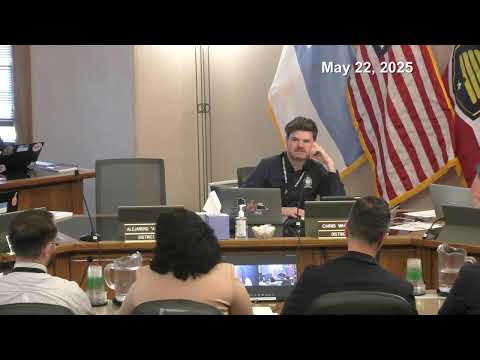
Salt Lake City’s Department of Public Lands presented a proposed FY26 budget increase of about $2.7 million to the City Council on May 1, asking for funding to address rising utility costs, deferred maintenance and expanded park services across the city.
The budget request would raise the department’s overall FY26 spending — excluding the golf enterprise fund — by roughly 13 percent over FY25, staff said, with capital investments and higher utility charges cited as the main drivers. Kim Shelley, director of the Department of Public Lands, told the council that “52% of our FTEs are within our park operations” and that the department manages 429 water meters (not including golf), each billed under different rate schedules.
Why it matters: council members repeatedly pressed staff about water conservation, deferred maintenance backlogs and how park security and ranger duties are measured. The requests affect how the city maintains park restrooms, irrigates turf and staffs seasonal operations that support events and routine upkeep.
Public-lands priorities and specifics Staff said one of the largest single inflationary requests is ongoing funding of $950,091 to help maintain and irrigate public spaces and to support an ongoing sycamore tree study. The department is also seeking $515,000 to expand restroom service coverage from 27 restrooms to all 39 park restrooms citywide and requested an increase in seasonal hours to 15,717 to meet higher maintenance demand.
Shelley described capital projects funded in part by the 2022 GEO bond as the “largest driver” of increases. She said operations and maintenance would grow by 4.7% and noted the department’s full-time staffing would drop from 165.85 to 159.85 FTEs because a graffiti services team and a supervisor are being transferred to Public Services; titles and salary-grade changes tied to last year’s market-pay adjustments also changed counts.
Data and how priorities were chosen Deputy Director Tyler Murdoch described how the department selects parks for increased patrols and restroom service based on maintenance logs and call tracking. “We collect maintenance data in Cartograph,” Murdoch said, explaining that Cartograph and Salesforce call logs identify higher-maintenance locations and help prioritize where contracted patrols and repairs are deployed.
Murdoch said patrols and contracted security have focused on parks with higher incidents of vandalism or hazardous materials — Liberty Park, Allen Park, Fairmont Park and Herman Franks on the east side and locations along the Jordan River and Cottonwood Park on the west side. Several council members pressed for clarification that comp-stat crime data, police records or other data sources could be incorporated; staff said they would work with Police and other departments as priorities evolve.
Park rangers: metrics and role discussion Shelley provided quarterly metrics in response to council questions: park rangers logged about 3,900 patrol hours, “greeted visitors of the parks 13,645 times,” removed roughly 4,976 hazardous items (needles, broken glass) and handled about 1,500 litter-removal instances in the first quarter of the year. Council members asked whether those activities align with the program’s original goals and requested a deeper review of park-ranger outcomes and training to better integrate rangers with other public-safety and outreach efforts.
Deferred maintenance, irrigation and water conservation Council members urged clearer metrics on deferred maintenance spending and water usage. Staff said the department is completing a Strategic Capital Asset Management Plan (SCAMP) that will inventory about 6,000 amenities citywide and produce annual funding needs for deferred maintenance by year-end. On irrigation, staff noted many older systems lack separate tree vs. turf irrigation lines; replacing or redesigning systems can protect urban canopy while cutting overhead irrigation in drought periods.
Operational adjustments and fleet/equipment Council members also asked about fleet and equipment maintenance. Staff said recent vacancy-savings reallocations and one-time funding have allowed the department to accelerate equipment replacement; one line-item in the property-maintenance request (about $333,000) would go to fleet to address aging mowers and other mission-critical equipment.
What the council asked staff to do Council members requested more detailed tracking of water gallons saved after system upgrades, deeper metrics and a follow-up briefing on the park-ranger program’s goals and outcomes, and an update on the SCAMP findings when available. Staff agreed to return with more data on irrigation water savings and deferred-maintenance needs.
Ending The council did not take a vote on the public-lands requests in the session; staff said they would return with additional detail on deferred maintenance, park-ranger metrics and water-use savings as the FY26 budget process proceeds.