Get Full Government Meeting Transcripts, Videos, & Alerts Forever!
Get email alerts on the Wetlands Buffer Change topic
No spam. Unsubscribe anytime.
Council sends letter supporting S102 wetlands changes after split vote
Summary
After discussion and testimony about flood and wetlands functions, the council approved a letter urging state lawmakers to support provisions in S102 that would allow updated mapping and reduce certain wetlands buffers from 50 feet to 25 feet.
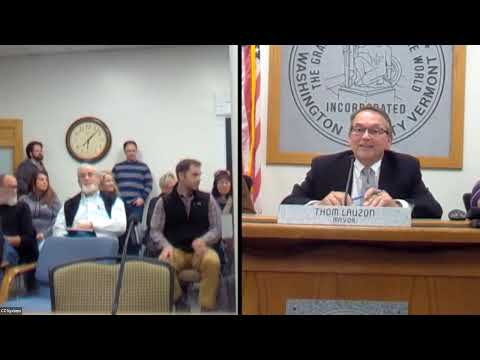
The Barre City Council voted May 20 to send a letter urging support for provisions in S102, a state housing bill that includes language allowing use of updated wetlands maps and, in some cases, reducing the statutory wetlands buffer from 50 feet to 25 feet.
The mayor and city manager explained the proposed letter and the potential local impacts, including the Prospect Heights site where a smaller buffer could increase buildable area and the number of housing units. The manager said Secretary Moore of the Agency of Natural Resources had testified in support of the changes and that the council had been in contact with Representative Wozozak and Senator Watson about the matter.
Several councilors and residents pressed caution. Representative Wozozak, present at the meeting, said committee members are concerned that allowing more development in or near wetlands could increase the risk of landslides and that the proposal would have to clear environmental committees. Resident and wetlands ecologist Danielle Ozarski urged site-specific analysis because wetlands provide water-quality protection and flood-storage functions; she cited research that often supports 50 to 300-foot buffer widths for riparian function.
Councilors debated the tradeoffs between speeding housing development and ensuring flood and water-quality protections. After discussion the council voted to send the letter of support. The motion carried on a voice vote with at least one member recorded as opposed; the council did not adopt a broader ordinance or regulatory change — the letter is an advocacy request to state lawmakers.