Get Full Government Meeting Transcripts, Videos, & Alerts Forever!
Get email alerts on the Tax Increment Financing topic
No spam. Unsubscribe anytime.
Emily City seeks residential TIF; county commissioners set public hearing and discuss millage captures
Summary
Emily City asked Lapeer County commissioners to record support for a proposed residential tax increment financing (TIF) district. City and downtown officials told the board the district would fund infrastructure such as sewer, water and streets; the county agreed to publish a public hearing and let the Committee of the Whole act on the matter.
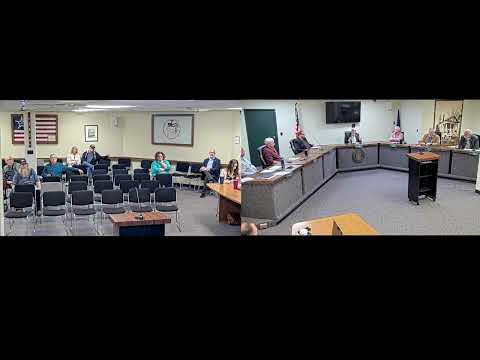
Emily City officials told the Lapeer County Board of Commissioners on May 23 that the city is pursuing a residential tax increment financing district to pay for infrastructure for new housing, and county commissioners voted to publish a public hearing and give the Committee of the Whole authority to act.
The city’s case was presented by Sam Moore, executive director of the Beard and Belton Corporation, and Craig Horton, city manager for Emily City. Moore said the TIF proceeds would be used for “essentially that sewer, water, streets, curves, gutters” to facilitate residential expansion. Horton and other presenters told commissioners the city and its downtown development authority had agreed not to capture any additional voted millages for the life of the residential TIF, with one exception pending further consultation on a law-enforcement/prosecutor millage.
Why it matters: a residential TIF lets a municipality use the increase in property-tax revenue inside a defined district to finance public improvements that support private development. County action in this case is procedural: a county decision to disapprove would be required to block local creation; otherwise, no action by the county is treated as acceptance of the city’s request.
Most of the discussion was technical and procedural. Presenters said the downtown development authority (DDA) had voted not to capture additional voted millages except the law‑enforcement/prosecutor millage, which the DDA held aside to discuss with the county sheriff and the police chief. Presenters also said that proceeds already captured from a seniors and veterans millage would be coordinated with county officials and returned to those intended beneficiaries through a memorandum of understanding.
Commissioners asked for details about the boundaries and what the captured funds would pay for. Commissioner Wise asked, “How big is the actual TIFA district gonna be? Where where is it gonna be located?” Moore replied that the proposed TIF district would include “everything outside the DDA,” and that “between the DDA and the TIFA, the entire Emily City will be, correct, in one or the other.” Horton and other presenters also described using the TIF to leverage federal and state grant funds to offset municipal infrastructure and developer costs.
Members of the public addressed the board during the meeting. One speaker who said she had attended a Lapeer City Council meeting described tax increment financing in general terms and urged residents to educate themselves on how TIFs work; she did not ask the board to take a specific vote.
On procedural next steps, the board authorized publication of a public hearing and gave the Committee of the Whole authority to act on the matter; commissioners were told the county would receive detailed calculations from equalization staff before any final approval. Commissioners and presenters repeatedly emphasized that the county would only have to take affirmative action if it wished to disapprove the city’s plan.
The county did not adopt substantive terms for the TIF at the May 23 meeting; it set the public‑input step and asked staff to provide equalization figures and related documents prior to any final action.
Ending: County staff and Emily City officials said they will continue coordination—particularly on the law‑enforcement/prosecutor millage and the already‑captured seniors and veterans funds—before any final county decision.