Get Full Government Meeting Transcripts, Videos, & Alerts Forever!
Get email alerts on the Transportation Network Companies Insurance topic
No spam. Unsubscribe anytime.
Senate committee hears debate over cutting TNC insurance for drivers en route to pickups
Summary
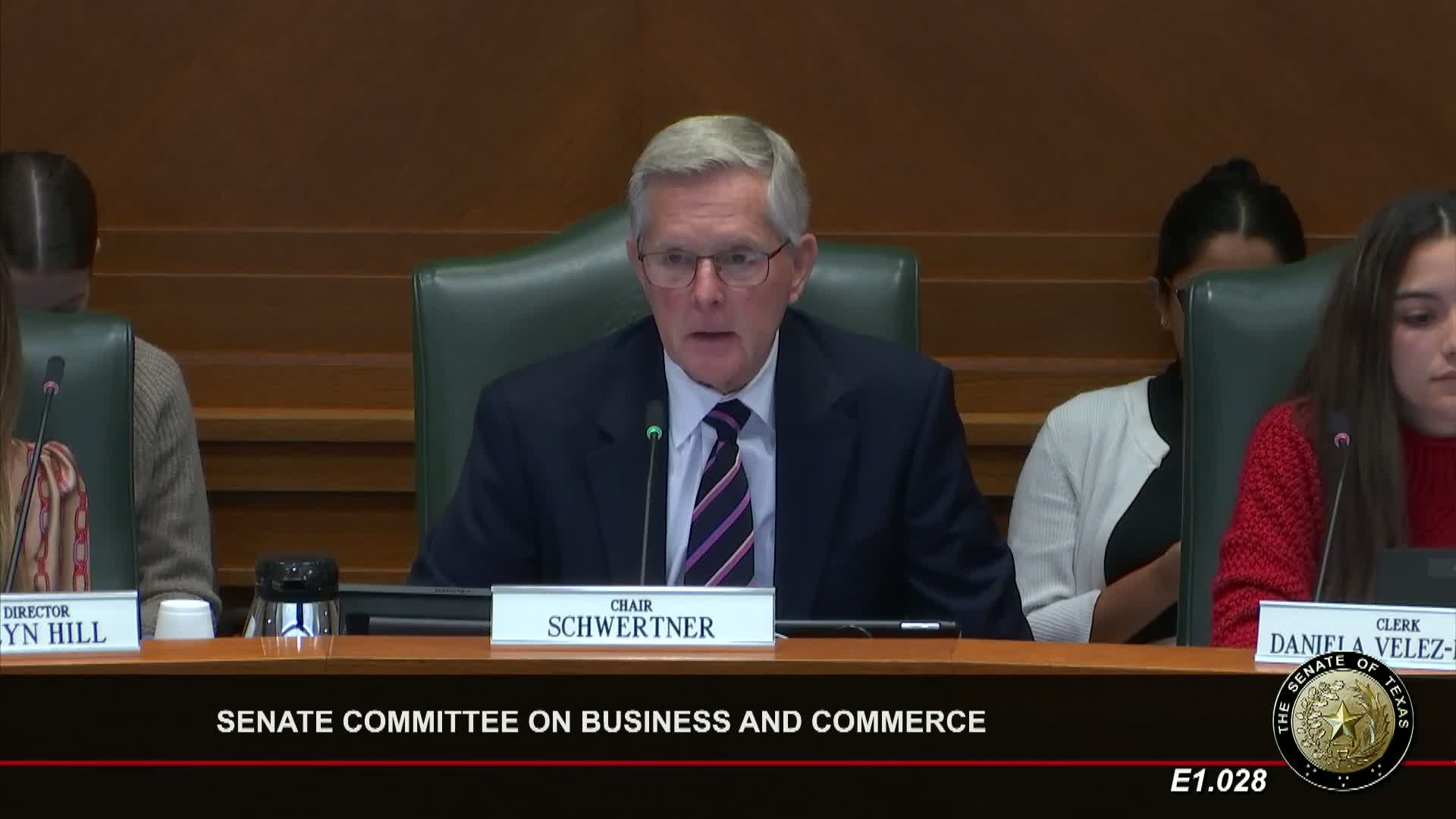
Senators on the Committee on Business & Commerce opened public testimony on House Bill 3,520, a bill to change insurance requirements for transportation network companies (TNCs) such as Uber and Lyft.
Senators on the Committee on Business & Commerce opened public testimony on House Bill 3,520, a bill to change insurance requirements for transportation network companies (TNCs) such as Uber and Lyft.
The bill’s sponsor, Senator Kevin Hagenbooth, told the committee HB 3,520 “reduces P2 primary liability requirements to match the requirements of P1, which are again, $50,000 for bodily injury liability per person, $100,000 bodily injury liability per accident and $25,000 property damage liability per per per accident.” The sponsor said the change would align insurance with the committee’s view of the period-2 risk and reduce operating costs that are passed to drivers and riders.
Supporters included Lee Parsley of Texans for Lawsuit Reform, who said the committee did not have evidence that risk to the public in period 2 (drivers en route to a pickup) is higher than in period 1 (app on but awaiting ride requests). Parsley urged lawmakers not to presume greater exposure without data.
Opponents, including Laura Tamez, past president of the Texas Trial Lawyers Association, warned the committee that period 2 presents significant incentives for risky driving — for example, drivers trying to meet short delivery or pickup windows — and recounted severe crash scenarios. Tamez said, “Good policy dictates a million dollars to cover that as opposed to $50,000” when describing catastrophic injuries she has seen in practice.
Committee members questioned comparative practices in other states. Senator Menendez asked whether other states require $1 million in period 2; the sponsor said he was not certain of the exact count. Witnesses noted that 45 states currently require $1 million for that phase, which opponents cited as evidence that Texas would be an outlier if it reduced coverage.
The committee took public testimony from consumer-safety and industry groups and left the bill pending.
Actions
A public hearing was held; no formal committee vote on the measure occurred. Outcome: left pending; public testimony closed and the bill remained pending subject to the call of the chair.
Why it matters
If enacted, the bill would lower mandated insurance limits for drivers in the phase when apps are active but a passenger is not yet aboard, a change that advocates say reduces costs and critics say could reduce financial protection for victims of severe crashes.