Get AI Briefings, Transcripts & Alerts on Local & National Government Meetings — Forever.
Senate Local Government Committee advances more than a dozen MUD and MMD bills
Loading...
Summary
The Senate Committee on Local Government advanced multiple bills to create or amend municipal utility districts (MUDs) and municipal management districts (MMDs), largely using standard legislative templates and recording unanimous or near‑unanimous committee votes; public testimony was generally absent.
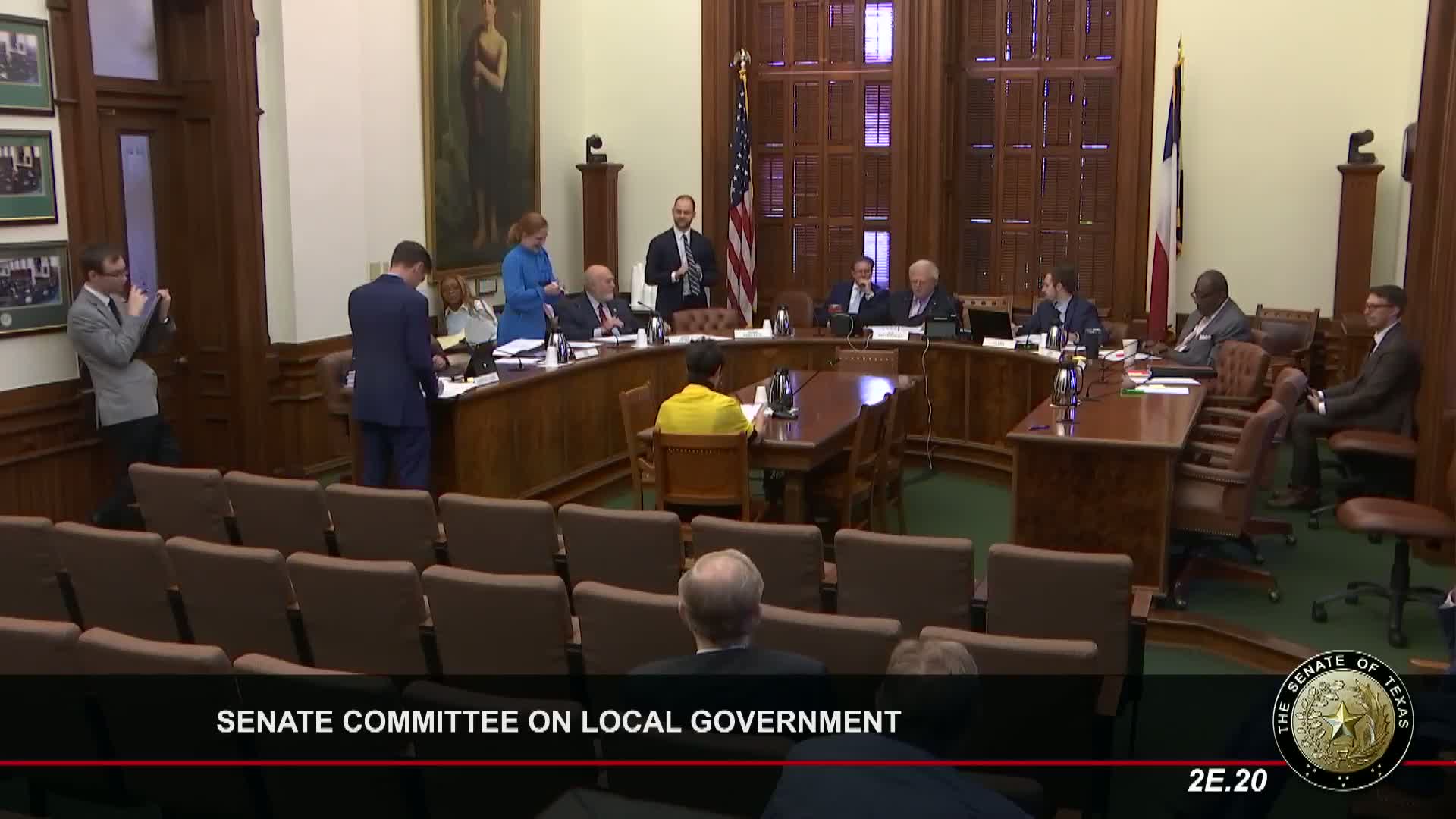
The Senate Committee on Local Government advanced more than a dozen bills creating or changing municipal utility districts and municipal management districts during its committee hearing, moving most measures to the full Senate with committee recommendations to pass.
The bills covered a range of local development actions: boundary realignments for an existing conservation district in Hays County, new MMDs and MUDs for planned master‑planned developments in multiple counties, and technical or validating fixes to earlier district creations. Senator Campbell (sponsor) said of one measure, “This bill simply redefines the boundaries of the existing Driftwood Conservation District to reflect the 522 acres in the district's original creation and several property annexations,” describing recent petitions that added “approximately 104 acres on 2 separate landowner's petitions.”
Why it matters: MUDs and MMDs can finance roads, utilities and other infrastructure through assessments, fees, bonds or, in some cases, voter‑approved taxes. Changes to district boundaries or powers affect which properties pay for and receive district services and can influence local land development and infrastructure financing.
What the committee did - The committee laid out and reported multiple measures to the full Senate, commonly adopting committee substitutes that conformed bills to the committee's standard templates. For several bills the clerk recorded unanimous committee votes (for example, several measures were reported with 4‑0 or 5‑0 tallies as recorded in the hearing). Public testimony was opened and, in nearly all cases, the record shows “hearing none, public testimony is now closed.”
Key examples discussed during the hearing: - House Bill 5,672 (Driftwood Conservation District): Sponsor Sen. Campbell explained the bill would realign the district boundary to reflect the district's original 522 acres and subsequent annexations; the sponsor said the district added roughly 200 acres in 2021 and an additional ~104 acres (two petitions, ~14 acres and ~90 acres), with the City of Dripping Springs consenting to the annexations. The committee voted to report the bill to the full Senate with a recommendation that it do pass (committee vote recorded as 4 ayes, 0 nays).
- House Bill 5,696 (Reserve MMD, Mansfield): The bill would create a roughly 200‑acre municipal management district in Mansfield to support mixed‑use development anchored by a new city hall and riverwalk. Sponsors said the measure grants the district authority to fund infrastructure subject to voter approval or bond issuance and prohibits eminent domain; the matter was left pending subject to call while a committee substitute was circulated.
- House Bill 5,680 (Bayou Veil MMD, Liberty County): Committee substitute conformed the bill to the MMD template; committee adopted the substitute and reported the bill to the full Senate (committee substitute reported 4‑0 as recorded).
- House Bill 5,654 (Montgomery County MUD): Creates Montgomery County Municipal Utility District No. 263 with standard MUD powers and oversight by the Texas Commission on Environmental Quality; the committee reported the bill (vote recorded 5‑0 as recorded).
- House Bill 5,662 (Fort Bend County Water Control and Improvement District No. 12): Adds road powers to an existing Fort Bend WCID; sponsors said the bill conforms to the agreed template for road powers. The committee reported the bill (vote recorded 5‑0 as recorded).
- House Bill 5,658 (Craver Ranch MMD, Denton County): Establishes a 2,500‑acre municipal management district under the standard MMD template; committee substitute adopted and reported (5‑0 as recorded).
- House Bill 5,666 (Fenske Road MUD, Harris County): Creates a roughly 34‑acre MUD within Houston's extraterritorial jurisdiction; committee substitute added initial director names and was adopted and reported without recorded opposition.
- House Bill 5,320 (Starr County drainage consolidation): A bill to merge two local districts into a countywide Starr County drainage and groundwater conservation district; committee reported the bill (4‑0 as recorded).
Most bills were described by senators as “template” bills or were revised into committee substitutes to conform to an agreed Senate template for MUDs or MMDs. Several sponsors noted technical corrections or validating language (for example, language to validate prior acts where a district was organized before an effective date, and drafting errors fixed to align with the MMD template). The committee referenced oversight by the Texas Commission on Environmental Quality for water‑related districts and cited Attorney General review or guidance in at least one validating bill.
Quotes and testimony: Committee minutes and the transcript show that public testimony was generally not offered; the committee opened public testimony on many bills and then closed hearing because no one came forward.
Next steps: The committee advanced the measures to the full Senate—many to the local and uncontested calendars—so the bills will await floor action. The chair recessed the committee to reconvene 15 minutes after adjournment.
Ending note: The hearing was procedural in tone: most bills used standard template language, committee substitutes were used to align bills with that template, and the committee recorded unanimous or near‑unanimous votes to advance the measures.