Get Full Government Meeting Transcripts, Videos, & Alerts Forever!
Get email alerts on the Education Assessment Reform topic
No spam. Unsubscribe anytime.
Senate panel adopts substitute for HB 4 to overhaul assessments, keep A–F ratings and phase in shorter in‑year tests
Summary
Senators on the Committee on Education K–16 adopted a committee substitute for House Bill 4 that proposes replacing Texas’s current end‑of‑year STAR testing model with shorter, in‑year assessments tied to state standards and retaining annual A–F accountability ratings with clearer rules on changes and a phased rollout.
Senators on the Committee on Education K–16 adopted a committee substitute for House Bill 4 that proposes replacing Texas’s current end‑of‑year STAR testing model with shorter, in‑year assessments tied to state standards and retaining annual A–F accountability ratings with clearer rules on changes and a phased rollout.
Sponsor Sen. Bettencourt described the committee substitute as a package that reintroduces a three‑part testing model (beginning, middle, end of year), phases implementation over three years, reduces use of benchmark/prep testing, and preserves annual A–F ratings while tightening notice and rulemaking timelines.
Sen. Bettencourt said the substitute “is getting rid of the STAR test. We’re replacing it with shorter tests that are better designed to support student learning.” He told the committee the plan includes training for teachers and a multi‑year phase‑in so districts can adapt.
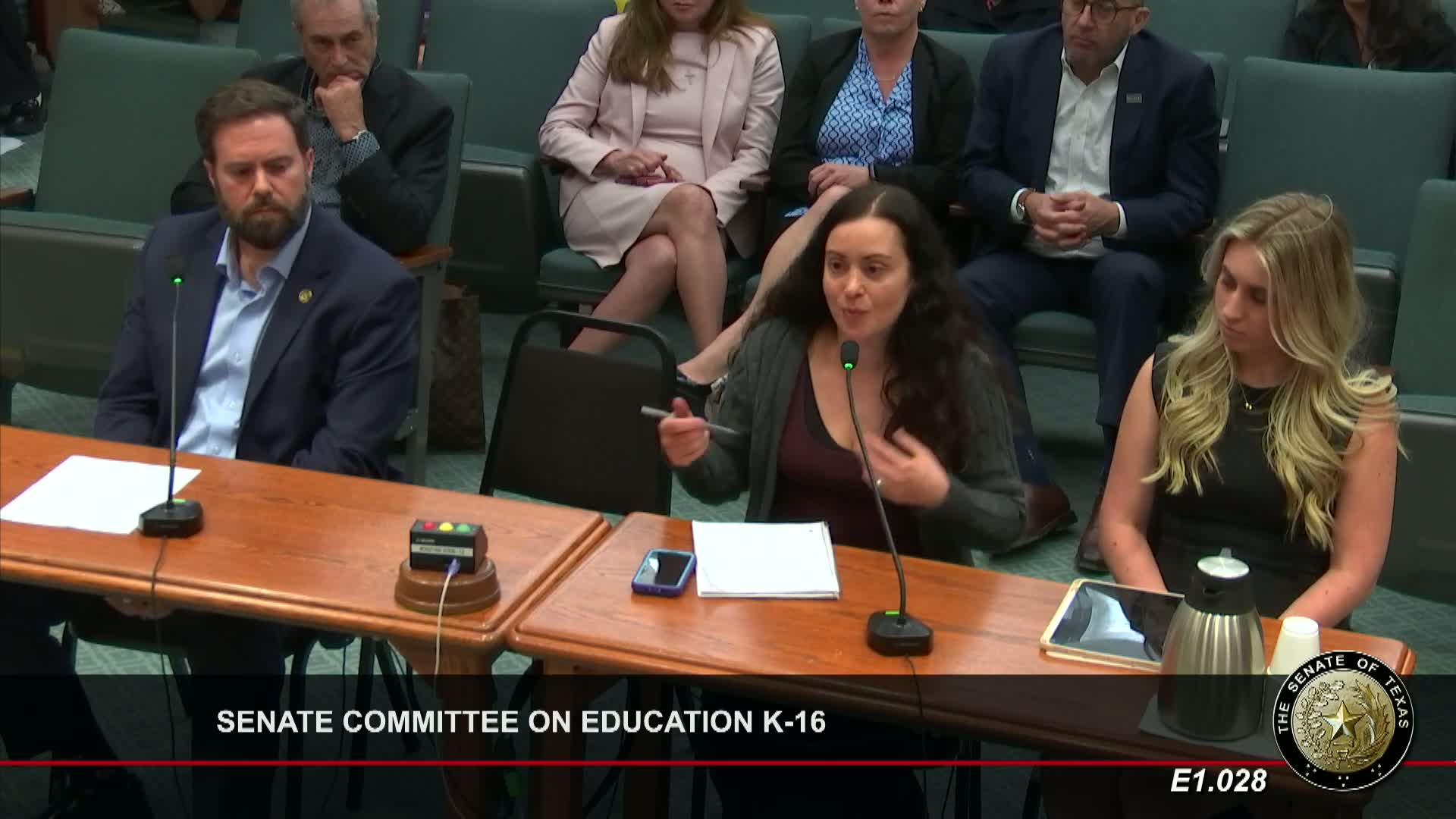
Invited witnesses and advocates split on technical choices but broadly supported change from the current single summative model. Mary Lynn Pineda of Texas 2036 argued for criterion‑referenced diagnostics, saying a criterion‑referenced report “is like getting your blood work back from your doctor every year.” Trista Bishop Watt of GoodReason/Houston said the substitute incorporates findings from a three‑year pilot and would reduce test fatigue while giving teachers timely data.
Other witnesses pressed for nationally normed reference tests that return results more quickly and allow national comparisons; proponents of norm‑referenced models argued they support timely instructional adjustments and comparisons across states. The committee discussed both approaches and the substitute kept a state‑aligned, criterion‑referenced path while including language to protect stability of indicators, require major changes be approved by the Legislature, and give districts advance notice of new standards.
The substitute also clarified remedies when districts use taxpayer funds to litigate to block accountability releases: the substitute expands conservator authority and narrows grounds for procedural suits, while creating grant and diagnostic support for districts that need capacity building.
Committee members asked technical questions about timelines and whether indicators could be added mid‑cycle; sponsors said the bill would include multi‑year notice (two years for major changes) and sync assessment refreshes with A–F recalibration cycles. Dee Carney of the Texas Center for School Accountability and other witnesses pointed to other states (Alaska, Maine, Nebraska) that use in‑year assessments and combine norm‑referenced growth measures with a criterion‑referenced summative score.
After invited testimony and questions, the committee adopted the substitute without objection and closed public testimony. The bill was left pending for further consideration by the committee before any floor action.
If enacted, the substitute would affect statewide accountability rules, assessment vendors and test design, teacher training and grading processes, and the timing and public release of ratings.