Get Full Government Meeting Transcripts, Videos, & Alerts Forever!
Get email alerts on the Career And Technical Education topic
No spam. Unsubscribe anytime.
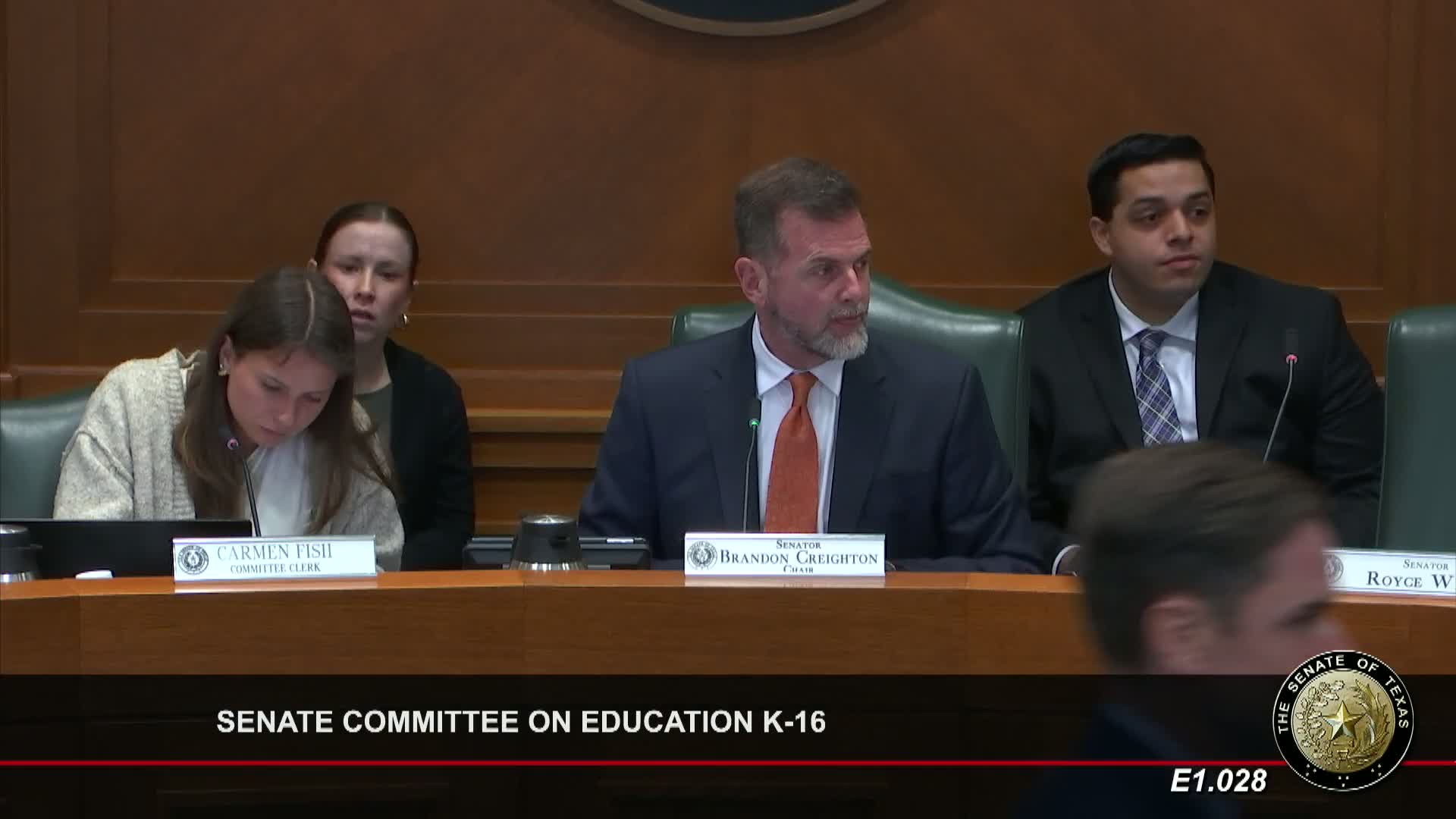
Committee hears competing views on applied-sciences high school pathway bill
Summary
House Bill 20 would create an applied sciences pathway to let 11th–12th grade students earn postsecondary certificates while in high school. Business and industry groups supported the bill as a workforce tool; some education advocates expressed concern that the bill could allow technical institutions to teach substituted core academic courses.
House Bill 20, creating an applied sciences pathway to let high school juniors and seniors earn postsecondary certificates while in high school, was presented and received mixed testimony before the Senate Committee on Education.
Senator King laid out the bill on behalf of the author and said the program aims to address hiring shortages in skilled trades by enabling students to earn certificates in targeted industries while still in high school.
Under the bill, certificate programs must be in the state’s list of 20 targeted industries — testimony named welding, plumbing, electrical, manufacturing technology and oil and gas exploration and production as examples — and the commissioner would be allowed to approve substitution of a required high-school credit with a career and technical education credit provided by an institution of higher education under the program.
Supporters from industry told the committee the program would help fill workforce gaps. Mark Boeshear of the Career and Technical Education Association of Texas testified in support and said the bill would “provide a lot of skilled trades opportunities for the students in the state.” Mike Maroney of the Texas Association of Manufacturers described the proposal as like “the dual credit on steroids.” JD Hale of the Texas Association of Builders said more labor availability would lower costs for homeowners and the broader housing market.
Education advocates urged caution. Mary Lynn Pernetta, director of education and workforce policy at Texas 2036, supported the goal of preparing students for high-wage jobs but raised concerns that the bill’s structure could permit institutions that offer applied courses to substitute instruction for core subjects. “We believe that our K–12 schools are the best people to provide this instruction to our students,” Pernetta testified, arguing that core reading and math instruction requires certified classroom educators.
Committee members asked panelists whether courses that meet Texas Essential Knowledge and Skills (TEKS) currently exist that would allow a CTE course to replace a core course; witnesses said no existing substitution course is currently widely available and that any replacement would require course development and state approval.
Public testimony closed after a multi-stakeholder panel, and the committee left House Bill 20 pending for further consideration.