Get Full Government Meeting Transcripts, Videos, & Alerts Forever!
Get email alerts on the Higher Education Foster Youth topic
No spam. Unsubscribe anytime.
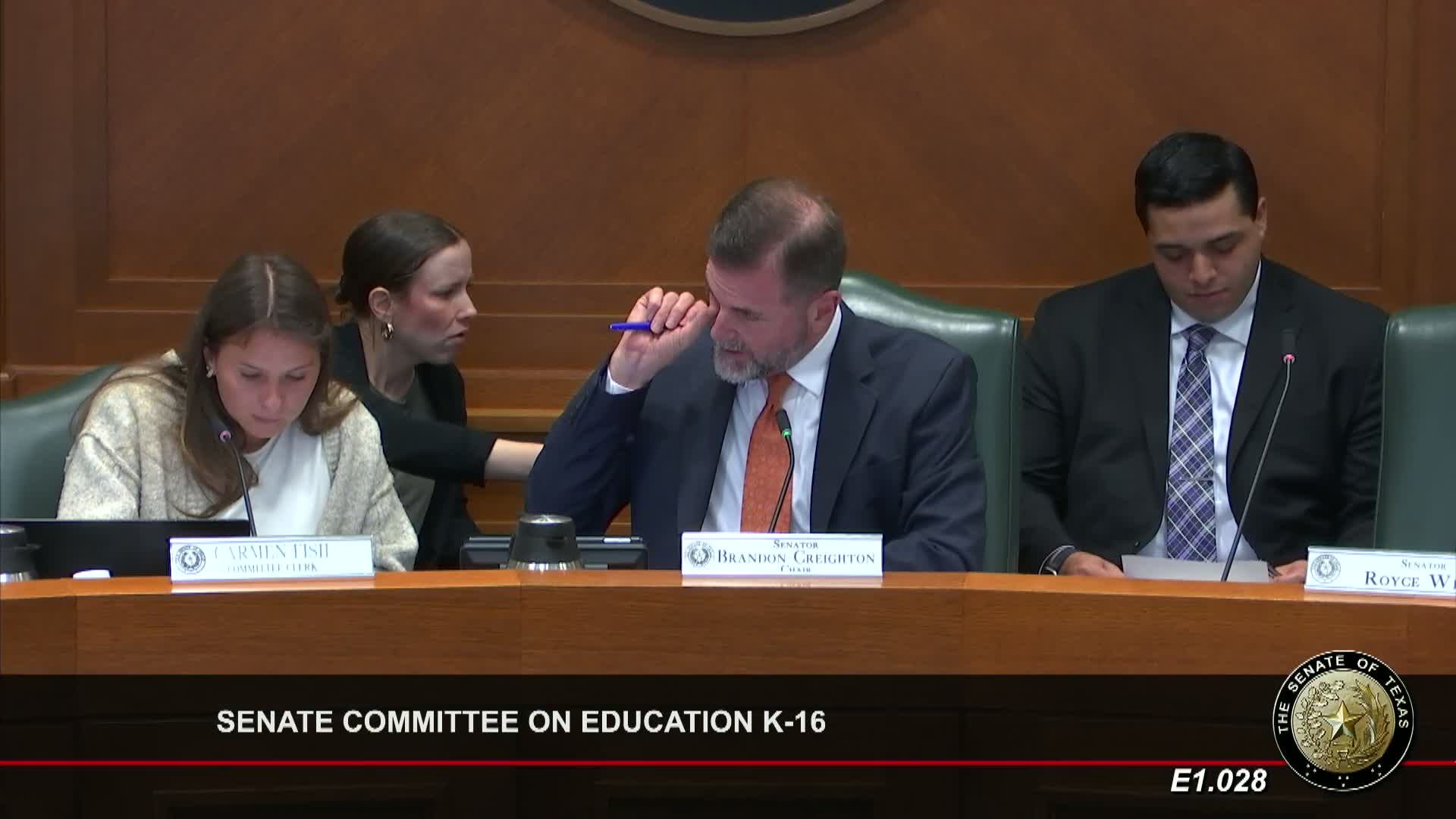
Senate panel hears testimony on bill to remove age limit for foster-care tuition waiver
Summary
Senate Committee on Education heard testimony supporting House Bill 12 11, which would remove the age limit that prevents some former foster youth from using a state tuition and fee waiver; supporters said the change would let more former foster youth access postsecondary education when they are ready, while fiscal impact is uncertain.
House Bill 12 11, which would remove the current age limit for former foster youth to use a state tuition and fee waiver, was laid out and left pending after public testimony before the Texas Senate Committee on Education.
The bill, presented to the committee by Senator José Menéndez, would eliminate the requirement that prospective students use the waiver before their 20th birthday and align the benefit for youth who age out of foster care with the treatment currently available to youth adopted from foster care.
The bill matters because state data and witnesses said many former foster youth are unlikely to be able to enroll in postsecondary education immediately after leaving care. “This bill is gonna change people's lives,” said Sarah Crockett, director of public policy for Texas CASA, who testified in support. “Those young adults who age out of the foster care system… often do not have a huge support system.”
Former foster youth and beneficiaries described how the waiver changed their trajectories. Timothy Belseth, testifying on his own behalf, said, “The Texas tuition fee waiver offers a life changing opportunity for former foster youth.” Belseth said the waiver helped him become a college graduate, an appointed member of the Family and Protective Services Council and a public-sector employee. Sierra Lynn Astran, who testified she graduated from the University of Texas at Austin and is applying to medical school, credited the waiver with making her education possible: “One of the largest factors contributing to my success thus far has been the utilization of this waiver.”
Committee members pressed witnesses and the sponsor on the potential cost to the state. Senator Menéndez cited program use: “Today, approximately 3,000 foster youth use these waivers annually,” and senators noted the Legislative Budget Board’s fiscal note said an estimate could not be determined because of a lack of data on potentially eligible individuals who might use the benefit after age 25.
Supporters said the bill would not change eligibility requirements or the waiver’s content, only the deadline for use. Sarah Crockett said the measure reflects a joint recommendation from the Texas Higher Education Coordinating Board and the Department of Family and Protective Services and would address cases where eligible people do not realize they could later use the waiver.
No formal amendments were offered during the hearing. Public testimony closed after three supporters spoke, and the committee left House Bill 12 11 pending subject to the call of the chair.
Ending: The committee did not take a vote on the bill at the hearing. The bill remains pending and may return for further consideration or amendment; the committee record shows no final action was taken during this session.