Get email alerts on the Grand Jury Reform topic
No spam. Unsubscribe anytime.
Grand jury reform proposals draw opposition from prosecutors at criminal justice committee
Summary
Proposed changes to grand jury practice including witness transcription/recording and limits on 'representment' drew sustained opposition from county prosecutors and district attorneys, who warned about costs, logistics and chilling effects on juror questions and victim willingness to testify.
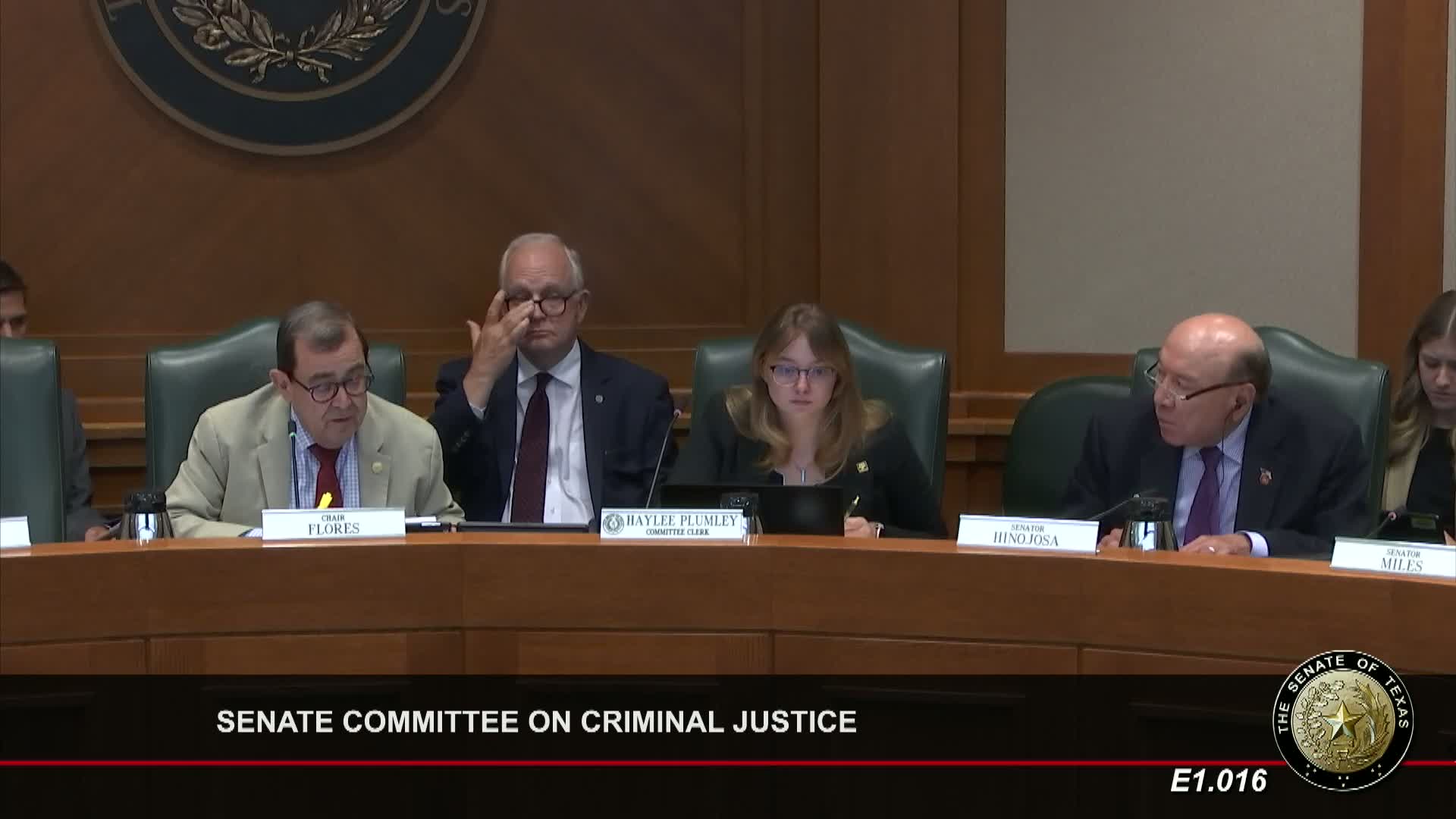
The Committee on Criminal Justice took testimony on House Bill 36,64, a proposal that would require prospective grand jurors to complete training, require transcription (or preservation) of witness testimony before a grand jury, and limit circumstances under which a case can be re-presented to a subsequent grand jury. Sponsor Senator Huffman outlined intentions to strengthen grand-jury procedures and preserve key evidence.
Elected district attorneys and prosecutors from across Texas urged caution and opposed several provisions in the committee substitute as drafted. Jarvis Parsons, Brazos County district attorney, said existing tools already address allegations of vindictive prosecution and that an absolute bar on representment could prevent appropriate indictments in counties that initially declined to act. "There is already a mechanism in statute and in case law that allows a defendant to... say this is vindictive," Parsons said, adding that restricting representment could "hurt good prosecutors" who inherit cases that merit indictment.
Smaller, rural prosecutors raised concerns about the operational costs and logistics of transcribing or recording grand-jury witness testimony. Corio County District Attorney Dusty Boyd told senators a transcription mandate would be a hardship in counties that struggle to hire court reporters. Philip McFurlough, a district attorney from a rural district, warned the committee a requirement to record or transcribe witness testimony could have a "significant chilling effect on [grand jurors'] willingness to ask questions when they know those questions are being recorded."
Shannon Edmonds of the Texas District and County Attorneys Association described national models that have moved away from mandatory grand jury presentments toward judge-administered probable-cause hearings after filing, saying states that face these concerns often adopt a different approach rather than layer due-process requirements onto a grand-jury system. Committee members said they would circulate a draft substitute for member review; public testimony was closed and the bill left pending.
Public testimony summary: multiple elected prosecutors from rural and urban counties testified; opposition focused on transcription cost, logistics, and potential chilling effects on jurors and victims.