Get Full Government Meeting Transcripts, Videos, & Alerts Forever!
Get email alerts on the Sexual Assault Law topic
No spam. Unsubscribe anytime.
Texas Senate committee hears survivor-backed bill to expand legal definition of consent
Summary
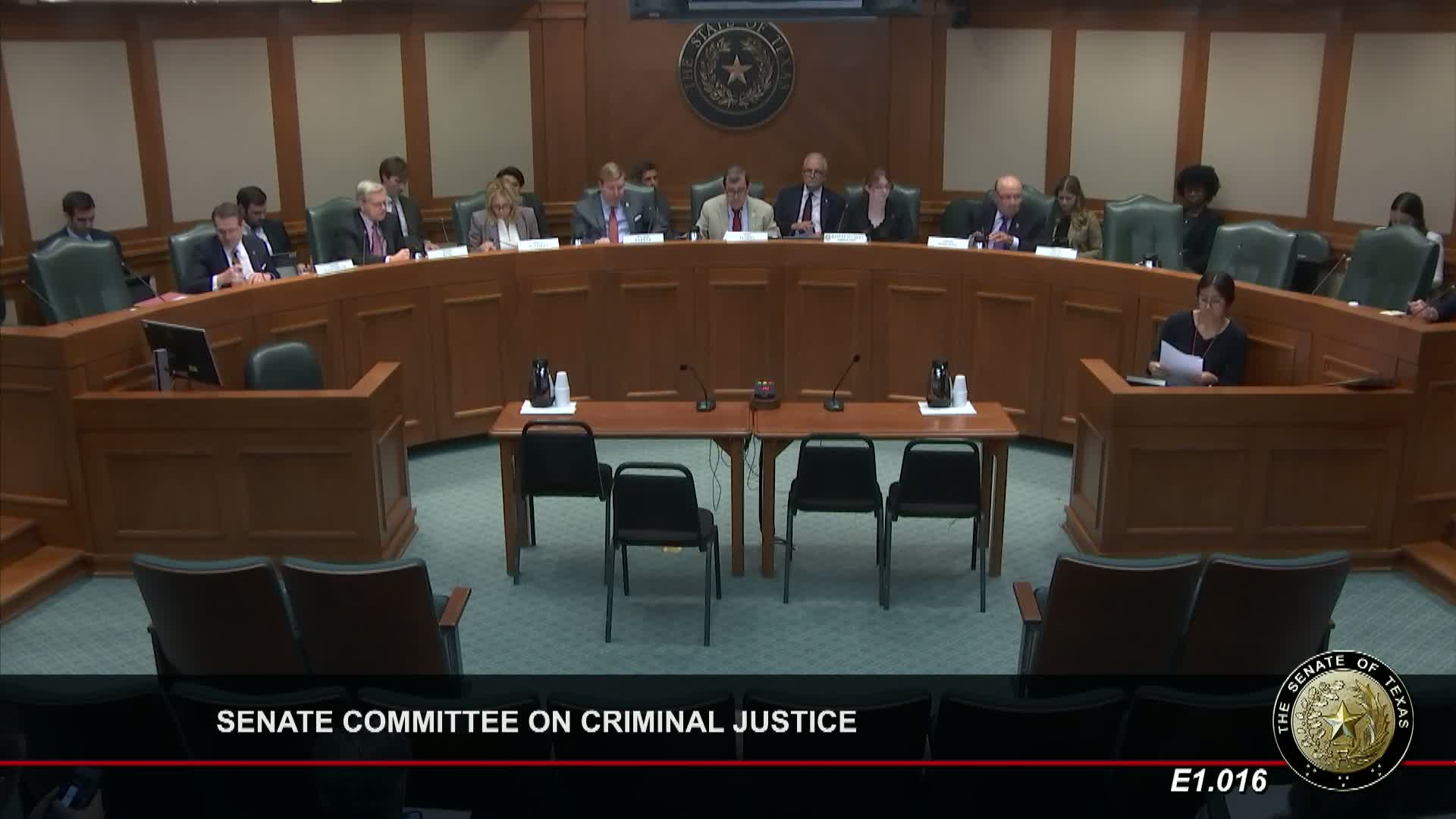
The Senate Committee on Criminal Justice heard testimony on House Bill 3,073, the Summer Willis Act, a measure to define consent in the penal code and expand protections for people incapacitated by alcohol or other substances.
The Senate Committee on Criminal Justice on Tuesday heard testimony on House Bill 3,073, known as the Summer Willis Act, a bill that would add a uniform statutory definition of consent to Texas's penal code and expand protections for people who are incapacitated by alcohol or other substances. Sponsor Sen. Charles Paxton explained the substitute and the bill's aim to close what supporters called a gap in current law.
Supporters said the change would make it easier to prosecute cases where the victim was incapacitated and to align criminal law with current understandings of trauma and consent. "If we don't scream, if we don't fight, if we have been drugged and made too incapacitated to say no, it doesn't count," survivor Summer Willis told the committee during invited testimony.
The substitute clarifies that consent should be defined as the same "assent in fact, whether express or apparent" used elsewhere in the penal code and removes some House language about withdrawal of consent that the committee substitute did not carry forward. Hillary England, deputy director for victim services in the Office of the Governor, said the changes reflect recommendations from the Governor's Sexual Assault Survivors Task Force and emphasized the task force's multi-year work on consent language.
Several survivors testified about personal experiences they and others faced under the current statute. Summer Willis described being drugged and later raped, and urged the committee to adopt the bill: "This bill isn't for me. It is for every Texan who deserves to be protected from the horror that I endured." Williamson County Special Victims Unit chief prosecutor Ryan Bounds told the panel the prior statutory requirement that the person who administered a substance also be the one who committed the assault made successful prosecutions difficult: "I have never charged it under that provision because it's almost impossible." He said the substitute's standard that a perpetrator 'knows' the other person cannot consent would be a meaningful change for prosecutors.
Witnesses from victim-service organizations and medical-forensic providers described common factual patterns the bill is meant to address, such as voluntary intoxication that nonetheless renders a person unable to consent, and examples where one person drugs a victim and another assaults the victim. Multiple witnesses urged inclusion of a "reasonably should know" standard rather than a purely subjective "knows" standard; committee members questioned draft language and staff about phrasing and proof standards.
Chair Flores opened and closed invited and public testimony during the item; after the hearing the committee closed public testimony and left the bill pending for further consideration.
Public testimony session: survivor and advocate testimony, resource witnesses from the governor's task force and county prosecutors. The committee held House Bill 3,073 pending for further action.