Citizen Portal
Sign In

Committee adopts protection for Devil’s River: new restriction on treated wastewater discharges in Val Verde County

3464586 · May 23, 2025

Loading...

AI-Generated Content: All content on this page was generated by AI to highlight key points from the meeting. For complete details and context, we recommend watching the full video. so we can fix them.

Summary

A committee substitute for House Bill 3,333 would ban new permits authorizing direct treated wastewater discharges into the Devil’s River in Val Verde County, lawmakers said.

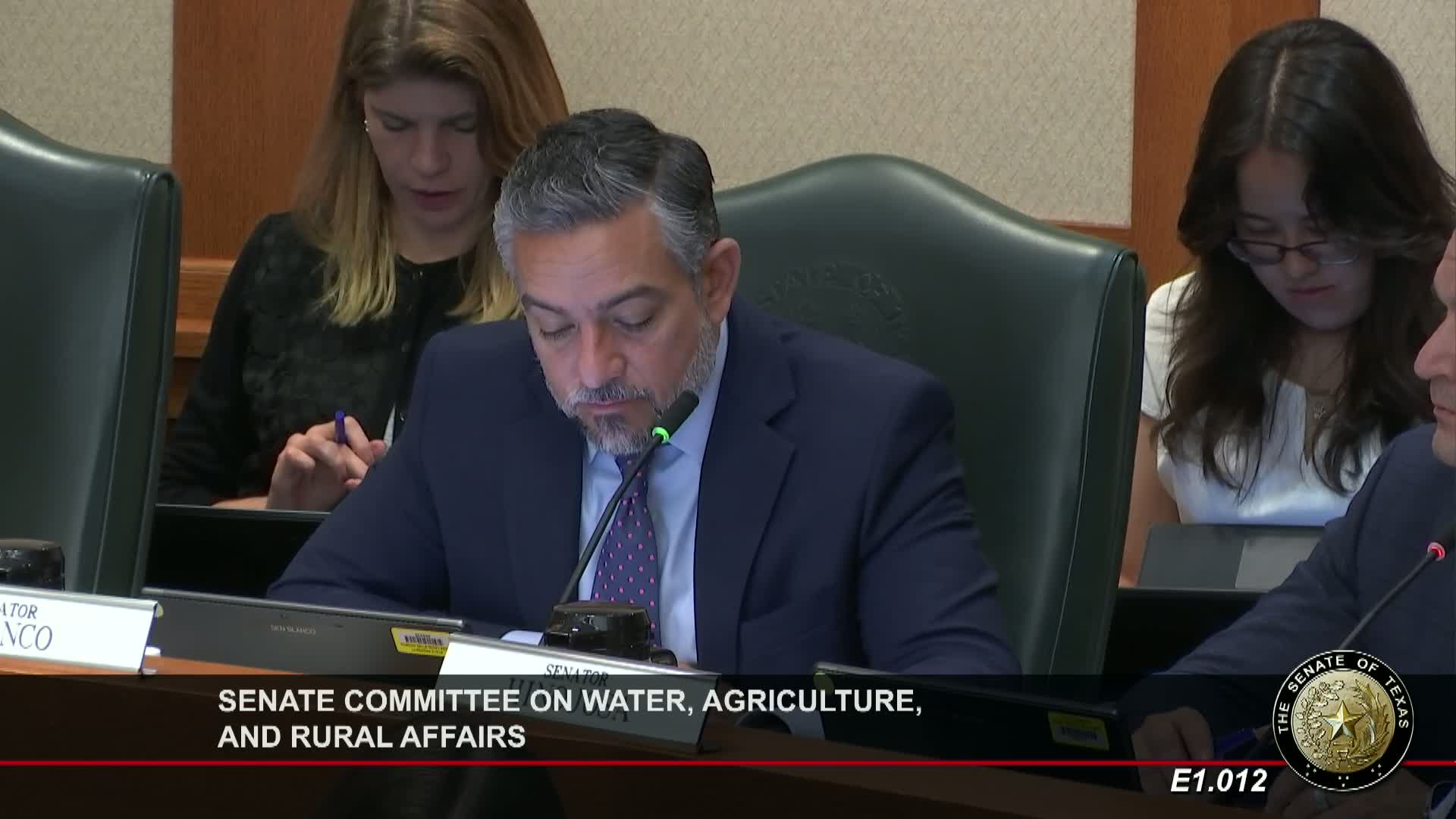
The Senate Committee on Water, Agriculture & Rural Affairs adopted a committee substitute for House Bill 3,333 that would prevent the Texas Commission on Environmental Quality from issuing new permits authorizing direct treated wastewater discharges into the Devil’s River basin in Val Verde County.

Sponsor Senator Blanco told the committee that the Devil’s River is one of Texas’ most pristine waterways and that current permitting rules allow the theoretical possibility of new direct wastewater discharges that could degrade the river’s exceptional water quality. The committee substitute retains TCEQ’s authority over stormwater permits and non‑stormwater general permits but prohibits direct treated wastewater discharges into the specified stretch of the basin.

Romy Swanson, executive director of the Devil’s River Conservancy, testified in favor of the bill on behalf of landowners and local governments she said had collaborated on stewardship for more than 100,000 acres along the river. “The bill is simple and targeted. It prohibits the discharge of treated wastewater into the Devil’s River within Val Verde County,” Swanson told the committee and said local stakeholders, including the City of Del Rio and Val Verde County, support the effort.

TCEQ’s water quality staff said the agency believes it is capable of ensuring permitted discharges meet water‑quality standards but acknowledged the Devil’s River’s unique qualities and that localized ecological effects can arise even when public‑health standards are met. Committee members said they expected the substitute to protect the river’s unique ecology while preserving the agency’s other permitting authorities.

The committee adopted the substitute and reported the bill favorably to the full Senate by roll call.