Get Full Government Meeting Transcripts, Videos, & Alerts Forever!
Get email alerts on the Roadside Vendors Regulation topic
No spam. Unsubscribe anytime.
Bill would let more Texas counties regulate roadside vendors amid safety concerns
Summary
House Bill 2012 would expand authority for county commissioners courts to regulate roadside vendors in unincorporated areas from counties with populations over 1,300,000 to counties with populations over 600,000 that are adjacent to counties with populations over 4,000,000; proponents cited traffic and pedestrian safety risks.
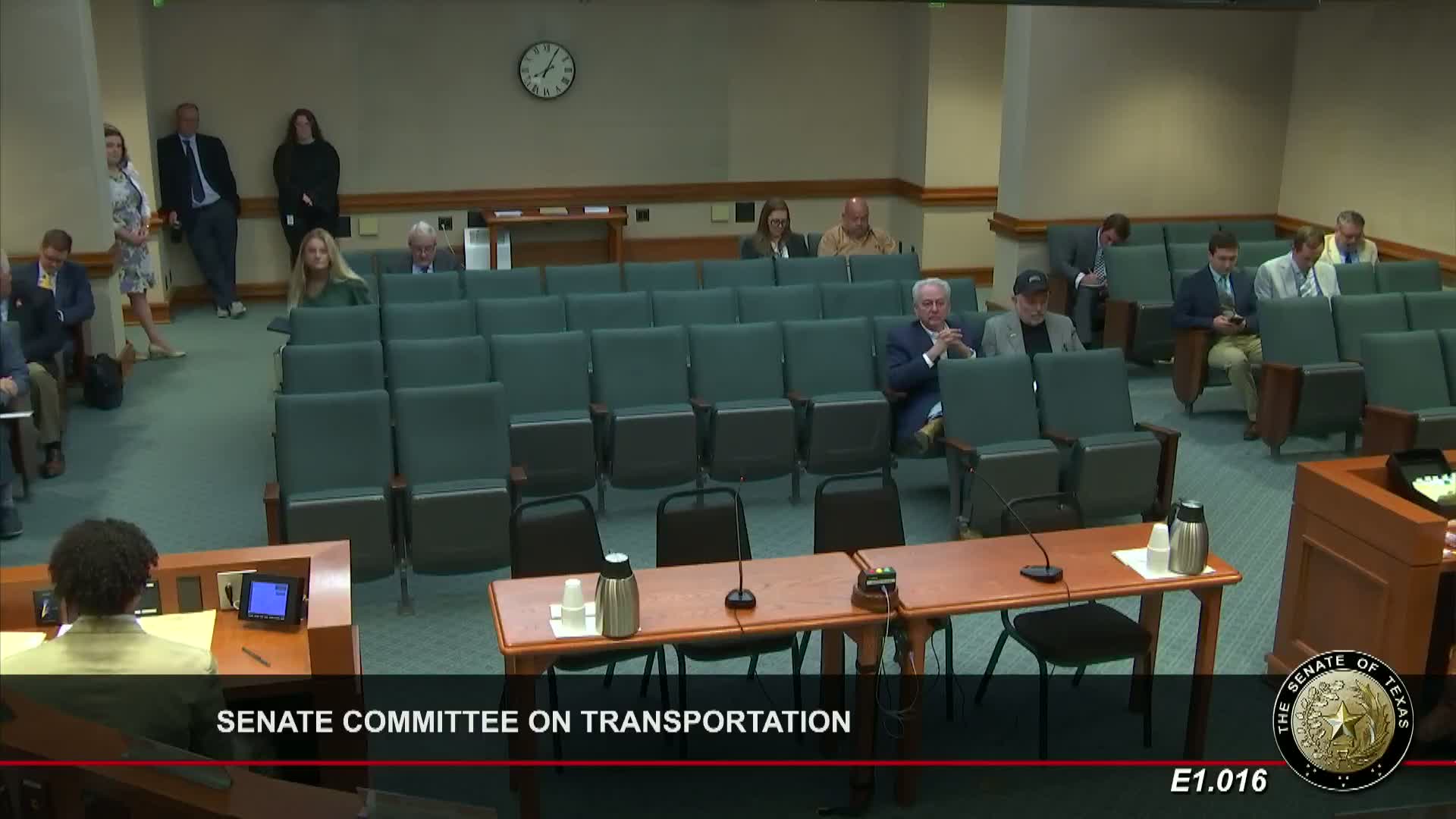
House Bill 2012, explained to the Senate Committee on Transportation on the committee's agenda by Senator Adam Hinojosa, would permit more Texas counties to regulate roadside vendors in unincorporated areas.
The bill would lower the population threshold from counties with populations over 1,300,000 to counties with populations over 600,000 that are adjacent to counties with populations of more than 4,000,000. "These vendors pose significant safety risk by blocking traffic, reducing visibility, and creating dangers for drivers and pedestrians," Senator Hinojosa said during his explanation of the bill.
Senator Hinojosa told the committee that Montgomery County's commissioner's court passed a resolution supporting legislation to authorize local regulation of roadside vendors; the bill's sponsor said the change would allow counties to regulate the sale of food or merchandise by vendors, including live animals, in unincorporated areas.
Committee members opened, then closed, public testimony without witnesses and later voted to report the bill favorably out of committee. The committee recorded a tally of five ayes and no nays and recommended the bill for a local and uncontested calendar.
Why it matters: supporters said the change would give more counties local tools to address traffic hazards and visibility issues created by roadside vending; opponents were not recorded in committee testimony. The committee vote means the bill will move toward the Senate calendar for further consideration.
What was not decided at the hearing: no floor action occurred; the bill was reported out of committee and remains subject to amendment and further votes in the full Senate.