Get Full Government Meeting Transcripts, Videos, & Alerts Forever!
Get email alerts on the Municipal Budget topic
No spam. Unsubscribe anytime.
Punta Gorda budget workshop previews fiscal 2026 staffing requests and flat ad valorem assumption
Summary
Finance staff presented a proposed fiscal year 2026 budget that assumes flat ad valorem revenue, projects personnel increases, and outlines cost pressures from insurance, utilities and pension obligations; councilmembers asked for clearer project accounting and will revisit many line items at the June 4 meeting.
Punta Gorda finance staff on May 20 presented the proposed fiscal year 2026 budget framework, including personnel requests and conservative revenue assumptions. Kristen, the city’s finance director, told the City Council that “For the beginning of our budget discussions, we are leaving the ad valorem estimated flat,” and outlined expected increases in insurance, utility taxes and pension costs.
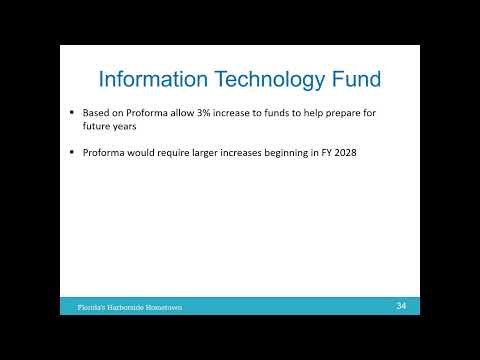
The presentation said the budget assumes a modest rise in some revenues but keeps the ad valorem (property tax) base flat pending final valuation numbers in July. The finance director outlined projected increases: an estimated 8% rise in health insurance, a 15% increase in workers’ compensation and actuarially determined pension costs for fire and police. She also noted the city is budgeting a 3% computer/IT overhead increase to smooth later-year shortfalls.
Why it matters: council members will set final priorities that determine whether the city keeps service levels, funds capital projects or changes the tax rate. Kristen said the pro forma “would require larger increases beginning in fiscal year 28,” and that without changes the multi‑year plan shows shrinking reserves in later years.
Council questions focused on transparency and line‑item clarity. Councilmember Janine Polk asked for clearer breakdowns of carryovers and spending by funding source; she said the current reports were “confusing” when reconciling multi‑year carryforward amounts. Staff agreed to refine the packet to show how much has been spent, what remains and what still must be budgeted forward.
Staffing and operating requests: the packet included requests for multiple positions across departments (public works, engineering, facilities, police and fire) and several temporary hires tied to known retirements or FEMA work. The presentation described a plan to add positions gradually so the five‑year plan remains balanced through fiscal 2028 under current revenue assumptions; staff warned that later years would require additional revenues or cuts.
What’s next: council members will continue the work at the June 4 meeting, when staff will bring refined spreadsheets, updated valuation numbers and any bargaining‑unit impacts. Kristen said final preliminary valuation numbers are due June 1 and that the final state estimates normally arrive in July.