Get email alerts on the Unit Lot Subdivision topic
No spam. Unsubscribe anytime.
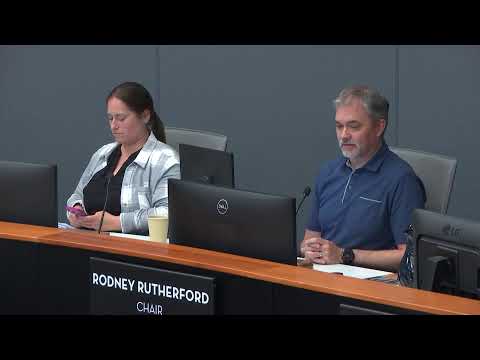
Planning Commission approves unit-lot subdivision code changes to implement state law
Summary
The Planning Commission held a public hearing and voted unanimously to recommend amendments to KMC 22 to add unit-lot subdivision definitions and procedures to implement recent state legislation facilitating fee-simple ownership within middle-housing projects.
The Kirkland Planning Commission held a public hearing May 22 and voted unanimously to recommend amendments to the Kirkland Municipal Code (KMC 22) to implement state-required unit-lot subdivision rules. The changes add definitions for "unit lot," "parent lot" and "unit lot subdivision," set recording requirements, and align review with existing short-plat and subdivision procedures.
The amendments respond to state legislation passed in the prior and current legislative sessions that requires cities to allow unit-lot subdivisions as an option for middle-housing projects. Planning staff said the draft also reflects updates in the most recent bill.
Janice Swinson, senior planner who prepared the draft ordinance, was credited by staff as the lead on the project; staff told the commission Swinson is retiring next week. A staff presenter summarized the policy: the parent lot must cumulatively meet underlying zoning standards for setbacks, lot coverage and, where applicable, floor-area ratio; the individual unit lots may have flexible internal lot lines and a property owner can own the unit and the land below it in fee simple, subject to recorded common-area provisions.
Staff emphasized that unit-lot subdivisions are intended to provide flexibility for middle-housing forms including cottages, townhouses and similar configurations and to create fee-simple ownership options that can facilitate home sales. "Unit lot subdivisions are really intended to be used in middle housing projects and they're designed and intended to provide more flexible site layouts," a staff presenter said.
Public comment and outreach
Two speakers addressed the commission. Liz Hunt, a resident, said the proposal "looks pretty straightforward" but asked staff to be mindful of unforeseen side effects as the approach is applied locally. Kyle Sullivan said he supports the amendment and called the approach "a good idea" that adds flexibility.
Key technical points discussed
- Metering and utilities: Commissioner Gina Medea asked whether units will be separately metered. Staff checked with the public works development engineering manager and clarified that Kirkland does not generally require separate meters by code but developers frequently install separate meters when they intend to sell units individually. Staff said the department will continue coordinating with public works to clarify metering expectations.
- Vesting and concurrent review: Staff said most unit-lot subdivisions will vest with associated development permits (for example, a grading permit or building permits) and that the city will allow concurrent review of construction permits and the subdivision to reduce delays.
- Potential race for unused development capacity: Commissioners raised whether applying development standards to the parent lot could allow a single unit owner to consume unused floor-area or lot-coverage allowances. Staff said the issue can be addressed through private covenants (CC&Rs) or administrative recording approaches and that staff will explore ways to document per-unit maximums administratively rather than by code amendment.
Commission action
Commissioners moved to approve the proposed amendments as presented by staff. The motion was seconded and approved unanimously. The public hearing record included no written comments before the meeting. Staff indicated the Planning Commission—s recommendation will move to City Council for final action.
Ending
Commissioners generally supported the measure as a tool to increase fee-simple ownership options for middle housing while urging staff to align definitions and procedures with neighboring jurisdictions where possible. Staff noted they had consulted the Master Builders Association and other jurisdictions in drafting the language and will continue coordinating with public works on metering and with legal staff on recording practices.
Speakers quoted in this article are listed in the attribution whitelist below.
AI generated
The text on this page is AI generated. Summaries, highlights, analysis, and video transcripts are all produced from the original source material.
AI can make mistakes, so if you spot one, and we will fix it for everyone.
Note: the source content is unaltered by us. Any content source we link to, be it a video, an audio recording, or a document, is presented exactly as its publisher released it. That publisher is usually a government body, sometimes an individual official or another organisation.