Get Full Government Meeting Transcripts, Videos, & Alerts Forever!
Get email alerts on the Medicaid Support Coordination topic
No spam. Unsubscribe anytime.
Support coordinators seek $465,000 in state funds to cover unpaid Medicaid intake work
Summary
Easterseals Louisiana and the Community Provider Association asked the Senate Finance Committee to add $465,000 in state general funds to House Bill 1 to reimburse support coordination agencies for initial intake work unpaid by Medicaid and to shore up an underpaid workforce.
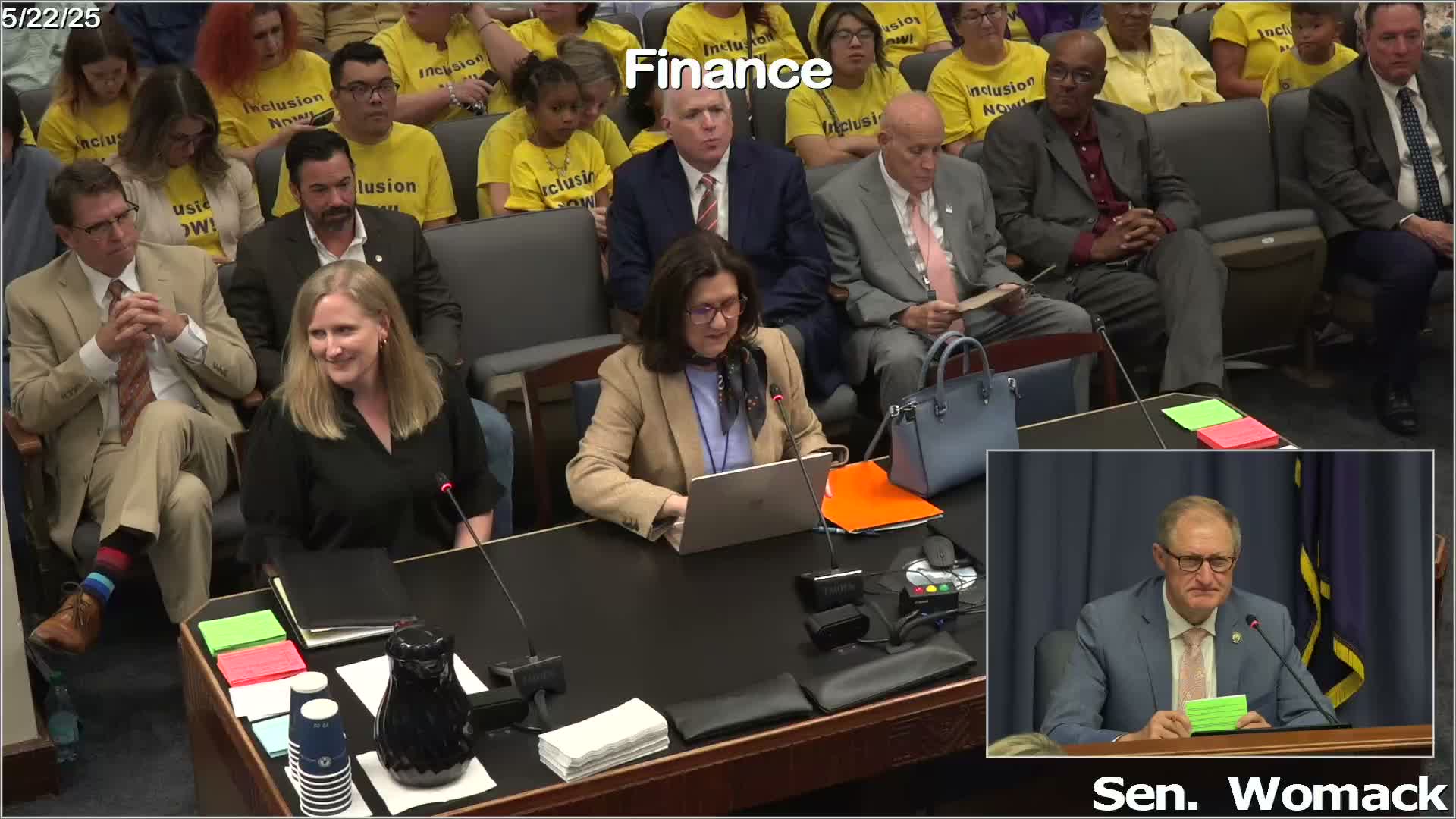
Tracy Garner, president and CEO of Easterseals Louisiana, told the Senate Finance Committee she is asking lawmakers to include $465,000 in state general funds in House Bill 1 to reimburse support coordination agencies for initial intake and support coordination work that Louisiana Medicaid has not paid.
Garner described support coordinators as “the hub” of home- and community-based waiver services and said the state’s Medicaid reimbursement for support coordination has increased “roughly 8% since support coordination began in 1999,” while agency costs have risen far more.
“Currently across the state, approximately 31,000 individuals receive some form of Medicaid waiver home and community based services,” Garner said. “Support coordination agencies work closely and collaboratively with service providers.” She told senators that the unpaid intake work averages six months while Medicaid determines eligibility and that for a large agency like Easterseals that has meant “roughly $700,000 in unpaid work every year.”
Caroline Meehan, executive director of the Community Provider Association of Louisiana, endorsed the request and urged the committee to view the $465,000 as a continuation of recent efforts to strengthen the state’s disability services system. “I think it’s in the grand scheme of things not a large amount of money to the state, but for these individual agencies I think it will be transformational,” Meehan said.
Garner noted that LDH estimated the state appropriation would draw federal matching funds; she said the $465,000 in state funds would garner about $945,000 in federal match. Committee members asked whether the requested funding was new and whether LDH had included it in its priority list; witnesses said the funding request resulted from a legislatively directed study and LDH had not included it earlier because a fiscal estimate was not ready in time for LDH’s original request.
The testimony distinguished the two issues the providers raised: (1) reimbursement for support coordination intake and retention concerns tied to stagnant rates, and (2) a separate request (raised by several witnesses) to add billing for nursing services in DD waivers. Senators asked for more detail on salary, recruitment and retention pressures and for LDH’s placement of the request in its priorities.
Garner and Meehan left the committee with a clear ask: appropriators should add $465,000 SGF in HB 1 to pay support coordinators for intake work and improve reimbursement for a workforce that “we simply cannot retain and recruit” at current pay levels, Garner said.
Ending: Committee members asked staff to collect fiscal details and LDH positions before formal budget votes.