Get Full Government Meeting Transcripts, Videos, & Alerts Forever!
Get email alerts on the Judiciary College Fees topic
No spam. Unsubscribe anytime.
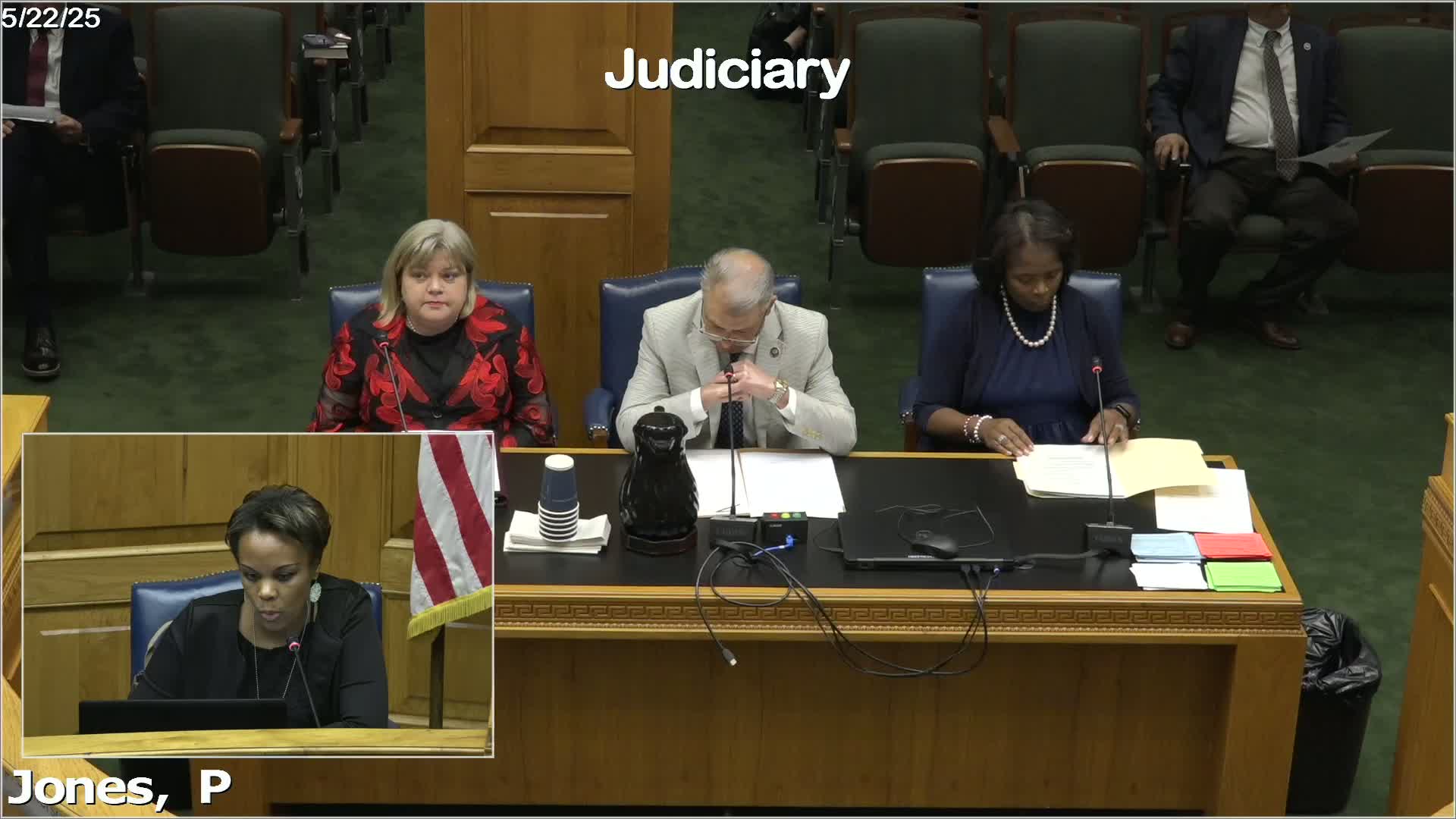
House panel advances bill to raise filing fee to fund Judicial College, adds Judicial Council approval
Summary
The House Judiciary Committee advanced HB 644, which would raise certain civil and criminal filing fees from $0.50 to $1.50 to support the Judicial College; an amendment delays effectiveness until the Judicial Council approves the change.
A House Judiciary Committee moved HB 644 forward after members adopted an amendment requiring the Judicial Council’s approval before the fee increase takes effect.
The bill, introduced by Representative Chad Brown, would raise a filing fee currently set at 50 cents to $1.50; the additional dollar is designated to support the Judicial College, which provides continuing legal education and new-judge training under the Supreme Court’s education branch. Representative Brown said the fee has not changed in more than a decade and the college receives less per filing than comparable states.
The committee adopted Representative Brown’s amendment (set number 30319) adding a new section referencing R.S. 13:62. The amendment says the changes “shall become effective on January 2026 if the council approves, and recommends those changes.” Representative Edmondson and others pressed for that condition during debate, noting that fee changes historically go first to the Judicial Council for review.
Judicial College officials told the committee the extra revenue would pay for training—including an expanded new-judge program in 2026—conference expenses and part-time staff who organize agendas and speakers. Judge Wiley, president of the Judicial College, said the college typically runs eight or nine conferences and requires judges to complete continuing legal education; she described plans to restore a multi-day new-judge course curtailed by COVID. Judge Wilson, vice chair of the Judicial Commission, said some complaints received by the commission involve newer judges who received shortened training, and that additional training and at least one additional investigator for the commission likely will be needed.
Representative Zarrang and others expressed concern that funds collected could be used by the Supreme Court for other purposes; Representative Brown and the judges on the record responded that the bill contemplates fee-sharing between the Judicial College and the Judicial Commission at the Supreme Court’s direction, and that some funds would support investigative staff for the commission and some would fund education.
Action by the committee was procedural: the committee adopted the Judicial Council-approval amendment without objection and then moved the bill forward as amended.
Ending: The bill was advanced out of committee as amended; its effectiveness is conditioned on the Judicial Council’s approval as added by the amendment. The committee discussion left open details about precise spending allocations, which representatives said would be governed by the Supreme Court’s internal direction and existing accounting practices.